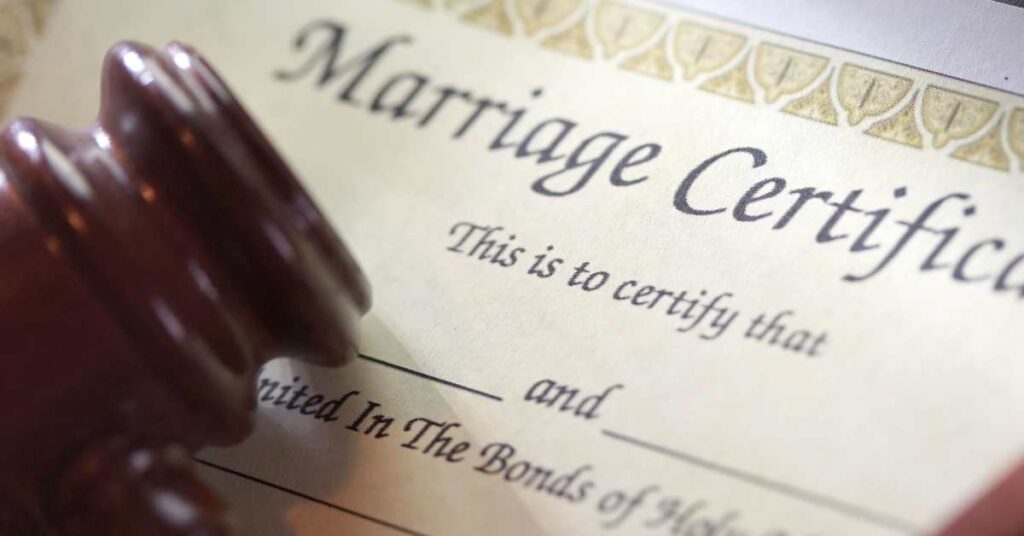
Marriage Certificate Translation for ICA Long-Term Visit Pass (LTVP) Applications
Quick Answer
Marriage certificate translation for ICA’s LTVP application must be a certified English translation, notarised by a Singapore Notary Public, with the notarial certificate authenticated by the Singapore Academy of Law. Neither spouse may act as the translator, since both are named parties on the certificate. ICA requires the original document and its English translation combined into a single uploaded file. SAL authentication has been mandatory for all notarial certificates since 1 October 2019.
Key Takeaways:
- Any marriage certificate not fully in English must be translated before submission to ICA for an LTVP application.
- Neither spouse is allowed to translate their own marriage certificate; an independent translator is required.
- Certified translations for ICA submissions typically also need notarisation and SAL authentication to be fully accepted.
- Every stamp, seal, and handwritten note on the original certificate must appear in the translation, with no omissions.
- If either spouse was previously married, the earlier marriage and divorce (or death) certificates must also be translated and certified.
In This Article:
- What Is an LTVP and Who Needs One
- Why Marriage Certificate Translation Matters
- What ICA Requires for Non-English Documents
- The Three Layers of an Accepted Translation
- Step-by-Step: How to Get Your Marriage Certificate Translated for LTVP
- Who Can and Cannot Translate the Certificate
- Common Mistakes That Delay LTVP Applications
- What Information Must Appear in the Translation
- Documents Often Needed Alongside the Marriage Certificate
- How Long Does the Process Take
- LTVP Translation Requirements at a Glance
- Quality Matters as Much as Speed
- Planning Ahead for a Smoother Application
- How to Order a Certified Translation Service from Elite Asia
- Getting Professional Help
If you are applying for a Long-Term Visit Pass (LTVP) in Singapore and your marriage certificate is not in English, you must get it translated, certified, and often notarised before ICA will accept it. Getting this step wrong is one of the most common reasons LTVP applications are delayed or sent back for more evidence.
This guide explains exactly what the Immigration & Checkpoints Authority (ICA) expects, how the translation process works, what it costs, and how to avoid the mistakes that slow applications down. It also walks through the paperwork step by step, so you know what to prepare before you even book an appointment.
What Is an LTVP and Who Needs One
The Long-Term Visit Pass lets certain foreign family members of Singapore Citizens or Permanent Residents stay in Singapore for an extended period. Foreign spouses married to Singapore Citizens are typically the ones who apply for either the standard LTVP or the enhanced LTVP+ scheme, depending on eligibility.
Unmarried children and parents of Singapore Citizens or Permanent Residents can also qualify under certain conditions. Because the marriage relationship is usually the basis for the pass, ICA needs solid proof that the marriage is real and properly registered. This is why the marriage certificate sits at the centre of nearly every LTVP application, and why any weakness in the supporting paperwork tends to surface early in the review process.
YOUR DOCUMENTS, TRANSLATED FOR OFFICIAL ACCEPTANCE
From personal certificates to business paperwork, our certified translation service helps you move forward with confidence across Singapore, Hong Kong, and Malaysia.
- Official document translation — suited for legal, immigration, and government submission
- Certified accuracy — handled by experienced translators who attest to translation validity
- Clear communication — accurate wording that preserves meaning and intent
- Regional support — built for clients operating across Asia
Why Marriage Certificate Translation Matters
If your marriage certificate was issued outside Singapore in a language other than English, ICA cannot process it as-is. Immigration officers need to read and verify every detail, including names, dates, and the issuing authority, which is only possible with an accurate English translation.
This requirement is not unique to LTVP. It also applies to Permanent Residency, Citizenship, and Dependant’s Pass applications, since ICA and the Ministry of Manpower both rely on the same underlying standard for foreign civil documents. A poor or incomplete translation can trigger a request for more evidence, which pauses your entire application while you fix the problem, and in some cases pushes the whole timeline back by several weeks.
Beyond the immediate paperwork, translation quality also matters for consistency across your entire immigration record. Once a translated marriage certificate is accepted by ICA, the same version is often reused later for Permanent Residency or Citizenship applications, so it pays to get it right the first time rather than redoing the work under time pressure.
Other Related Articles:
What ICA Requires for Non-English Documents
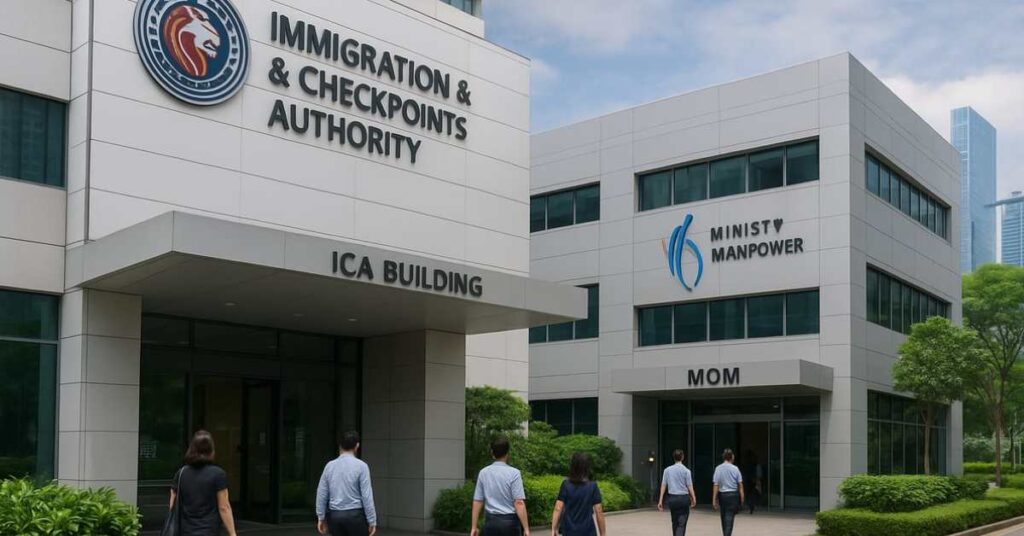
ICA’s rules are specific. For documents not issued in English, you must submit the original along with an English translation, uploaded together as a single file. Officially, ICA accepts translations from three sources only: the embassy of the issuing country, a notary public (either in Singapore or the issuing country), or a private translation that is later attested by an embassy or notarised locally.
ICA does not endorse any particular translation company. What matters is not the brand name behind the translation, but whether the correct certification and notarisation chain is attached. This is an important distinction, and it is worth reading our overview of certified translation and what you actually need to know before choosing a provider.
The Three Layers of an Accepted Translation
Most applicants use the private translation route, which typically involves three layers working together.
- Certified translation: A professional translator or agency converts the marriage certificate into English and signs a statement confirming it is accurate and complete.
- Notarisation: A Singapore Notary Public verifies the translator’s identity and signs to confirm the translation was properly certified, after sighting the original document.
- SAL authentication: Since 1 October 2019, every notarial certificate produced in Singapore must also be authenticated by the Singapore Academy of Law before it holds legal weight.
For a closer look at how these three steps differ and why each one matters, our guide comparing sworn translation and certified translation breaks down the distinctions clearly. Understanding this hierarchy early saves time, because many applicants assume a certified translation on its own is sufficient, only to be asked for notarisation and authentication later.
Step-by-Step: How to Get Your Marriage Certificate Translated for LTVP
Follow these steps in order to avoid delays with your ICA submission.
- Confirm the language requirement. Check whether your marriage certificate is fully in English. If any part, including stamps or handwritten notes, is in another language, the whole document needs translation.
- Choose an independent translator. Neither spouse can translate their own marriage certificate, even if one of you is fluent in both languages. You need an independent, professional translator or agency. Our article on discovering how certified translation in Singapore is carried out explains what to look for in a reliable provider.
- Request a complete translation. Make sure every visible detail is translated: names, dates, places, witness names, registry numbers, and every stamp or seal. Missing even a faded seal can cause ICA to query your submission.
- Get the translation notarised. Bring the original certificate to a Singapore Notary Public. The notary must physically see the original before signing off on the translation.
- Arrange SAL authentication. Your notary typically handles this step for you, submitting the notarial certificate to the Singapore Academy of Law for authentication.
- Combine the original and translation into one file. ICA requires the original document and its English translation to be uploaded together as a single file.
- Submit with your LTVP application. Upload the combined file through the ICA online system along with your other supporting documents.
Working through these steps in order matters more than most applicants realise. Skipping ahead, such as booking a notary appointment before the translation is finished, often means going back and forth between the translator and the notary, which adds days to an already tight timeline.
Who Can and Cannot Translate the Certificate
This point catches many applicants off guard. Because both spouses are named parties on the marriage certificate, neither of you is allowed to act as the translator, no matter how good your language skills are. The translator must be a genuinely independent third party.
There is no official public list of “ICA-approved” translators in Singapore. Instead, ICA cares about the process: an independent translator, followed by notarisation, followed by SAL authentication where required. Choosing an experienced provider that regularly handles government submissions reduces the risk of missing a step. Our piece on the benefits of certified translation explains why working with an established provider matters for official use.
Friends or relatives who happen to be bilingual are also not suitable substitutes for a professional translator. Even if their translation is accurate, it will lack the formal certification statement that ICA expects, and it cannot be notarised in the same way as a translation from a recognised translation service.
Common Mistakes That Delay LTVP Applications
Knowing what typically goes wrong helps you avoid the same pitfalls. These are the most frequent translation-related issues seen with government submissions in Singapore.
- Leaving out stamps, seals, or handwritten notes on the original certificate.
- Spelling names differently in the translation compared with the passport.
- Submitting only a certified translation when notarisation is also required.
- Skipping SAL authentication after notarisation.
- Letting one spouse translate the document themselves.
- Laminating the original certificate, which can obscure security features needed for verification.
- Relying on machine translation without proper human certification.
For a broader view of where automated tools fall short, read our comparison of machine translation versus human translation and why sensitive personal documents need a trained linguist rather than software alone. Machine tools can be useful for a rough understanding of a document’s content, but they cannot provide the signed statement of accuracy that ICA requires, and they frequently mistranslate proper nouns such as place names or registry terms.
What Information Must Appear in the Translation
Marriage certificates look different depending on the country of issue, but a proper translation should always capture the same core details.
- Full legal names of both spouses, matching passport spelling
- Date and place of the marriage ceremony
- Names of witnesses and the officiant
- Marriage registration number and registry details
- Issuing authority and jurisdiction
- Every seal, stamp, or watermark on the original, translated or clearly described
If either spouse was married before, the prior marriage certificate and the divorce decree, or the former spouse’s death certificate, must also go through the same translation and certification process. This is easy to overlook, especially for marriages that ended many years ago, but ICA’s requirement does not change with time. It is worth gathering these older documents early, since obtaining a certified copy from a foreign registry can take longer than the translation itself.
Documents Often Needed Alongside the Marriage Certificate
An LTVP application usually needs more than just the marriage certificate. ICA’s checklist also lists items such as birth certificates, passport copies, and in some cases divorce or death certificates, depending on the applicant’s history. If you are also translating a passport for the application, our guide to certified passport translation services covers what that process involves.
Handling all foreign-language documents together as one batch, rather than one at a time, helps catch inconsistencies, such as a name spelt differently across two certificates, before ICA does. It also means only one round of notary and SAL appointments is needed, rather than repeated visits as each new document is finished.
How Long Does the Process Take
Timelines vary depending on the translator’s workload and how quickly a notary appointment can be booked. As a general guide, translation itself usually takes a few working days, notarisation depends on appointment availability, and SAL authentication can often be completed within a similar short window when bundled with the notary visit. If your application also includes several other translated documents, it is sensible to allow extra time rather than assume everything will be ready overnight.
Applicants who need the certificate translated quickly, for example because a visa or pass is close to expiry, should flag this at the outset. Most professional translation providers can prioritise urgent requests, but the notary and SAL steps depend on external appointment availability, so building in a buffer of at least one to two weeks beyond the translation itself is a sensible precaution.
LTVP Translation Requirements at a Glance
| Requirement | LTVP / LTVP+ Application |
|---|---|
| English translation | Required for any non-English certificate |
| Self-translation by spouse | Not accepted |
| Independent professional translator | Required |
| Notarisation | Typically required as part of the chain |
| SAL authentication | Required since 1 October 2019 for notarial certificates |
| Prior marriage documents | Required if either spouse was married before |
| Original and translation combined | Uploaded as a single file |
Quality Matters as Much as Speed
Because ICA officers compare the translation against the original line by line, accuracy is not optional. A rushed or careless translation, even one with the right paperwork attached, can still raise questions if names, dates, or details do not match exactly. Our overview of how translation quality is checked at every stage explains the review process a reliable agency should follow before a document is delivered.
Small inconsistencies, such as a hyphenated surname appearing differently across the passport, the marriage certificate, and the translation, are a frequent cause of extra queries. It is worth cross-checking the spelling of every name against the passport before the translation is finalised, rather than after submission.
If you would like to see how a properly documented certified translation looks for other visa or immigration purposes, our guide to visa application document translations offers additional context on the standards immigration authorities expect across different pass types. The same underlying principles, accuracy, completeness, and proper certification, apply whether the document supports an LTVP, a Dependant’s Pass, or a long-term visa elsewhere.
Planning Ahead for a Smoother Application
Because an LTVP application often depends on several supporting documents rather than the marriage certificate alone, it helps to map out every foreign-language document you will need before starting the translation process. This avoids a situation where the marriage certificate is ready, notarised, and authenticated, but a birth certificate or prior divorce decree still needs the same treatment weeks later.
It is also worth keeping digital and physical copies of every translated and certified document, since some of these papers will likely be needed again for future submissions, such as renewing the LTVP or applying for Permanent Residency down the line. Keeping a well-organised folder, physical or digital, of the original certificates, translations, notarial certificates, and SAL authentication slips makes future applications considerably faster.
How to Order a Certified Translation Service from Elite Asia
Getting your documents officially certified and translated through Elite Asia is a simple three-stage process. Here is a step-by-step guide to help you through it.
Step 1: Check If Your Document Qualifies
Visit the Elite Asia Certified Translation Services page to confirm your document type is covered. Common documents that require certified translation include:
- Birth, marriage, divorce, or death certificates
- Diplomas, degree certificates, and graduation papers
- Immigration and naturalisation papers
- Passports and ID cards
- Affidavits, powers of attorney, and court documents
- Medical/hospitalisation certificates
- Police reports, tax records, and property deeds
Step 2: Check the Language Pair
Certified translation at Elite Asia is available for over 30 languages, including:
- Asian languages: Bahasa Indonesia, Bahasa Melayu, Chinese/Mandarin, Japanese, Korean, Thai, Vietnamese, Tagalog, Hindi, Tamil, Burmese, Khmer, Bengali, Lao
- European languages: German, French, Russian, and more
Step 3: Get a Free Quote
You have two ways to request a quote:
✅ Option A — Online Quotation Form
Go to eliteasia.co/request-free-quotation/ and fill in the form. Select “Personal” for individual documents (e.g. birth certificate, passport) or “Corporate” for business-related documents. Your rate is determined by:
- Language pair (e.g. Bahasa Indonesia to English)
- Complexity of the source document
- Number of words or pages
- Required turnaround time
Pricing starts from as low as SGD 45 per page (for selected languages, within 350 words per page).
✅ Option B — Direct Contact
For urgent requests, call +65 6681 6717 (GMT+8, Mon–Fri, 9 AM–6 PM), or use the Live Chat or WhatsApp button on the page.
Step 4: Place Your Order & Make Payment
Once you receive and confirm the quote, proceed to place your order online. Elite Asia accepts all major credit cards — Visa, Mastercard, and American Express — through secure online payment. You will receive an email confirmation once your order and payment are processed.
Step 5: Translation & Proofreading Begin
A dedicated project manager is assigned to your project from start to finish. The assigned certified translator — a native-speaking linguist with over 10 years of experience — works on your document. All translations go through a full review and quality assurance check before proceeding to the next stage.
Step 6: Client Review
Before certification, the completed translation is sent to you for review. This ensures the output accurately reflects your source document and meets your requirements.
Step 7: Certification & Notarisation
Once approved, Elite Asia endorses the translated document with its official stamp and issues a Certificate of Translation, which includes:
- A description of the translator’s qualifications
- The title and date of the translated document
- Elite Asia’s official endorsement
If notarisation is required (e.g. for immigration or legal submissions to government authorities), Elite Asia works with qualified notary publics to provide this as a one-stop service.
Step 8: Receive Your Certified Translation
Your completed, certified document is delivered in one of two ways:
- 📧 By email — for digital copies
- 📦 By courier — for physical certified documents
💡 Peace of mind guarantee: Elite Asia has had zero rejections due to translation errors since 2006 and has served over 10,000 clients. Their certified translations are accepted by authorities including the Immigration & Checkpoints Authority, Ministry of Manpower, and the Supreme Court.
Getting Professional Help
Marriage certificate translation for an LTVP application involves more than converting words from one language to another. It requires accuracy, the right certification chain, and an understanding of exactly what ICA checks for. Getting a professional, experienced provider involved from the start reduces the risk of delays caused by missing steps or overlooked details.
If you are preparing a marriage certificate or any other supporting document for your LTVP application, explore Elite Asia’s certified translation services to get an accurate, properly certified translation completed with the paperwork ICA expects. Get started here.
Elite Asia’s team covers 30+ languages across Singapore, Malaysia, Hong Kong, Japan, South Korea, China, Taiwan, and Thailand — with full technical support, ISO 9001:2015 certification, and a dedicated MICE division ready to support your next event.
Latest Articles on Certified Translation:
- Certified Translation for Singapore M&A Due Diligence: Handling Multilingual Data Rooms Without Slowing Down the Deal


- Certified Financial Statement Translation for Singapore Regional HQs: Audit Reports, Consolidation Packs & Cross-Border Reporting

- Board Resolutions, Powers of Attorney & Constitutional Documents: Certified Translation Checklist for Singapore Company Filings

Frequently Asked Questions (FAQs)
1. Can I translate my own marriage certificate for an LTVP application?
No. Since both spouses are parties named on the certificate, neither of you can act as the translator. An independent professional translator must complete the work.
2. Is a certified translation alone enough for ICA?
Usually not. Most ICA submissions, including LTVP, require the translation to also be notarised, with SAL authentication added to the notarial certificate.
3. What happens if my marriage certificate has stamps or seals in another language?
Every stamp, seal, or handwritten note on the original document must be translated or clearly described in the English version. Leaving these out is one of the most common reasons for delay.
4. Do I need to translate a previous marriage certificate too?
Yes, if either spouse was married before. The prior marriage certificate, along with the divorce decree or a former spouse’s death certificate, must also be translated and certified.
5. How should I submit the translated marriage certificate to ICA?
The original document and its English translation should be combined into a single file and uploaded together as part of your LTVP application.

Last Modified:
Contact Us
Working across languages? Our team can support your company’s translation and interpretation needs. For business enquiries, get in touch to explore what fits your requirements.
Request a Quote