How Long Is a Certified Translation Valid for ICA and MOM Submissions?
Quick Answer
A certified translation for ICA and MOM submissions has no fixed expiry date; it stays valid as long as it still matches the current original document. ICA usually demands notarisation on top of certification for civil documents like birth and marriage certificates, while MOM typically accepts a plain certified translation for work pass filings. Reissued originals or expired source documents, such as a six-month police clearance, force a redo regardless of the translation’s age.
Key Takeaways:
- A certified translation has no fixed expiry date; validity depends on whether it still matches the current original document.
- ICA generally requires notarised, and sometimes authenticated, translations for civil documents like birth and marriage certificates.
- MOM typically accepts a straight certified translation without notarisation for most work pass submissions.
- Reissued originals, expired source documents, or illegible copies are the main reasons a translation needs to be redone.
- Always verify current ICA or MOM guidelines before reusing an older translation, since requirements can change by document type and pass category.
In This Article:
- Why Certified Translations Do Not Technically Expire
- The Real Factor: Does It Match the Current Document?
- ICA Requirements: Stricter and Often Needs Notarisation
- MOM Requirements: Certified Translation Is Usually Enough
- Table: ICA vs MOM Translation Expectations
- When You Actually Need a New Translation
- Common Reasons Translations Get Rejected
- How to Check If Your Certified Translation Is Still Valid
- Practical Tips to Avoid Delays
- Special Cases Worth Noting
- How to Order a Certified Translation Service from Elite Asia
- Cost and Timing Considerations
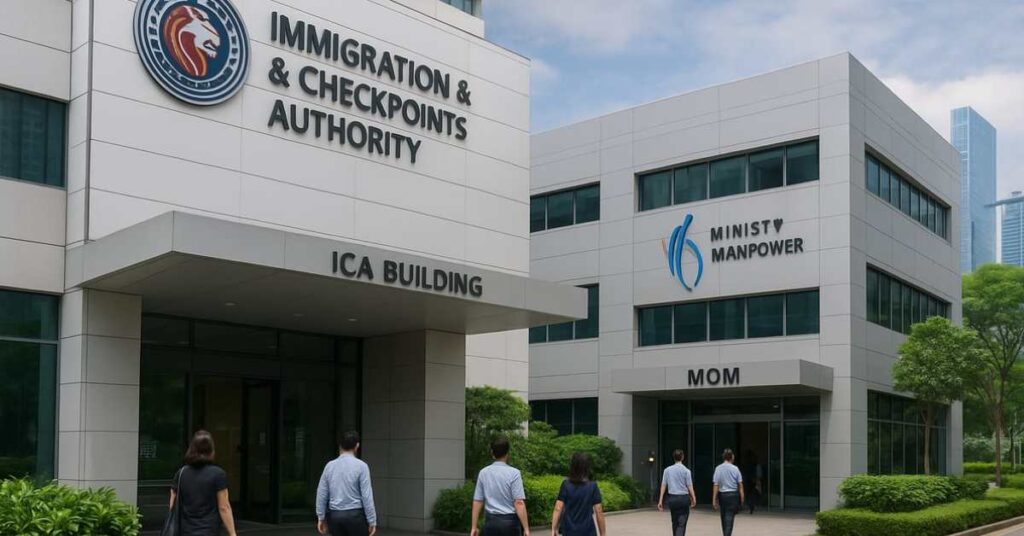
A certified translation does not carry a fixed expiry date, but it stops being useful the moment it no longer matches your current situation, your original document, or the requirements of the authority you are submitting it to. For Singapore’s Immigration and Checkpoints Authority (ICA) and Ministry of Manpower (MOM), the real question is not “when does it expire” but “does it still accurately reflect what the officer needs to see”. This distinction confuses many applicants, especially those reusing documents from a previous visa, work pass, or permanent residency application.
This guide breaks down exactly how validity works for both authorities, what makes a translation go stale, how the two agencies differ in their standards, and how to avoid the delays that come from submitting an outdated translation.
Why Certified Translations Do Not Technically Expire
Unlike a passport or a work pass, a certified translation is not a licence with a built-in end date. It is simply a written promise from a qualified translator that the translated text is a true and accurate copy of the original document. As long as that promise still holds true, the translation remains valid, regardless of how many months or years have passed since it was issued.
The problem arises when the situation surrounding the translation changes. If the original document has been reissued, amended, or has itself expired, the translation tied to the old version becomes useless even though nothing is technically “wrong” with it. This is the most common misunderstanding people have when reusing old paperwork for a new application, and it explains why so many applications get flagged for resubmission even when the applicant believed their documents were in order.
It also helps to understand what a certified translation actually certifies. To learn the full process from start to finish, you can read Discover How a Certified Translation in Singapore Is Carried Out, which walks through how a translator works page-for-page against a source document, which is precisely why any mismatch between an old translation and a newer original triggers a rejection.
YOUR DOCUMENTS, TRANSLATED FOR OFFICIAL ACCEPTANCE
From personal certificates to business paperwork, our certified translation service helps you move forward with confidence across Singapore, Hong Kong, and Malaysia.
- Official document translation — suited for legal, immigration, and government submission
- Certified accuracy — handled by experienced translators who attest to translation validity
- Clear communication — accurate wording that preserves meaning and intent
- Regional support — built for clients operating across Asia
The Real Factor: Does It Match the Current Document?
Officers at ICA and MOM are not checking a translation’s birthday. They are checking whether the translated content lines up exactly with the source document you are submitting alongside it. That means the date printed on the translation certificate is far less important than whether the facts inside it are still accurate.
Three situations commonly cause a previously valid translation to fail during review:
- The original document was reissued with new details, such as a renewed identity card, an updated marriage certificate, or a corrected birth certificate
- The source document itself has a validity window, such as a police clearance certificate or medical report, and that window has already closed
- The translation was created for a different purpose or a different receiving authority with stricter certification rules than the one you are now submitting to
If you are unsure what basic standards apply to certified translations generally, it is worth reviewing Certified Translation – Things You Need to Know, which explains the fundamentals that most government bodies, including ICA and MOM, expect to see on a properly certified document.
Other Related Articles:
ICA Requirements: Stricter and Often Needs Notarisation
ICA generally applies tighter standards than MOM because immigration matters, such as permanent residency, citizenship, and dependant pass applications, carry higher legal weight. For documents like birth certificates, marriage certificates, and divorce papers, ICA often expects the certified translation to also be notarised, and in some cases authenticated, before it will be accepted. This extra layer exists because these documents form the legal backbone of an applicant’s identity and family history, and errors here can have long-term consequences.
If you are handling documents for permanent residency, it helps to check ICA Document Translation Requirements for Permanent Residency in Singapore, since PR applications tend to involve multiple certificates from different countries, each with its own translation and notarisation requirements. A translation that was perfectly acceptable for a previous visa application may not meet the higher bar ICA sets for PR or citizenship filings.
Understanding the difference between the certification types is essential here, and reviewing Certified vs. Notarised vs. Sworn Translation: What Businesses Need to Know clarifies which route your specific document actually needs. Many applicants assume “certified” and “notarised” mean the same thing, but ICA draws a clear line between the two, and using the wrong one is one of the most common causes of processing delays.
MOM Requirements: Certified Translation Is Usually Enough
MOM’s rules are noticeably lighter than ICA’s. For most work pass applications, including Employment Pass, S Pass, and Work Permit submissions, a certified translation on its own is typically sufficient, without the added step of notarisation. This is a meaningful distinction because notarisation adds cost and processing time that MOM applicants often do not actually need.
That said, MOM officers will still reject a translation if it is illegible, incomplete, or does not match the supporting original document. The bar is lower on formality but not on accuracy, and employers sponsoring foreign staff should not assume that “lighter requirements” means “no requirements at all.”
For businesses managing multiple staff documents at once, understanding how a translation provider structures its workflow matters. Reviewing How Do We Manage Our Translation Service Project for Our Clients shows how a consistent, quality-controlled process reduces the risk of submitting mismatched or outdated translations across an entire workforce.
Table: ICA vs MOM Translation Expectations
| Aspect | ICA Submissions | MOM Submissions |
|---|---|---|
| Certified translation required | Yes | Yes |
| Notarisation usually required | Often yes, especially for civil documents | Usually no |
| Authentication sometimes needed | Yes, for select overseas documents | Rare |
| Sensitivity to outdated originals | Very high | High |
| Typical documents | Birth, marriage, divorce certificates, PR papers | Educational certificates, employment letters, payslips |
When You Actually Need a New Translation
You do not need to redo a translation just because time has passed. You need a new one when something about the underlying facts has changed. Here are the clearest triggers that should prompt you to order a fresh translation rather than reuse an old one:
- The original document has been renewed, replaced, or reissued by the issuing authority
- The source document type has a built-in validity period, such as a six-month police certificate, and that period has lapsed
- You are applying to a different authority with different certification standards than the one the translation was originally prepared for
- The translation was handwritten, poorly scanned, or has become illegible over time
- You have since changed your name, marital status, or other personal detail that the original translation reflects incorrectly
If none of these apply, a properly certified translation from several years ago can often still be reused, provided the receiving authority does not have an internal policy demanding a fresher copy. It is worth checking submission guidelines directly with ICA or MOM before assuming an old translation will pass, since policies can be updated without much public notice.
Common Reasons Translations Get Rejected
Understanding rejection triggers helps you sidestep them entirely rather than discovering them the hard way after a submission bounces back. Frequent rejection causes include:
- Self-translation or translation completed by a family member instead of an accredited, professional translator
- Missing translator certification statement, signature, or official business stamp
- Mismatched names, dates, or reference numbers between the translation and the original passport or identity document
- Submitting only the translation without the original document or a certified true copy attached
- Using a translator who is not recognised for the specific language pair required by ICA or MOM
Businesses translating contracts, affidavits, or corporate filings face an additional layer of scrutiny. It is worth exploring Legal Certified Translation Services for Singapore Corporates, since these documents often carry formatting and certification standards that go beyond what a simple personal certificate requires.
How to Check If Your Certified Translation Is Still Valid
Follow these steps before relying on an existing translation for a new ICA or MOM submission.
- Compare dates. Check the issue date on your original document against the date the translation was prepared. If the original has since been reissued, the translation is outdated and must be redone.
- Check for built-in expiry on the source document. Some documents, such as medical certificates or police clearances, expire within months of issue. If the source has expired, translate the fresh version instead of the old one.
- Confirm the certification format. Make sure the translation includes a signed certification statement, the translator’s credentials, and, where required, a notarial seal or stamp.
- Match it to the correct authority. A translation accepted by MOM may not satisfy ICA’s stricter notarisation rules, so confirm requirements for the specific department you are submitting to before you rely on it.
- Verify legibility and completeness. Faded scans, missing pages, or unclear stamps are common reasons for rejection, even when the underlying content is accurate.
- When in doubt, order a new one. If any of the above raises a red flag, it is faster and safer to commission a fresh certified translation than to risk delays from a rejected submission and a resubmission cycle.
Practical Tips to Avoid Delays
Working with an experienced translator from the start reduces the chance of costly resubmissions later. Understanding the wider benefits of getting this right the first time is worthwhile, and reviewing What Are the Benefits of Certified Translation highlights how accuracy, consistency, and proper certification protect against the kind of small errors that cause big delays.
Language coverage also matters more than most applicants expect. Not every translator is accredited for every language pair, so confirming What Languages Does Elite Asia Singapore Translate before committing to a provider avoids delays caused by using an unrecognised linguist for a less common language combination.
Similarly, if you are unsure whether your document needs certification, notarisation, or full apostille, it helps to review Types of Certificate Translation Services in Singapore to match the right service level to the right document before you submit anything.
Special Cases Worth Noting
Visa and dependant pass applications sometimes sit in a grey zone between ICA and MOM, depending on the pass type and the applicant’s specific circumstances. If you are preparing supporting paperwork for a visa, reviewing guidance on Visa Application: Document Translations clarifies which certification level your specific pass category needs, since requirements can differ between a short-term visa and a long-term dependant pass.
Corporate applicants sponsoring multiple employees should also consider timing carefully. If several staff members require translated documents for the same submission window, batching the requests with a single reliable provider reduces the risk of inconsistent formatting or missed certification details across the group.
How to Order a Certified Translation Service from Elite Asia
Getting your documents officially certified and translated through Elite Asia is a simple three-stage process. Here is a step-by-step guide to help you through it.
Step 1: Check If Your Document Qualifies
Visit the Elite Asia Certified Translation Services page to confirm your document type is covered. Common documents that require certified translation include:
- Birth, marriage, divorce, or death certificates
- Diplomas, degree certificates, and graduation papers
- Immigration and naturalisation papers
- Passports and ID cards
- Affidavits, powers of attorney, and court documents
- Medical/hospitalisation certificates
- Police reports, tax records, and property deeds
Step 2: Check the Language Pair
Certified translation at Elite Asia is available for over 30 languages, including:
- Asian languages: Bahasa Indonesia, Bahasa Melayu, Chinese/Mandarin, Japanese, Korean, Thai, Vietnamese, Tagalog, Hindi, Tamil, Burmese, Khmer, Bengali, Lao
- European languages: German, French, Russian, and more
Step 3: Get a Free Quote
You have two ways to request a quote:
✅ Option A — Online Quotation Form
Go to eliteasia.co/request-free-quotation/ and fill in the form. Select “Personal” for individual documents (e.g. birth certificate, passport) or “Corporate” for business-related documents. Your rate is determined by:
- Language pair (e.g. Bahasa Indonesia to English)
- Complexity of the source document
- Number of words or pages
- Required turnaround time
Pricing starts from as low as SGD 45 per page (for selected languages, within 350 words per page).
✅ Option B — Direct Contact
For urgent requests, call +65 6681 6717 (GMT+8, Mon–Fri, 9 AM–6 PM), or use the Live Chat or WhatsApp button on the page.
Step 4: Place Your Order & Make Payment
Once you receive and confirm the quote, proceed to place your order online. Elite Asia accepts all major credit cards — Visa, Mastercard, and American Express — through secure online payment. You will receive an email confirmation once your order and payment are processed.
Step 5: Translation & Proofreading Begin
A dedicated project manager is assigned to your project from start to finish. The assigned certified translator — a native-speaking linguist with over 10 years of experience — works on your document. All translations go through a full review and quality assurance check before proceeding to the next stage.
Step 6: Client Review
Before certification, the completed translation is sent to you for review. This ensures the output accurately reflects your source document and meets your requirements.
Step 7: Certification & Notarisation
Once approved, Elite Asia endorses the translated document with its official stamp and issues a Certificate of Translation, which includes:
- A description of the translator’s qualifications
- The title and date of the translated document
- Elite Asia’s official endorsement
If notarisation is required (e.g. for immigration or legal submissions to government authorities), Elite Asia works with qualified notary publics to provide this as a one-stop service.
Step 8: Receive Your Certified Translation
Your completed, certified document is delivered in one of two ways:
- 📧 By email — for digital copies
- 📦 By courier — for physical certified documents
Cost and Timing Considerations
Reusing a valid old translation saves both time and money, which is exactly why understanding validity matters so much. Ordering a fresh translation unnecessarily adds cost, while submitting an outdated one risks a rejected application and a much longer delay overall. Striking the right balance means checking the document’s status first, rather than defaulting to either extreme.
For ICA submissions requiring notarisation, expect a longer turnaround than a straightforward MOM certified translation, since the notarial step adds an extra layer of verification. Planning ahead, especially around Singapore’s typical application peak periods, helps avoid last-minute scrambling for a service that fits your submission deadline.
Getting the right level of certification from the start saves time and avoids resubmissions. Explore Elite Asia’s Certified Translation Services, accepted by ICA, MOM, and Singapore’s Supreme Court, covering over 30 languages, so you can submit your documents with confidence the first time.
Elite Asia’s team covers 30+ languages across Singapore, Malaysia, Hong Kong, Japan, South Korea, China, Taiwan, and Thailand — with full technical support, ISO 9001:2015 certification, and a dedicated MICE division ready to support your next event.
Latest Articles on Certified Translation:
- Certified Translation for Singapore M&A Due Diligence: Handling Multilingual Data Rooms Without Slowing Down the Deal


- Certified Financial Statement Translation for Singapore Regional HQs: Audit Reports, Consolidation Packs & Cross-Border Reporting

- Board Resolutions, Powers of Attorney & Constitutional Documents: Certified Translation Checklist for Singapore Company Filings

Frequently Asked Questions (FAQs)
1. Does a certified translation expire after a fixed number of years?
No. There is no standard expiry period. The translation remains valid as long as it accurately reflects the current original document and meets the receiving authority’s certification standards.
2. Can I reuse an old certified translation for a new ICA application?
Only if the original document has not been reissued or changed since the translation was made. If the source document has been renewed, you will need a fresh translation.
3. Does MOM require notarisation like ICA does?
No. MOM usually accepts a plain certified translation without notarisation for most work pass applications, while ICA often requires notarisation for civil documents.
4. What happens if I submit an outdated translation to ICA or MOM?
The application is likely to be rejected or delayed until a corrected, matching translation is submitted, which can add weeks to processing time.
5. How do I know if my document needs a notarised translation instead of just certified?
It depends on the document type and the authority. Civil documents for ICA, such as birth or marriage certificates, usually need notarisation, while employment-related documents for MOM typically do not.

Last Modified:
Contact Us
Working across languages? Our team can support your company’s translation and interpretation needs. For business enquiries, get in touch to explore what fits your requirements.
Request a Quote