AI Translation vs Human Translation: Which Is Better?
Quick Answer
AI translation and human translation each serve different purposes, and neither is universally better than the other. AI tools excel at speed and scale, processing thousands of words in seconds at a fraction of the cost of human translators. Human translators, however, consistently deliver 95–100% accuracy and handle cultural nuance, tone, and context that AI still struggles to replicate. For high-stakes content — legal, medical, or marketing — human expertise remains the stronger choice.
Key Takeaways:
- Speed vs. accuracy: AI translation processes thousands of words in seconds, but human translators consistently achieve 95–100% accuracy — making speed and quality the central trade-off.
- Cost is not the whole picture: AI translation costs a fraction of human rates, but poor-quality translations can damage brand reputation and cost far more to fix than the original saving.
- Cultural nuance is a human strength: AI tools frequently miss idioms, local references, and tone — areas where professional translators with native-level cultural knowledge make a critical difference.
- Content type determines the right choice: Routine, high-volume content suits AI well; legal, medical, financial, and marketing content should always involve professional human translators.
- Hybrid translation is the industry standard: Most businesses today combine AI speed with human review — using machine translation for the first draft and professional editors for accuracy, tone, and cultural adaptation.
In This Article:
- What Is AI Translation?
- What Is Human Translation?
- AI Translation vs Human Translation: A Head-to-Head Comparison
- Where AI Translation Excels
- Where Human Translation Excels
- The Hybrid Approach: Getting the Best of Both
- AI Translation and the Risk of Errors
- How to Choose the Right Approach for Your Business
- The Future of AI and Human Translation
- Final Thoughts
What Is AI Translation?
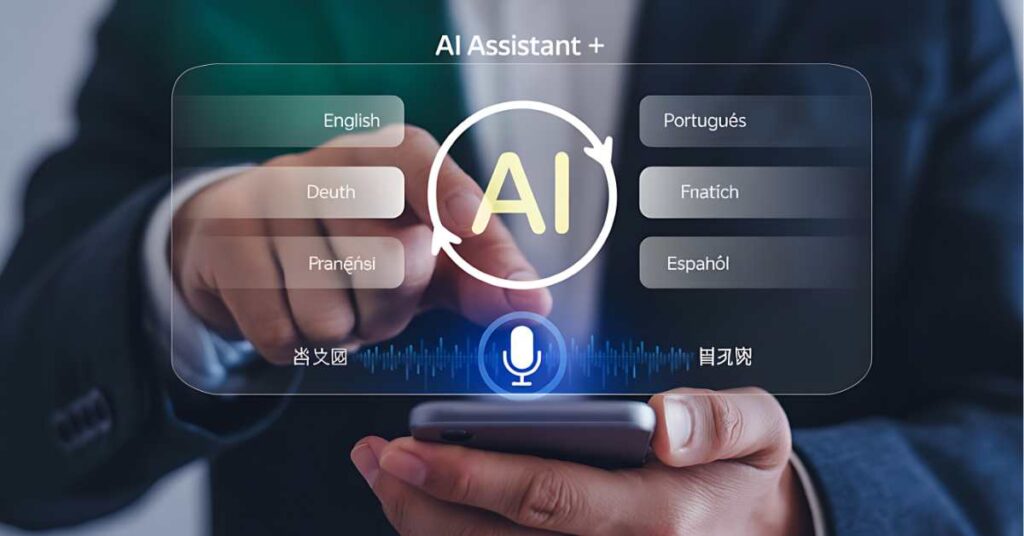
AI translation uses artificial intelligence and machine learning to convert text from one language to another. Modern AI translation tools — such as neural machine translation (NMT) engines — analyse large amounts of data to learn how languages work and produce natural-sounding results.
These tools have come a long way from the basic, word-for-word translation software of the past. Today’s AI translation systems can handle context, sentence structure, and even some industry-specific terminology.
To understand how these systems work under the hood, How AI Translation Works: Is It Truly Helpful in 2026? offers a clear and accessible explanation.
AI translation is used in a wide range of applications, including:
- Website translation
- Customer support chatbots
- E-commerce product listings
- Real-time communication tools
- Social media content
THE BEST OF AI. THE TRUST OF HUMAN EXPERTISE.
Why choose one when you can have both? Our hybrid solutions combine the speed of AI with the cultural precision of native linguists.
- Hybrid Translation — AI-driven translation, refined by industry-specialist linguists
- Hybrid Transcription — automated voiceovers and captions that stay on-brand
- Hybrid Interpretation — host global events in any language, from any location
- AI Captioning — instant multilingual captions for meetings, webinars & beyond
What Is Human Translation?
Human translation is exactly what it sounds like — a trained, professional translator reads the source text and rewrites it in the target language. The translator applies their understanding of both languages, as well as the context, tone, and cultural nuances behind the content.
Professional translators often specialise in specific industries, such as legal, medical, financial, or marketing content. This specialisation ensures that every word choice is accurate, appropriate, and effective.
Unlike AI, a human translator does not just convert words. They understand the intent behind a message, and they know how to make that message land well with the target audience.
AI Translation vs Human Translation: A Head-to-Head Comparison
Let us look at the key differences across the areas that matter most to businesses.
Speed
AI translation wins here — no question. An AI tool can translate thousands of words in a matter of seconds. A human translator typically works at around 2,000 to 3,000 words per day for standard content.
If you need to publish content in multiple languages quickly, or if you are translating a high volume of product descriptions, AI translation is the faster option.
Cost
AI translation is significantly cheaper, especially for large volumes of text. Many AI tools offer per-word pricing that is a fraction of what a professional translator charges.
However, cheap does not always mean cost-effective. A poor-quality translation that damages your brand, confuses your customers, or triggers a legal issue can cost far more to fix than the savings made upfront.
The Benefits of Translation for Business Development highlights why investing in quality translation — not just the cheapest option — is essential for long-term growth.
Accuracy
This is where things get more nuanced.
AI translation tools have improved dramatically. Modern systems can achieve 70–85% accuracy for straightforward content, particularly for common language pairs. However, they still struggle with:
- Idiomatic expressions and local slang
- Ambiguous phrasing
- Context-dependent meaning
- Culturally sensitive language
Human translators consistently produce translations that are 95–100% accurate, particularly for complex content. They understand subtext, intent, and the subtle details that shape meaning.
For high-stakes content — legal contracts, medical records, marketing campaigns — human accuracy is not a luxury. It is a necessity.
Neural Machine Translation: Measuring the Quality of Machine Translation explains how translation quality is measured and what to look for when evaluating any translation tool or service.
Other Related Articles:
Cultural Understanding
Language is not just words. It carries culture, history, and shared understanding. A phrase that works perfectly in English may mean something completely different — or even offensive — in another language.
Human translators understand cultural context in a way that AI simply cannot replicate. They know when a direct translation would fall flat, when humour needs to be adapted, and when a concept needs to be explained rather than translated.
This is especially important when you are entering new markets. How to Localise Your Brand to an Asian Market? shows how cultural adaptation is often the deciding factor between a successful market entry and a missed opportunity.
Tone and Brand Voice
Maintaining a consistent brand voice across multiple languages is one of the hardest challenges in global content strategy.
AI tools can produce grammatically correct text, but they often struggle to capture tone — whether that is formal, conversational, playful, or authoritative. Human translators can adapt your brand voice for each market while keeping the core message intact.
If you want to know more about adapting tone effectively for new markets, How to Adapt Your Tone of Voice for New Markets in 2026 is a useful read.
Handling Specialised Content
Certain types of content require deep subject matter knowledge. Legal documents, medical reports, financial statements, and technical manuals all use precise terminology where a single mistranslation can have serious consequences.
AI tools are generally not equipped to handle this level of specialisation with confidence. Human translators who specialise in these fields bring knowledge that goes beyond language — they understand the domain itself.
Supporting Legal Documents Required? Translate it Professionally! and The Key to Success When Translating Financial Documents both explain why professional expertise is non-negotiable for these document types.
Where AI Translation Excels
Despite its limitations, AI translation is genuinely useful in many real-world scenarios. Here is where it performs best:
- High-volume, low-risk content. Product descriptions, FAQ pages, internal communications, and user-generated content are all good candidates for AI translation. The volume is high, the stakes are lower, and speed matters.
- First drafts and rough translations. AI can produce a solid first draft that a human translator can then review, refine, and improve. This approach — often called Machine Translation Post-Editing (MTPE) — combines the speed of AI with the quality of human review.
- Real-time communication. For live chat support or real-time messaging, AI translation enables fast communication across language barriers in a way that human translators simply cannot match.
A Closer Look at the Benefits of Integrating Automatic Translation outlines practical situations where AI-powered translation adds genuine business value.
Where Human Translation Excels
Human translators remain the gold standard in several key areas:
- Marketing and brand content. Adverts, campaigns, taglines, and brand stories all require creativity, cultural sensitivity, and an understanding of the audience. Marketing Localisation Is Driving Global Success for International Brands demonstrates why human-led localisation is at the heart of successful international campaigns.
- Legal and regulatory documents. Precision is everything. A single word out of place in a contract can change its meaning entirely.
- Creative and literary content. Transcreation — the art of adapting creative content across languages — goes well beyond translation. Transcreation vs. Translation: How They Differ explains why creative content needs a human touch.
- Sensitive or complex topics. Medical, mental health, or crisis communications require empathy and cultural awareness that AI cannot provide.
The Hybrid Approach: Getting the Best of Both
For most businesses, the real question is not “AI or human?” — it is “how do we use both effectively?”
A hybrid translation model combines the speed and scalability of AI with the quality and cultural expertise of professional translators. Here is how it typically works:
- AI handles the first pass. The AI tool translates the content quickly and at low cost.
- Human translators review and refine. A professional editor checks the output, corrects errors, adapts tone, and ensures cultural accuracy.
- Quality assurance is applied. The final content is reviewed against the original to confirm accuracy and consistency.
This model is increasingly the industry standard, especially for businesses that need to produce large volumes of content across multiple languages without sacrificing quality.
Is AI Translation Really Changing the Industry? explores how this shift towards hybrid workflows is reshaping the translation industry as a whole.
The hybrid approach also supports better localisation outcomes. Why Localisation is Important for Your Global Business Success in Singapore makes the case for treating translation and localisation as a continuous, integrated process — not a one-off task.
AI Translation and the Risk of Errors
One of the biggest misconceptions about AI translation is that it is “good enough” for most purposes. In some cases, it is. In others, the consequences of relying solely on AI can be significant.
Common AI translation errors include:
- Literal translations that are grammatically correct but unnatural in the target language
- Misinterpreted idioms that change the meaning of a sentence
- Wrong register — using formal language where casual language is expected, or vice versa
- Missed cultural references that create confusion or offence
- Inconsistency — translating the same term differently across a document
For businesses, these errors carry real risks. A mistranslated product description can mislead a customer. A poorly localised marketing campaign can damage brand reputation. A legal document with an incorrect term can create liability.
AI Translation: Expectations vs. Reality takes a grounded look at what AI translation tools actually deliver — and where the gaps remain.
How to Choose the Right Approach for Your Business
Ask yourself the following questions when deciding between AI translation, human translation, or a hybrid approach:
What type of content is it?
– Routine, high-volume content → AI translation or hybrid
– Legal, medical, financial, or creative content → Human translation
Who is the audience?
– Internal communications or informational content → AI may suffice
– Customers, stakeholders, or regulatory bodies → Human expertise is recommended
What is the risk of an error?
– Low-stakes content → AI translation is acceptable
– High-stakes content → Human translation is essential
What is your timeline?
– Urgent, large-volume needs → AI with human review
– Standard project timelines → Full human translation
What is your budget?
– Limited budget, non-critical content → AI translation
– Adequate budget, business-critical content → Human or hybrid
Understanding your needs clearly before choosing an approach will save you time, money, and potential headaches down the line. What is Professional Translation and Why is it Crucial in Business Growth? is a good resource for businesses that are weighing their options for the first time.
The Future of AI and Human Translation
AI translation technology is advancing rapidly. Tools are becoming more accurate, more context-aware, and better at handling specialised content. As AI continues to improve, the line between AI and human translation will blur further.
But it is unlikely that AI will fully replace human translators — at least not for content that requires creativity, cultural sensitivity, and high stakes accuracy. What is more likely is a future where AI and human expertise work together more seamlessly than ever.
How AI Is Changing the Translation Service Industry in 2026 looks at the trends shaping the industry now, and what to expect in the years ahead.
Final Thoughts
AI translation and human translation are not opposites — they are complements. Each has a role to play depending on the content type, audience, and stakes involved.
For businesses operating across multiple languages and markets, the most effective strategy is a hybrid approach: use AI where it adds speed and scale, and rely on human expertise where accuracy, tone, and cultural understanding are critical.
If you are ready to find the right balance for your business, explore Elite Asia’s Hybrid Translation Solution — a service designed to combine the efficiency of AI with the quality of expert human translators, so you never have to choose between speed and accuracy.
Elite Asia’s team covers 30+ languages across Singapore, Malaysia, Hong Kong, Japan, South Korea, China, Taiwan, and Thailand — with full technical support, ISO 9001:2015 certification, and a dedicated MICE division ready to support your next event.
Latest Articles on Technology:


Frequently Asked Questions (FAQs)
1. Is AI translation accurate enough for business use?
AI translation can be accurate enough for routine, high-volume, and low-risk content. For marketing, legal, medical, or client-facing content, human review is strongly recommended to ensure accuracy and cultural appropriateness.
2. Can AI replace human translators?
AI is unlikely to fully replace human translators for complex or high-stakes content. While AI handles speed and volume well, human translators offer cultural insight, creativity, and contextual judgement that AI cannot replicate.
3. What is machine translation post-editing (MTPE)?
MTPE is a process where AI tools produce a first draft translation, which a professional human editor then reviews and refines. This hybrid approach balances speed and cost with quality.
4. What types of content should always use human translators?
Legal documents, medical reports, financial statements, marketing campaigns, and any content aimed at customers or external stakeholders should always involve professional human translators.
5. What is a hybrid translation model?
A hybrid translation model uses AI tools to produce a fast, cost-effective first draft, which is then reviewed and refined by professional human translators. This approach is widely used in the translation industry to balance quality, speed, and cost.


Last Modified:
Contact Us
Working across languages? Our team can support your company’s translation and interpretation needs. For business enquiries, get in touch to explore what fits your requirements.
Request a Quote