What Language Is Spoken in the Philippines? The Philippines’ Language Report
Quick Answer
The Philippines officially recognizes Filipino and English as its two national languages, though it is home to over 170 additional regional and indigenous languages. Filipino, standardized from Tagalog, serves as the primary medium for education and media, while English—a legacy of American colonial rule from 1898 to 1946—remains widely used in government, business, and law. Beyond these, major regional languages like Cebuano and Ilocano dominate specific areas, and Cebuano alone claims roughly 25.5 million speakers, making it the country’s second-most-spoken language.
Key Takeaways:
- Two official languages: Filipino and English hold official status nationwide, with English commonly used in government, business, and law.
- Extreme linguistic diversity: Over 170 languages exist across the archipelago, most belonging to the Austronesian language family shared with Indonesia and Malaysia.
- Colonial legacy shapes language use: Spanish rule (1565–1898) influenced vocabulary, while American occupation (1898–1946) cemented English as a lasting official language.
- Regional languages remain dominant locally: Cebuano, Ilocano, and Hiligaynon are widely spoken in their respective regions, sometimes outnumbering Filipino speakers locally.
- Bilingualism and code-switching are the norm: Most Filipinos speak at least two languages, and Taglish reflects this everyday blending of Tagalog and English.
The Official Languages: Filipino and English
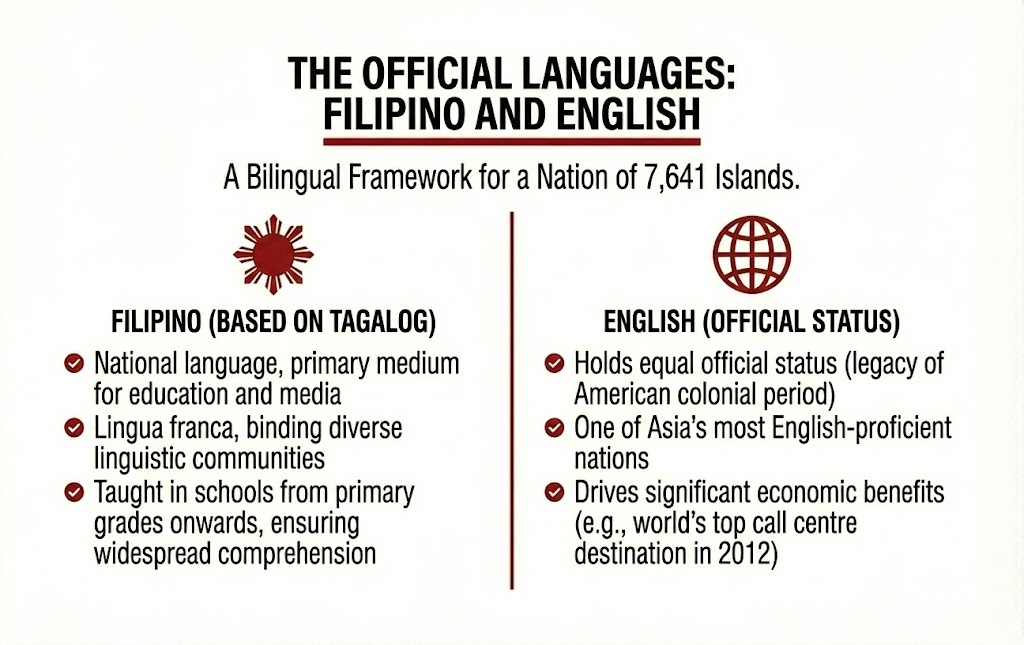
When people ask “what is the main language spoken in the Philippines,” the answer requires understanding that the country officially recognises two languages: Filipino and English. This bilingual framework shapes education, government operations, business transactions, and daily interactions across the 7,641 islands that comprise the nation.
- Filipino, the national language based on Tagalog, serves as the primary medium for education and media throughout the country. The language functions as a lingua franca, binding together the Philippines’ diverse linguistic communities and enabling communication across regional boundaries. Schools throughout the archipelago teach Filipino from primary grades onwards, ensuring widespread comprehension among younger generations.
- English holds equal official status, a legacy of American colonial administration from 1898 to 1946. The Philippines has maintained its position as one of Asia’s most English-proficient nations, with this linguistic capability driving significant economic benefits. The country’s English fluency helped it surpass India as the world’s top call centre destination in 2012, demonstrating how language skills translate directly into economic opportunity.
Need Translation Done Professionally? Elite Asia Can Help!
Your trusted language partner across Asia since 2006 — ISO 9001:2015 certified.
- Certified & legal translation — accepted by official authorities
- 30+ languages — by experienced native linguists
- Dedicated project manager — every project, on time
- One-stop service — translation, interpreting, marketing, localisation
Understanding Filipino vs. Tagalog
A common source of confusion centres on the relationship between Filipino and Tagalog. Whilst closely related, these terms are not interchangeable. Tagalog originated as a regional language spoken primarily in central and southern Luzon, the Philippines’ largest island. With approximately 22.5 to 33 million native speakers and over 50 million second-language speakers, Tagalog represents the country’s most widely spoken indigenous language.

Filipino emerged as a standardised, more inclusive national language under President Ferdinand Marcos’s administration during the 1970s. The 1987 Constitution granted the Filipino language official language status, distinguishing it from its Tagalog foundation through several key characteristics:
- Expanded vocabulary: Filipino incorporates words from other Philippine languages and foreign influences, including Spanish, English, Chinese, and Malay
- Modified alphabet: The Filipino alphabet includes letters F, J, V, X, and Z, which traditional Tagalog lacked.
- Flexible structure: Filipino maintains a more forgiving grammatical structure, making it more accessible to non-native speakers
- Evolving nature: As the national language, Filipino continues to develop and adapt to contemporary linguistic needs
This distinction matters for translation services providers and businesses. Whilst Tagalog speakers can understand Filipino, translating for Philippine audiences requires recognising which variant best serves your target market and purpose.
Other Related Articles:
The Major Languages Beyond Tagalog

Understanding the languages spoken in the Philippines extends far beyond the official languages. The archipelago hosts between 120 and 187 languages, depending on classification methodologies, of which 175 to 183 are considered living languages. These languages predominantly belong to the Austronesian language family, specifically the Malayo-Polynesian branch, connecting Philippine linguistics to broader Southeast Asian linguistic patterns.
Cebuano: The Southern Powerhouse
Cebuano, also called Bisaya or Binisaya, is the second-most-spoken language in the Philippines, with approximately 25.5 million speakers. Cebuano dominated as the country’s most spoken native language from the 1950s through the 1980s, before Tagalog’s promotion as the basis for Filipino shifted the linguistic balance.
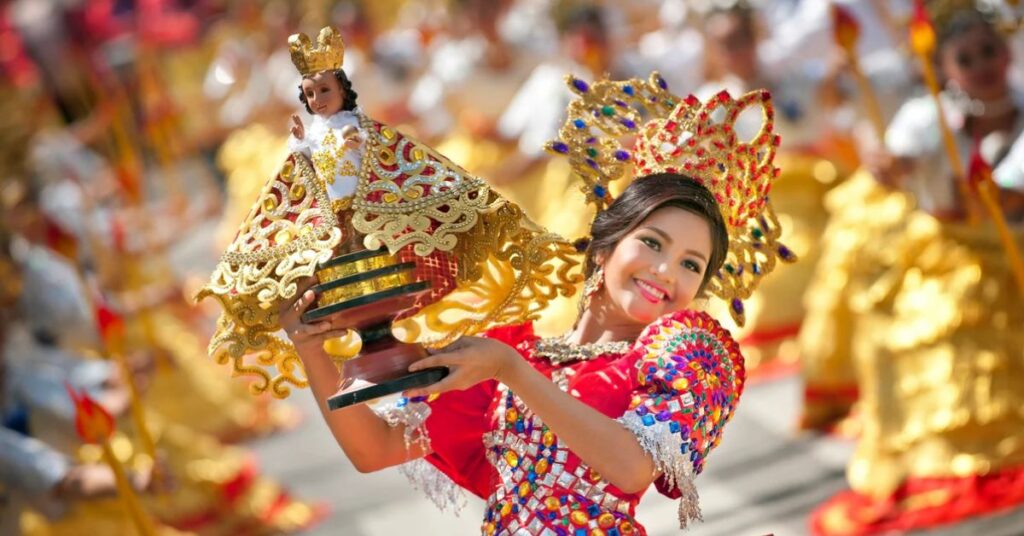
Cebuano speakers reside primarily in the Visayas region and throughout Mindanao, the southernmost island of the Philippines. The language serves as the lingua franca across Central Visayas, western Eastern Visayas, and most of Mindanao. For businesses targeting southern Philippine markets, Cebuano translation and interpretation capabilities prove essential for authentic local engagement.
The 2020 Census of Population and Housing revealed that Bisaya/Binisaya was spoken in 4,214,122 households, representing 16.0% of the country’s total households. This substantial presence makes Cebuano translation services critical for companies developing marketing localisation strategies aimed at regional markets beyond Metro Manila.
Hiligaynon: The Bridge Language
Hiligaynon, also known as Ilonggo, is spoken by approximately 7 to 9.1 million people, primarily in Western Visayas and Soccsksargen. Linguistic researchers note Hiligaynon’s unique position as a bridge between Tagalog and Cebuano, the Philippines’ two largest language groups. This intermediary characteristic makes Hiligaynon speakers often more adaptable when learning either Tagalog or Cebuano.
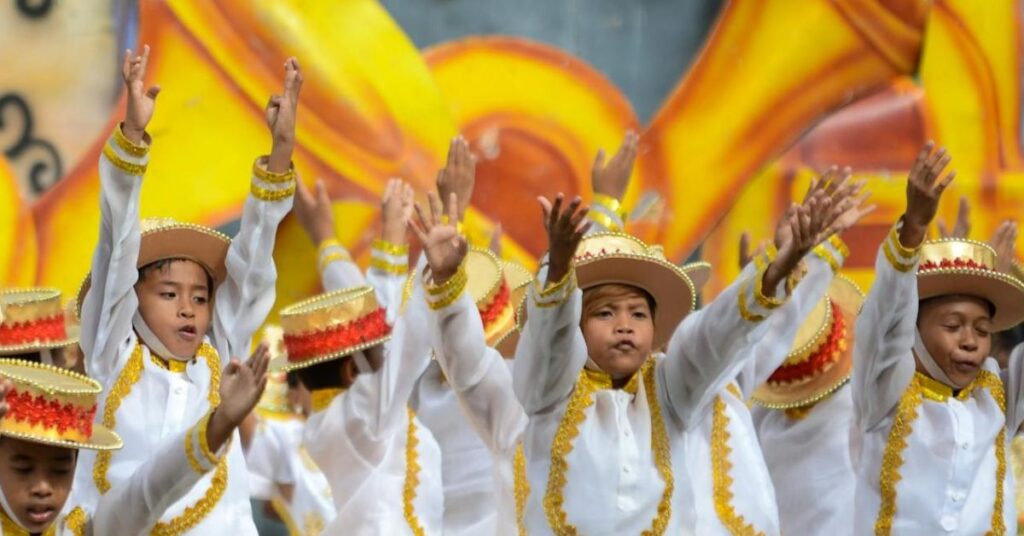
The language predominates in the provinces of Iloilo, Guimaras, Negros Occidental, and Capiz in Western Visayas, as well as in South Cotabato, Sultan Kudarat, and North Cotabato in Mindanao. Since 2012, Hiligaynon has been formally taught in schools and universities throughout these regions, supporting language preservation efforts.
Businesses requiring multilingual website development for Philippine audiences should consider Hiligaynon translations when targeting Western Visayas markets, where the language’s melodic quality and cultural significance create strong local connections.
Ilocano: The Northern Voice
Ilocano ranks as the Philippines’ third most-spoken native language, with approximately 7.7 to 10 million speakers. The Ilocano people originally settled in the Ilocos region, a coastal plain in northwestern Luzon, following Spanish arrival in the 16th century. Population growth drove Ilocano migration to neighbouring provinces, southern Mindanao, and internationally to locations including Hawaii.
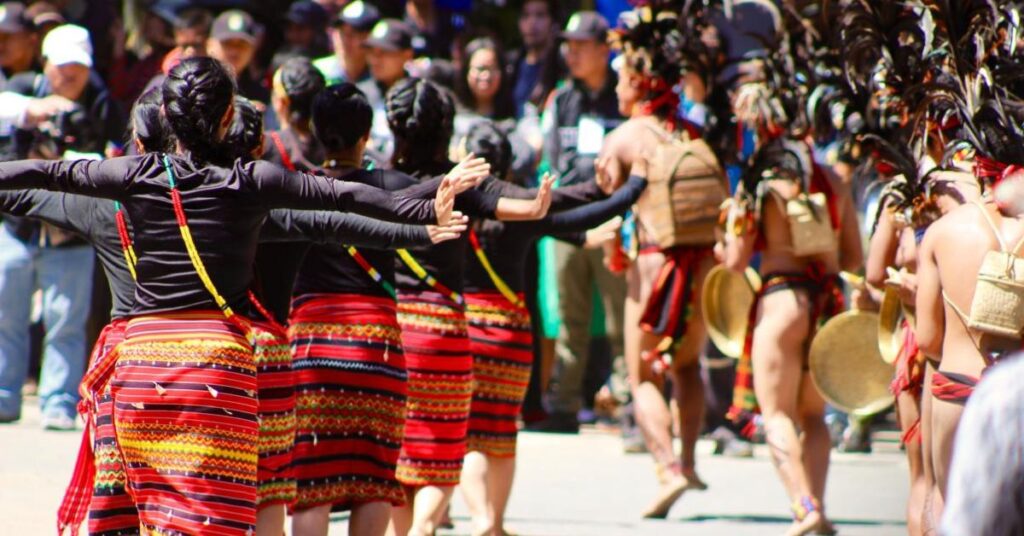
The 2020 census recorded 1,863,409 households (7.1% of the national total) speaking Ilocano as their primary home language. Beyond the Philippines, Ilocano maintains significant speaker populations in Hawaii and other regions with substantial Filipino diaspora communities, creating international demand for Ilocano interpretation services.
Other Significant Regional Languages
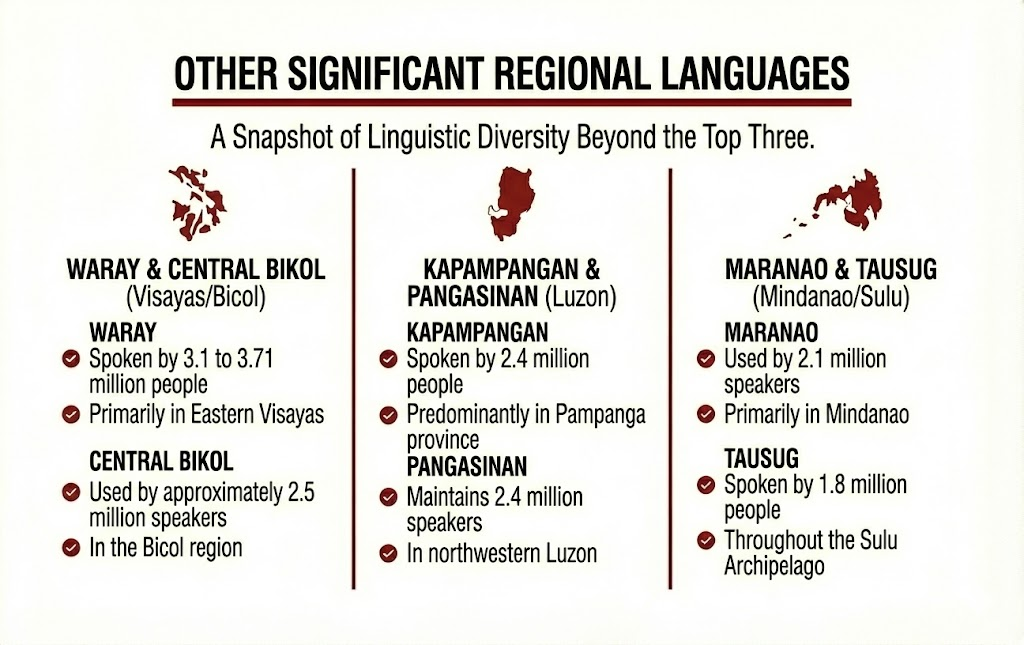
Beyond the top three, several other Philippine languages maintain substantial speaker populations:
- Waray: Spoken by 3.1 to 3.71 million people, primarily in Eastern Visayas
- Central Bikol: Used by approximately 2.5 million speakers in the Bicol region
- Kapampangan: Spoken by 2.4 million people, predominantly in Pampanga province
- Pangasinan: Maintains 2.4 million speakers in northwestern Luzon
- Maranao: Used by 2.1 million speakers, primarily in Mindanao
- Tausug: Spoken by 1.8 million people throughout the Sulu Archipelago
Each of these languages carries distinct cultural significance and requires specialised knowledge for accurate document translation and interpretation. For businesses developing comprehensive Philippine market strategies, understanding regional language preferences enhances the effectiveness of content localisation and demonstrates cultural respect.
The Colonial Legacy: Spanish and English Influence
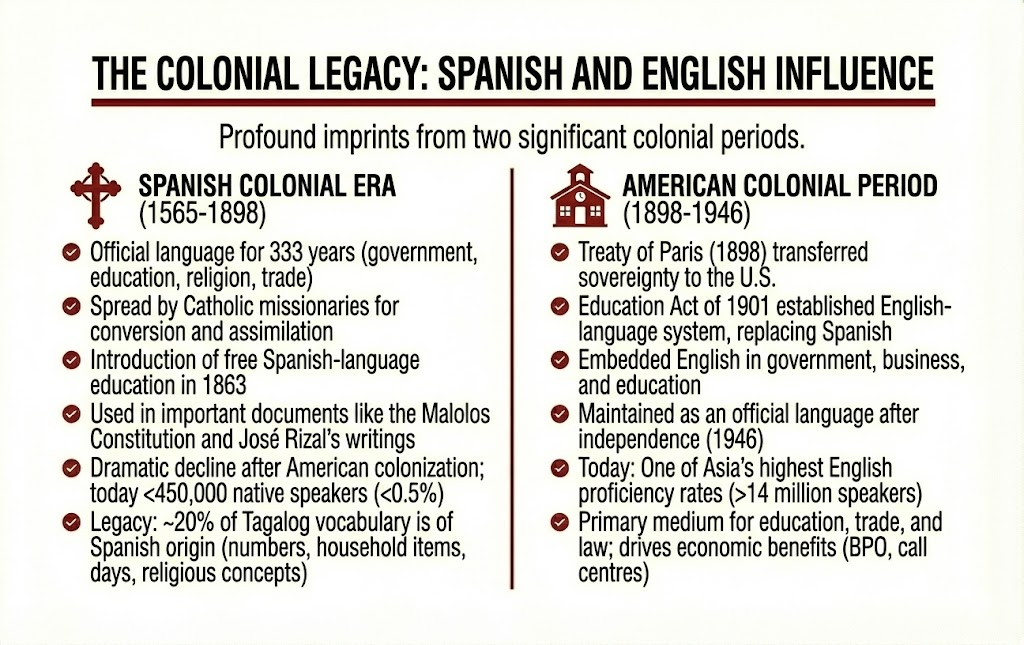
The linguistic landscape of the Philippines bears profound imprints from two significant colonial periods that have shaped the languages spoken there today.
Spanish Colonial Era (1565-1898)
Spanish colonisation began in 1565 when conquistador Miguel López de Legazpi established the first Spanish settlement in Cebu. For 333 years, Spanish served as the official language of government, education, religion, and trade throughout the Philippines. Catholic missionaries played pivotal roles in spreading Spanish, using the language as a tool for religious conversion and cultural assimilation.
By the late Spanish colonial period, significant portions of the urban and elite populations spoke Spanish fluently. Important national documents, including the Malolos Constitution and writings by national hero José Rizal, were composed in Spanish. The introduction of free Spanish-language education in 1863 accelerated the spread of Spanish among Filipino populations.
However, Spanish influence declined dramatically following American colonisation. By 1950, only 6% of the Philippine population spoke Spanish. Today, fewer than 450,000 native Spanish speakers remain in the Philippines, representing less than 0.5% of the population. The 1987 Constitution relegated Spanish to “optional and voluntary” status, effectively ending its role as an official language.
Despite Spanish’s decline as a spoken language, its influence remains embedded in Filipino vocabulary. Approximately 20% of Tagalog words derive from Spanish origins, including standard terms for numbers, household items, days of the week, and religious concepts. This linguistic legacy means that Spanish-to-Filipino translation work requires understanding historical language evolution and contemporary usage patterns.
American Colonial Period (1898-1946)
The Treaty of Paris, signed in December 1898, transferred Philippine sovereignty from Spain to the United States. American colonial administration introduced transformative changes to Philippine linguistic practices. The Education Act of 1901 authorised the recruitment of American teachers to establish an English-language educational system, deliberately replacing Spanish as the medium of instruction.
This strategic shift embedded English deeply into Philippine society. By the time the Philippines gained independence in 1946, English had become integral to government operations, business transactions, and education. The decision to maintain English as an official language following independence reflected both practical considerations and the language’s value for international engagement.
Today, the Philippines maintains one of Asia’s highest English proficiency rates. More than 14 million Filipinos speak English, and the language serves as the primary medium of instruction in education and the language of trade and law. This English proficiency delivers substantial economic benefits, positioning the Philippines as a premier destination for business process outsourcing, international call centres, and multilingual customer support operations.
For companies requiring professional translation services, the Philippines’ strong English foundation simplifies English-to-Filipino translation projects while creating demand for services that bridge Filipino languages with other Asian and European languages.
Chavacano: The Spanish-Based Creole
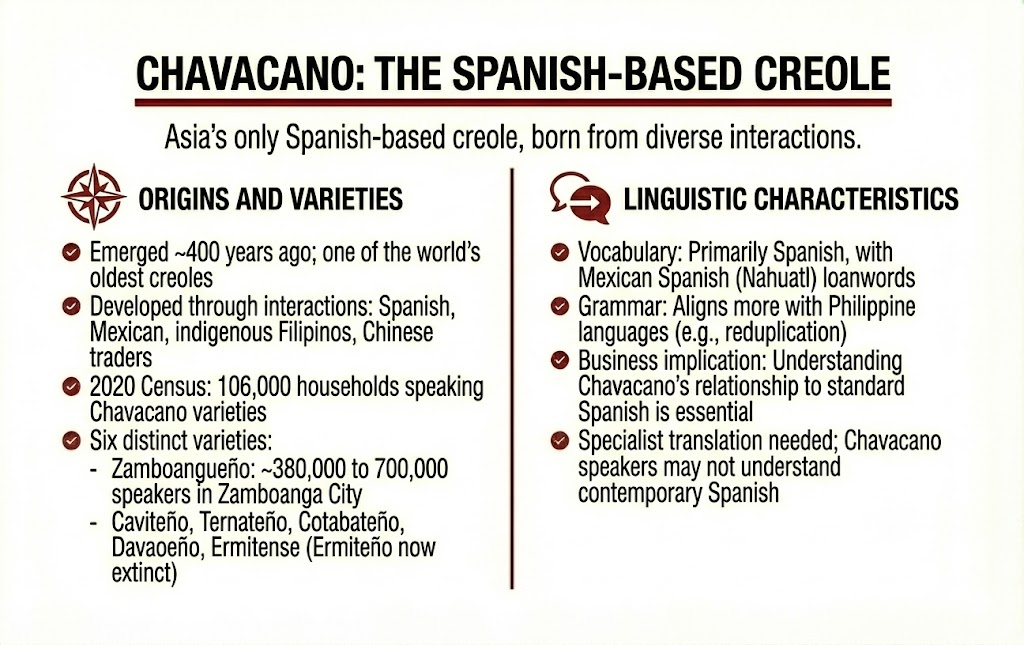
Among the Philippines’ linguistic diversity, Chavacano (or Chabacano) stands out as Asia’s only Spanish-based creole language. This distinctive language family comprises several varieties spoken across the Philippines, with the Zamboanga City variant having the highest concentration of speakers.
Origins and Varieties
Chavacano emerged approximately 400 years ago, making it one of the world’s oldest creole languages. The language developed through interactions between Spanish colonisers, Mexican soldiers, indigenous Filipinos, and Chinese traders, particularly in locations of military and strategic importance to Spanish colonial administration.
The 2020 Census recorded 106,000 households speaking Chavacano varieties. Linguistic classifications identify at least six distinct Chavacano varieties:
- Zamboangueño: Spoken by approximately 380,000 to 700,000 people in Zamboanga City and surrounding regions
- Caviteño: Found in Cavite City on Manila Bay
- Ternateño: Spoken in Ternate, Cavite
- Cotabateño, Davaoeño, and Ermitense: Other regional varieties with smaller speaker populations
Ermiteño, once spoken in Manila’s Ermita district, is now apparently extinct, highlighting the vulnerability of minority language varieties.
Linguistic Characteristics
Chavacano derives most of its vocabulary from Spanish, with Mexican Spanish influence evident through Nahuatl loanwords. However, the language’s grammatical structures align more closely with those of Philippine languages, incorporating features such as reduplication common to Malayo-Polynesian languages.
For businesses requiring Spanish translation services in the Philippines, understanding Chavacano’s relationship to standard Spanish proves essential. Whilst vocabulary shows Spanish origins, Chavacano speakers may not understand contemporary Spanish, and translation work requires specialists familiar with this unique linguistic blend.
Taglish: The Modern Philippine Lingua Franca
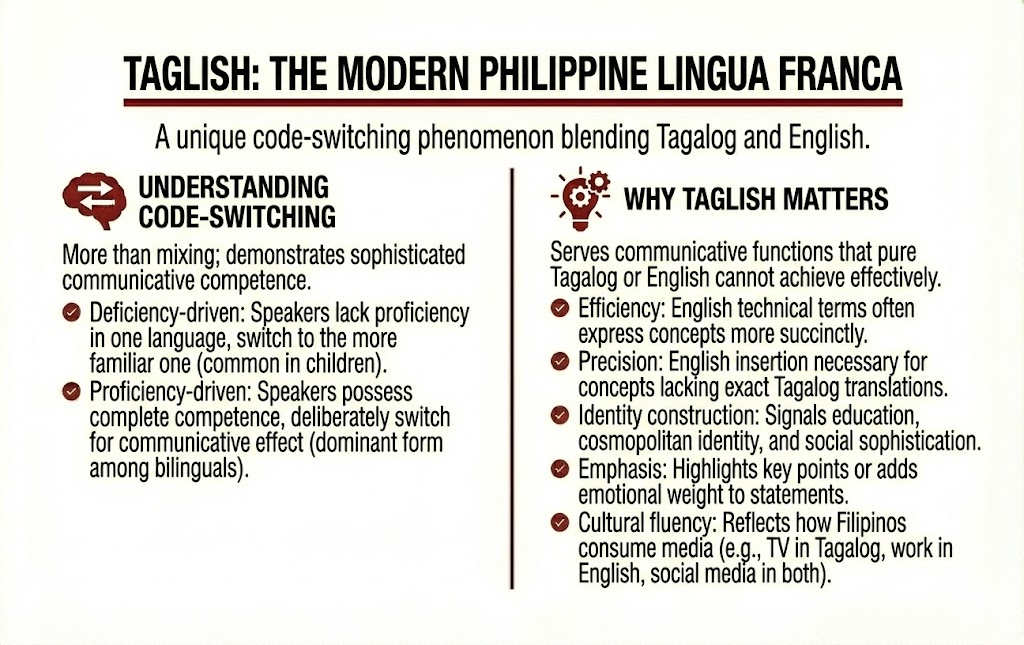
Perhaps the most distinctive feature of contemporary Philippine language use is Taglish (or Englog). This code-switching phenomenon blends Tagalog and English within single conversations and even individual sentences. This linguistic practice has become so widespread that it now functions as the de facto lingua franca among urbanised and educated Filipinos.
Understanding Code-Switching
Taglish represents more than simple language mixing; it demonstrates sophisticated communicative competence. Linguistic researcher Maria Lourdes S. Bautista identifies two types of code-switching in the Philippines:
- Deficiency-driven code-switching occurs when speakers lack proficiency in one language and switch to their more familiar tongue. This pattern appears commonly among young children learning both languages simultaneously.
- Proficiency-driven code-switching occurs when speakers possess complete competence in both languages and deliberately switch between them for communicative effect. This represents the dominant form of code-switching in the Philippines, where fully bilingual speakers seamlessly alternate between Tagalog and English.
Why Taglish Matters
Taglish serves multiple communicative functions that pure Tagalog or English cannot achieve as effectively:
- Efficiency: English technical terms often express concepts more succinctly than Tagalog equivalents
- Precision: Certain concepts lack exact Tagalog translations, making English insertion necessary for clarity
- Identity construction: Code-switching signals education, cosmopolitan identity, and social sophistication
- Emphasis: Switching languages can highlight key points or add emotional weight to statements
- Cultural fluency: Taglish reflects how Filipinos consume media, TV in Tagalog, work in English, and social media in both
For businesses developing multilingual marketing campaigns targeting Philippine audiences, understanding Taglish proves crucial. Pure Tagalog content may sound overly formal or artificial to urban Filipino consumers, whilst English-only content can feel disconnected from local culture. Strategic code-switching in marketing materials creates authentic connections with target audiences.
Companies requiring transcreation services rather than literal translation should work with Philippine language specialists who understand how Taglish operates in different contexts, from casual social media posts to professional business communications.
Endangered Languages and Preservation Challenges
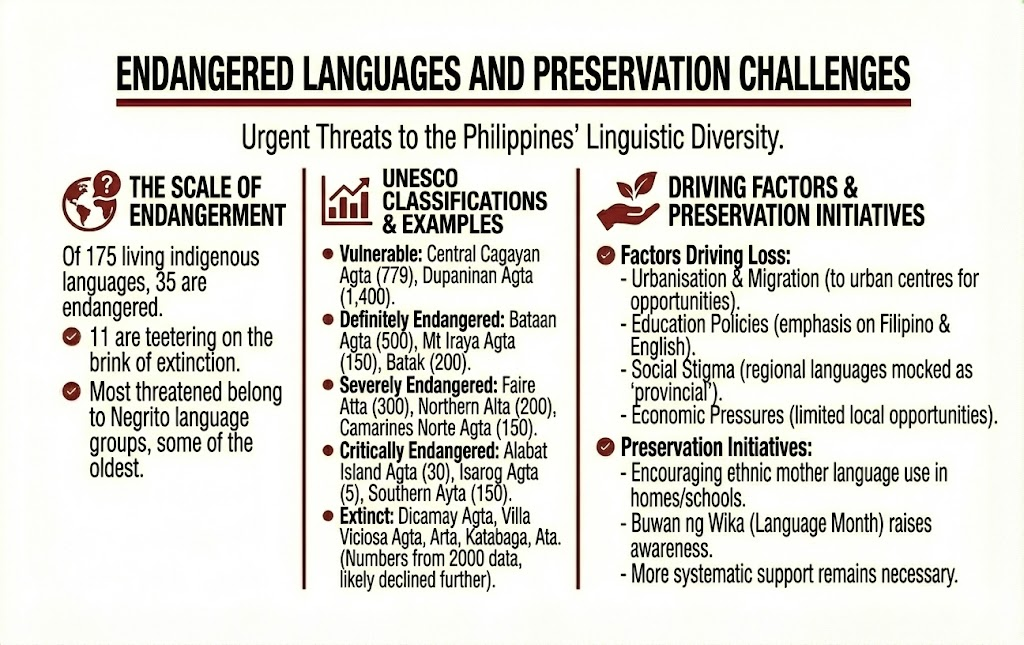
Whilst some Philippine languages thrive, many face existential threats. The linguistic diversity that makes the Philippines remarkable also includes numerous endangered and critically endangered languages requiring urgent preservation efforts.
The Scale of Endangerment
UNESCO and linguistic research organisations have documented alarming trends in the endangerment of the Philippine language. Of the Philippines’ 175 living indigenous languages, 35 are classified as endangered, with 11 teetering on the brink of extinction. Most threatened languages belong to Negrito language groups, some of the oldest languages spoken in the Philippine archipelago.
UNESCO’s endangerment classifications reveal the crisis’s severity:
Vulnerable Languages:
- Central Cagayan Agta: 779 speakers (2000 data)
- Dupaninan Agta: 1,400 speakers
Definitely Endangered:
- Bataan Agta: 500 speakers
- Mt Iraya Agta: 150 speakers
- Batak: 200 speakers
Severely Endangered:
- Faire Atta: 300 speakers
- Northern Alta: 200 speakers
- Camarines Norte Agta: 150 speakers
Critically Endangered:
- Alabat Island Agta: 30 speakers
- Isarog Agta: 5 speakers
- Southern Ayta: 150 speakers
Extinct Languages:
- Dicamay Agta
- Villa Viciosa Agta
- Arta
- Katabaga
- Ata
These speaker numbers, recorded in 2000, have likely declined further, intensifying the urgency of preservation.
Factors Driving Language Loss
Several interconnected factors accelerate Philippine language endangerment:
- Urbanisation and Migration: As rural populations migrate to Metro Manila and other urban centres, they often abandon native languages in favour of Filipino and English to access education and employment opportunities.
- Education Policies: The national emphasis on Filipino and English in public education, government, and media marginalises regional languages, creating generational discontinuity in language transmission.
- Social Stigma: Regional accents and languages face mockery as “provincial” in academic and professional settings, pressuring speakers to suppress their mother tongues in favour of standardised Filipino or English.
- Economic Pressures: Limited economic opportunities in areas where endangered languages predominate drive youth toward urban centres, where language maintenance becomes increasingly complex.
Preservation Initiatives
Efforts to preserve endangered Philippine languages include encouraging the use of ethnic mother languages in homes and schools before introducing Filipino and English. The Philippines’ celebration of Buwan ng Wika (Language Month) each August raises awareness of linguistic diversity, though more systematic support remains necessary.
For language service providers and translation technology companies, supporting endangered language documentation and preservation represents both a social responsibility and an opportunity to safeguard irreplaceable linguistic heritage.
Immigrant Languages: The Global Connection
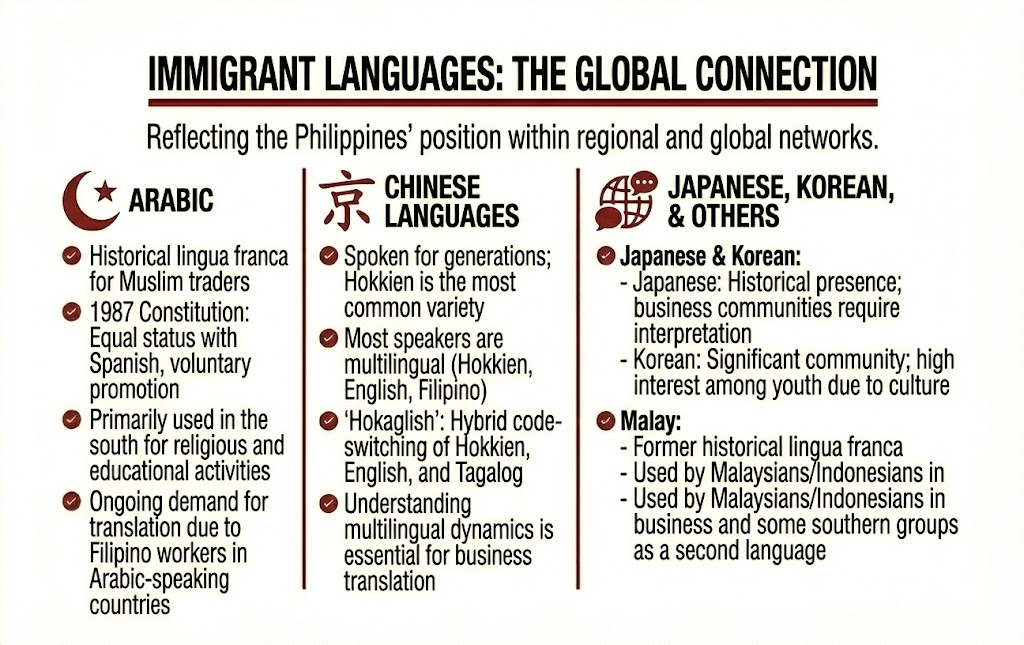
Beyond indigenous languages and colonial inheritances, the Philippines hosts several immigrant languages that reflect the country’s position within regional and global networks.
Arabic
Arabic has been spoken in the Philippines for centuries, historically serving as a lingua franca for Muslim traders throughout the Malay Archipelago. The 1987 Constitution grants Arabic equal status with Spanish, mandating its promotion on a voluntary basis.
Today, Arabic primarily appears in the southern Philippines for religious activities and educational purposes, with limited use in daily conversation. However, the substantial Filipino worker population in Arabic-speaking countries creates ongoing demand for Arabic translation and interpretation services.
Chinese Languages
Filipinos with Chinese ancestry have spoken multiple Chinese languages for generations, with Hokkien Chinese representing the most common variety. Most Hokkien speakers also speak English and/or Filipino, often as their primary languages, demonstrating the multilingual capabilities of Philippine Chinese communities.
Code-switching among Hokkien, English, and Tagalog creates hybrid linguistic forms locally termed “Hokaglish”, an extension of the Taglish phenomenon incorporating Chinese elements. For businesses engaged in Chinese-to-Filipino translation work, understanding these multilingual dynamics proves essential for accurate, culturally appropriate communication.
Japanese, Korean, and Other Languages
- Japan maintains a presence in the Philippines dating to the 11th century CE, with contemporary Japanese business communities concentrated in Metro Manila requiring ongoing Japanese interpretation services.
- Korean speakers, including Korean expatriates and Philippine-born individuals of Korean ancestry, form another significant immigrant language community. The popularity of Korean culture in the Philippines has intensified interest in learning Korean amongst young Filipinos.
- Malay holds historical importance as a former lingua franca throughout the Philippine archipelago, influencing many contemporary Philippine languages. Today, Malaysians and Indonesians living and conducting business in the Philippines speak Malay daily, whilst some Tausug, Sama-Bajau, and Yakan peoples along the southern border use Malay as a second language.
These immigrant languages create demand for multilingual business communication services that bridge Philippine languages with major Asian and global languages.
Translation and Interpretation Services for Philippine Languages
The Philippines’ linguistic complexity creates substantial demand for professional language services that enable effective communication across language barriers. Whether for business expansion, legal documentation, or cultural exchange, accurate translation and interpretation prove essential for success in Philippine contexts.
Why Professional Translation Matters
The Philippines presents unique translation challenges that amateur or machine translation cannot adequately address:
- Dialect Variation: Regional variations within major languages mean translators must understand not just “Tagalog” but which regional variant is used by your specific audience. Content localisation requires this granular understanding.
- Cultural Nuances: Direct translation without cultural adaptation can result in miscommunication or offence. Professional translators understand contextual appropriateness and cultural sensitivities that impact message reception.
- Code-Switching Norms: Knowing when and how to incorporate Taglish in marketing materials versus maintaining pure Filipino in formal documents requires native-level linguistic intuition.
- Technical Terminology: Specialised fields such as legal, medical, and technical translation require translators with subject-matter expertise beyond general language proficiency. Certified translation services ensure accuracy for official documents.
Types of Language Services for Philippine Markets
Businesses and organisations working with Philippine languages require diverse service types:
- Document Translation: Converting contracts, certificates, technical manuals, and business documents between English, Filipino, and regional languages whilst maintaining legal validity and technical accuracy.
- Website Localisation: Adapting multilingual websites for Philippine audiences requires more than text translation; it also involves cultural adaptation, local SEO optimisation, and an understanding of regional preferences.
- Interpretation Services: Conference interpretation enables real-time communication during business meetings, legal proceedings, medical appointments, and international conferences involving Filipino participants.
- Subtitling and Transcription: Video subtitling services make multimedia content accessible to Philippine audiences, whilst transcription services convert spoken Philippine languages into written text for documentation purposes.
- Software and App Localisation: Mobile app translation ensures digital products function appropriately for Filipino users, accounting for language, cultural preferences, and technical requirements.
Choosing the Right Translation Partner
When selecting translation services for Philippine language projects, consider these essential factors:
- Native Speaker Expertise: Work with providers employing native Filipino translators with in-country experience who understand current linguistic trends and cultural contexts.
- Industry Specialisation: Choose providers with expertise in your specific sector, whether financial translation, legal interpretation, or technical documentation.
- Quality Assurance Processes: Professional providers implement multi-step review processes, including translation, editing, and proofreading by separate linguists to ensure accuracy.
- Cultural Competence: Effective translation requires understanding not just language but cultural context, business practices, and communication norms within Philippine society.
- Technology Integration: Modern translation management systems improve efficiency and consistency whilst maintaining quality for large-scale projects.
Business Implications: Communicating Effectively in Philippine Markets
Understanding the language spoken in the Philippines directly impacts the success of companies entering or expanding into the Philippine market. Language choices influence customer engagement, brand perception, regulatory compliance, and operational effectiveness.
Market Entry Considerations
- Regional Market Targeting: Companies must determine whether to pursue nationwide strategies in Filipino and English, or focus on specific regions where Cebuano, Ilocano, or Hiligaynon might be more effective for local engagement.
- Customer Preferences: Research shows that 76% of consumers prefer purchasing products with information in their native language. For Philippine markets, this means understanding which language variants resonate most strongly with your specific customer segments.
- Competitive Differentiation: Whilst many international companies rely solely on English or basic Filipino translations, businesses that invest in high-quality, culturally nuanced translations gain competitive advantages through authentic local connections.
Regulatory and Legal Requirements
Various Philippine business activities require certified translation services for legal compliance:
- Corporate registration documents
- Contracts and agreements
- Financial reports and disclosures
- Product labelling and safety information
- Employment documentation
- Legal proceedings and court documents
Professional legal translation services ensure accuracy and legal validity whilst meeting regulatory requirements across different Philippine jurisdictions.
E-Commerce and Digital Marketing
The Philippines’ retail e-commerce market is expected to grow by an average annual rate of 15% between 2025 and 2029, creates substantial opportunities for businesses with effective multilingual digital strategies:
- Website Translation: Multilingual e-commerce platforms enable businesses to serve diverse Philippine customer segments whilst expanding throughout Southeast Asia.
- SEO Optimisation: Multilingual SEO strategies incorporating Filipino, regional language, and code-switching search patterns improve discoverability and organic traffic.
- Social Media Content: Understanding Taglish usage patterns enables authentic social media marketing that resonates with Filipino audiences across platforms.
- Content Marketing: Culturally adapted content demonstrates respect for Philippine culture whilst building brand loyalty amongst local consumers.
Communication Best Practices
Successful communication with Philippine audiences requires understanding several key principles:
- Respect Linguistic Diversity: Acknowledge that the Philippines comprises multiple language communities with distinct identities, not a monolithic “Filipino” audience.
- Balance Formality and Accessibility: Filipino business culture values both professionalism and approachability. Language choices should reflect the appropriate formality level for the context whilst remaining accessible.
- Cultural Sensitivity: Be aware of historical sensitivities around language, particularly regional pride in languages like Cebuano that historically competed with Tagalog for national language status.
- Localisation Beyond Translation: Effective communication requires adapting not just language but cultural references, imagery, examples, and communication styles to Philippine contexts. This is where transcreation proves valuable.
The Future of Philippine Languages
As the Philippines continues to develop economically and technologically, its linguistic landscape faces both opportunities and challenges that will shape the languages spoken in the Philippines for generations to come.
Globalisation and Language Shift
The Philippines’ integration into global economic systems intensifies pressure toward English proficiency, whilst simultaneously creating new platforms for regional language expression through digital media and social networking.
- English Expansion: Demand for English skills continues to grow as the Philippines maintains its position in international business process outsourcing, potentially marginalising regional languages in professional contexts.
- Digital Language Revitalisation: Social media, podcasts, and digital content creation provide new platforms for regional languages, enabling speakers to connect across geographic boundaries and younger generations to engage with heritage languages.
Technology and Language Services
Artificial intelligence translation technology presents both opportunities and limitations for Philippine languages:
- Opportunities: AI-powered translation makes basic communication more accessible and affordable, potentially supporting language learning and cross-linguistic exchange.
- Limitations: Machine translation struggles with Philippine language nuances, code-switching, and cultural context. Hybrid translation approaches combining AI efficiency with human expertise offer promising solutions that balance cost, speed, and quality.
Policy and Education
Future linguistic trends will depend significantly on education policies and government language initiatives:
- Mother Tongue-Based Education: Policies supporting early education in children’s native languages before transitioning to Filipino and English could strengthen regional language vitality.
- Language Documentation: Systematic documentation of endangered languages through academic research, digital archives, and community-driven initiatives remains critical for preservation.
- Economic Incentives: Creating economic opportunities tied to regional languages through tourism, cultural industries, and local business development could incentivise language maintenance amongst younger generations.
Conclusion: Navigating Philippine Linguistic Diversity
Understanding what language is spoken in the Philippines requires recognising that no single answer suffices. The Philippines’ linguistic landscape encompasses official languages (Filipino and English), major regional languages (Cebuano, Ilocano, Hiligaynon), the unique Spanish-based Chavacano creole, widespread Taglish code-switching, and 170+ other languages, including critically endangered indigenous tongues.
For businesses, this diversity presents both challenges and opportunities. Companies that invest in high-quality professional translation and interpretation services gain competitive advantages through authentic cultural connections, regulatory compliance, and effective communication with diverse Philippine audiences. Whether expanding into Philippine markets, communicating with Filipino stakeholders, or serving Filipino customers internationally, language choices directly impact success.
The Philippines’ multilingualism reflects its complex history, diverse geography, and dynamic contemporary culture. By approaching Philippine language diversity with respect, cultural sensitivity, and professional expertise, businesses and organisations can build meaningful connections that transcend language barriers whilst contributing to the preservation and celebration of this remarkable linguistic heritage.
Ready to connect with Philippine audiences through professional translation services?
Elite Asia specialises in Filipino, Tagalog, and regional Philippine language translation and interpretation services tailored for businesses expanding across Southeast Asia. Our native-speaking linguists combine language expertise with cultural knowledge and industry specialisation to deliver accurate, culturally appropriate translations that resonate with your target audiences.
Whether you need website localisation, document translation, conference interpretation, or comprehensive multilingual marketing solutions, our team delivers exceptional results that help your business succeed in diverse Philippine markets.
Request a free quotation today and discover how Elite Asia’s translation and interpretation services can bridge language barriers, enhance your brand presence, and unlock opportunities throughout the Philippines and Southeast Asia.
Elite Asia’s team covers 30+ languages across Singapore, Malaysia, Hong Kong, Japan, South Korea, China, Taiwan, and Thailand — with full technical support, ISO 9001:2015 certification, and a dedicated MICE division ready to support your next event.



Frequently Asked Questions (FAQs)
1. What is the official language of the Philippines?
The Philippines has two official languages: Filipino, standardized from Tagalog, and English, a holdover from American colonial rule.
2. How many languages are spoken in the Philippines?
The country is home to more than 170 languages, including regional tongues like Cebuano, Ilocano, and Hiligaynon, plus numerous critically endangered indigenous languages.
3. What is “Taglish” and why do Filipinos use it?
Taglish refers to the widespread practice of code-switching between Tagalog and English in everyday conversation, reflecting the bilingual fluency common across the country.
4. Is Cebuano more widely spoken than Tagalog in some regions?
Yes, Cebuano (also called Bisaya) dominates in the Visayas and parts of Mindanao and has roughly 25.5 million native speakers, making it a major rival to Tagalog-based Filipino.
5. What is Chavacano and where is it spoken?
Chavacano is a unique Spanish-based creole language spoken mainly in Zamboanga, standing out as one of the few Spanish-derived languages in Asia.


Last Modified:
Contact Us
Working across languages? Our team can support your company’s translation and interpretation needs. For business enquiries, get in touch to explore what fits your requirements.
Request a Quote