Local SEO: What Is It and How to Do It for 2026
Local SEO helps your business appear in front of nearby customers when they search online. Whether you run a café or other businesses, understanding local SEO in 2026 is no longer optional — it is essential.
What Is Local SEO?
Local SEO, or local search engine optimisation, is the process of improving your business’s visibility in geographically relevant search results. When someone types “digital marketing agency near me” or “best restaurant in Jakarta,” search engines like Google display results based on the user’s location. Local SEO makes sure your business shows up in those results.
For instance, it can help your Google Business Profile rank higher in the local pack, which is beneficial for increasing visibility and reaching potential customers in your area.
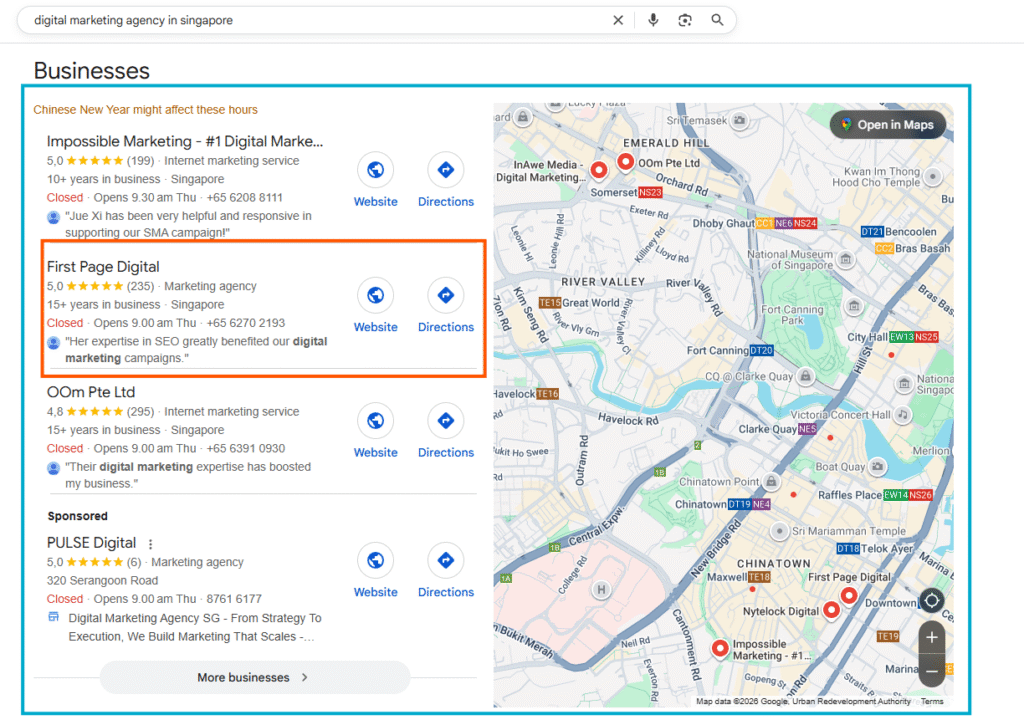
Unlike standard SEO, which targets a broad, global audience, local SEO focuses on a specific city, region, or neighbourhood. It involves optimising your website, your Google Business Profile (GBP), and your online reputation so that local customers can find you quickly and easily.
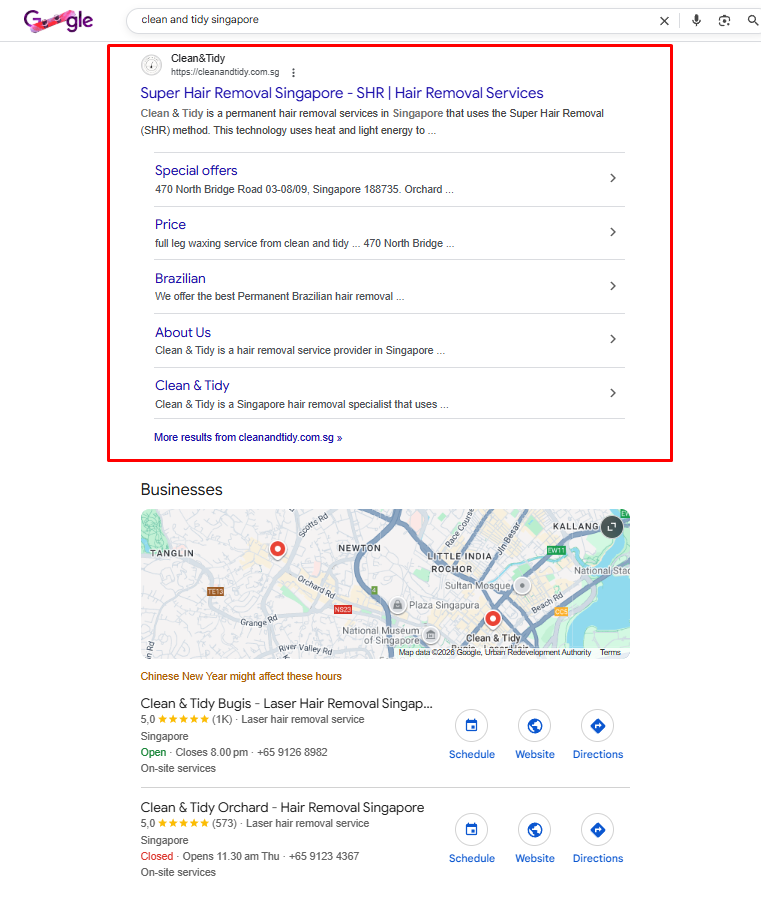
For businesses that serve a local customer base — whether online or in person — local SEO is the most direct route to qualified traffic. It is not about reaching everyone; it is about reaching the right people at the right time.
Why Is Local SEO Important?
Understanding why local SEO is important starts with knowing how people search today. Studies consistently show that the majority of consumers use search engines to find local businesses before making a purchase decision.
Here is why local SEO matters in 2026:
- Targets high-intent users: People searching locally are often ready to act, whether that means calling, visiting, or buying
- Builds trust and credibility: Appearing at the top of local results signals authority and reliability to potential customers
- Drives foot traffic and phone calls: Local pack listings directly generate direction requests and calls from Google Maps
- Provides a competitive edge: Many small and mid-sized businesses still under-invest in local SEO, meaning early movers gain a significant advantage
- Improves conversion rates: Local searchers convert at higher rates because their intent is specific and immediate
For those wondering why local SEO is important for small businesses specifically, the answer is simple: small businesses often cannot compete on large advertising budgets, but a well-optimised local presence levels the playing field. A small plumber in Penang can outrank a national brand if their local SEO is stronger.
How Local SEO Works
How local SEO works comes down to three fundamental signals that Google evaluates: relevance, proximity, and prominence.
- Relevance refers to how well your business matches what the user is searching for. This is influenced by your GBP category, website content, and keywords used.
- Proximity refers to how close your business is to the user conducting the search, or to the location mentioned in their query.
- Prominence refers to how well-known and trusted your business is online, factored through reviews, links, citations, and overall online presence.
These three pillars work together. A business that is highly relevant and prominent but far away may still rank below a closer, well-optimised competitor. Conversely, a business right next door with a poorly maintained GBP and no reviews will lose to one that has invested in its local presence.
Explore Elite Asia’s On-Site & Off-Site SEO services to see how structured SEO support can help your business gain meaningful local visibility.
How Google Determines Local Ranking
Google’s local ranking algorithm in 2026 weighs several signals differently depending on whether the result appears in the Local Pack/Maps, organic search, or AI-powered search.
Local Pack / Google Maps Rankings
| Ranking Signal | Weight |
|---|---|
| Google Business Profile (GBP) Signals | 32% |
| Review Signals | 20% |
| On-Page Signals | 15% |
| Behavioural Signals | 9% |
| Link Signals | 8% |
| Citation Signals | 6% |
| Personalisation | 6% |
| Social Signals | 4% |
Local Organic Rankings
| Ranking Signal | Weight |
|---|---|
| On-Page Signals | 33% |
| Link Signals | 24% |
| Behavioural Signals | 10% |
| Personalisation | 8% |
| GBP Signals | 7% |
| Citation Signals | 7% |
| Review Signals | 6% |
| Social Signals | 5% |
AI Search Visibility (ChatGPT, Google AI, Perplexity)
| Ranking Signal | Weight |
|---|---|
| On-Page Signals | 24% |
| Review Signals | 16% |
| Citation Signals | 13% |
| Link Signals | 13% |
| GBP Signals | 12% |
| Personalisation | 9% |
| Social Signals | 9% |
| Behavioural Signals | 4% |
These differences are important. If you want to rank in the Local Pack, your GBP is your number one priority. If you want to rank in AI search tools, you need strong reviews, consistent citations, and authoritative on-page content.
How Did Search Engines Evolve?
Search engines began as simple keyword-matching tools in the 1990s. Early engines like AltaVista ranked pages purely by keyword frequency, which was easily gamed.
Google changed the game by introducing PageRank — an algorithm that valued quality backlinks as “votes” of trust. Over time, Google added behavioural signals, mobile-first indexing, and semantic understanding through updates like Hummingbird and BERT.
Today, in 2026, Google’s algorithm factors in AI interpretation, entity understanding, and conversational search intent. This evolution means local businesses must think beyond keywords and focus on building a well-rounded, trusted online presence.
Read about the top Chinese search engines and their SEO strategies — a useful comparison that illustrates how different search engines prioritise different ranking signals.
So How Does Google Work?
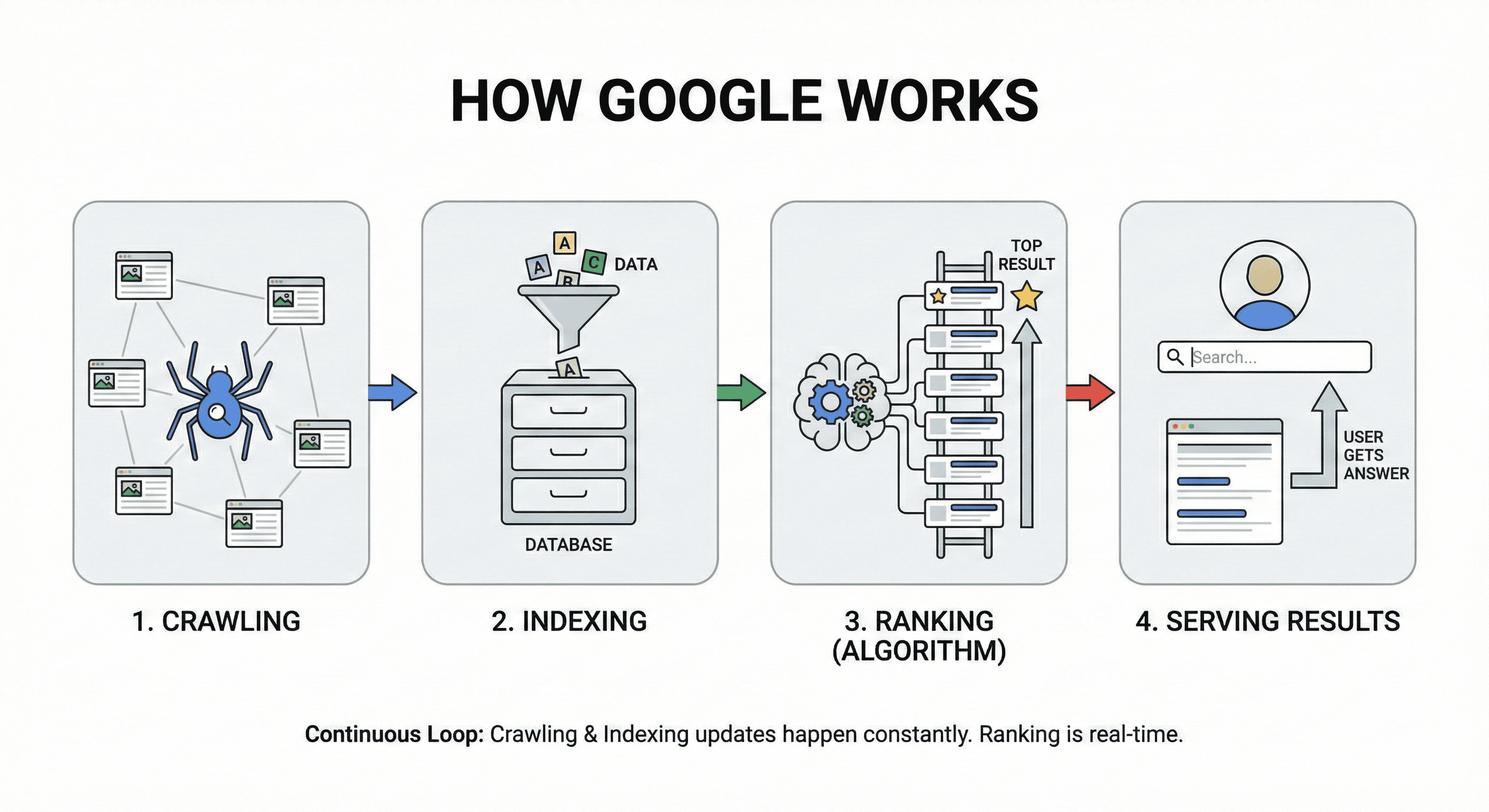
Google works by sending automated programmes called “crawlers” or “spiders” to scan and index web pages across the internet. It then stores this information in a massive index and uses its algorithm to rank pages based on hundreds of signals.
For local search, Google also pulls data from its own Google Business Profile system, external directories (like Yelp or Yellow Pages), review platforms, and user behaviour data (such as click-through rates, time on page, and conversion actions like calls or direction requests).
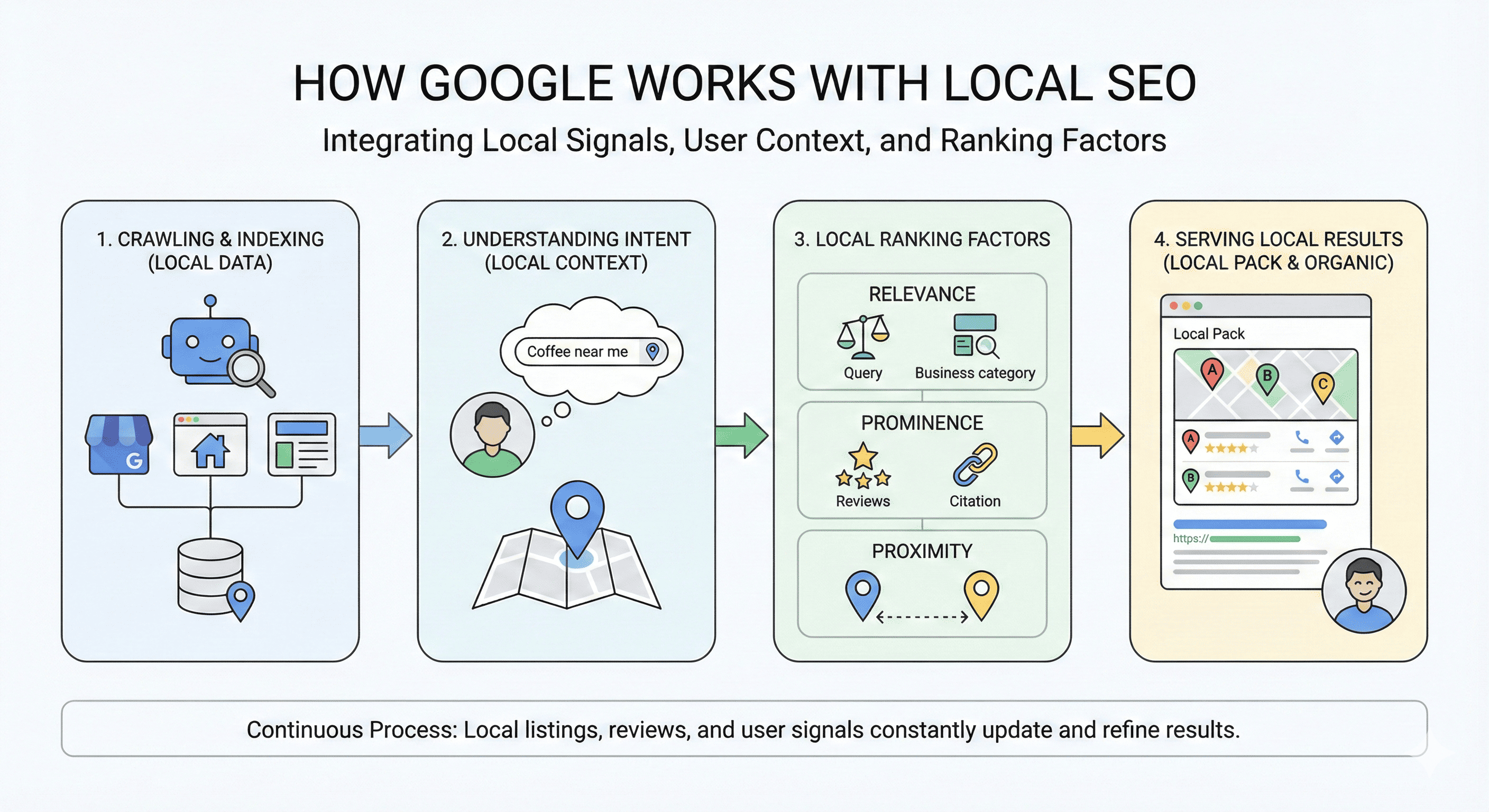
Understanding this process helps explain how to improve local SEO rankings — because every signal you improve (GBP completeness, review count, on-page keywords, backlinks) feeds directly into what Google uses to rank you.
How Google Ranks Search Results
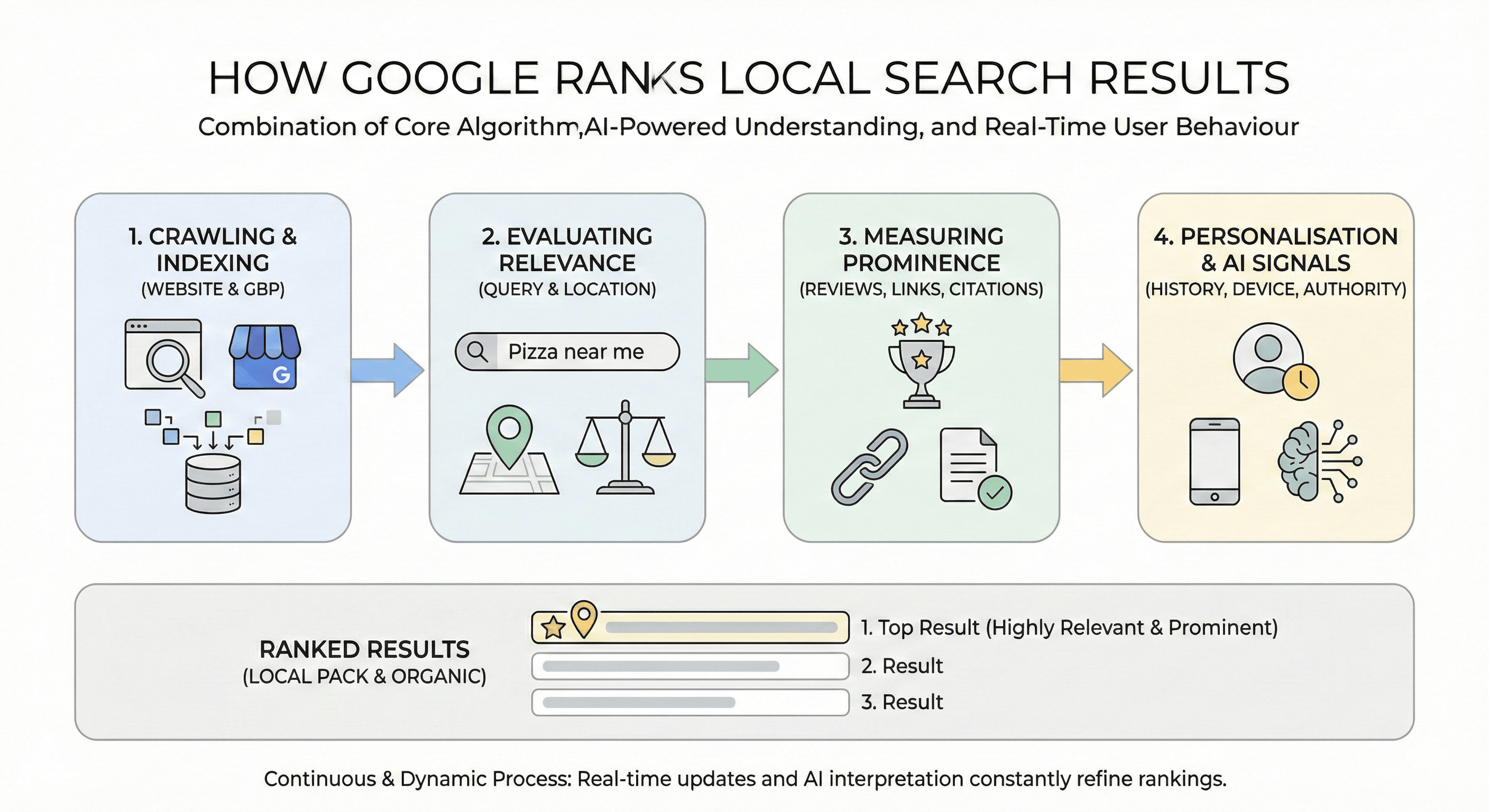
Google ranks search results using a combination of its core algorithm, AI-powered understanding, and real-time user behaviour. In local search specifically, the process involves:
- Crawling and indexing your website and GBP listing
- Evaluating relevance against the user’s query and location
- Measuring prominence through reviews, links, and citations
- Factoring in personalisation based on the user’s search history and device
- Applying AI signals to interpret entity relationships and content authority
Local SEO Is a Different Pattern
Standard SEO and local SEO share many foundations, but local SEO has its own distinct patterns and priorities. The most obvious difference is the Google Business Profile — a tool that does not exist in standard SEO but is the single most important factor for local pack rankings.
Local SEO also relies heavily on NAP consistency (Name, Address, Phone number) across all online directories and citations. Inconsistencies in your business name, address, or phone number across platforms confuse Google and damage your rankings.
Additionally, local SEO requires location-specific content — landing pages, blog posts, and service pages that mention the city or region you serve. This content signals to Google that your business is genuinely relevant to a specific geographic area.
What Is the Difference Between SEO and Local SEO?
What is the difference between SEO and local SEO? The core distinction lies in geographic intent and audience scope.
| Dimension | Standard SEO | Local SEO |
|---|---|---|
| Audience | National or global | City, region, or neighbourhood |
| Primary Goal | Rank for broad industry keywords | Rank for location-based searches |
| Key Tool | Website + backlinks | Google Business Profile + citations |
| Result Type | Organic blue links | Local Pack, Maps, organic local |
| Review Importance | Moderate | Critical |
| NAP Consistency | Not required | Essential |
| Content Focus | Topical authority | Location + topical relevance |
| Typical Business | E-commerce, publishers, SaaS | Restaurants, clinics, agencies, retail |
Both types of SEO complement each other — a strong local SEO strategy will also improve your standard organic rankings for location-based queries.
Learn the difference between SEO translation and SEO localisation — an important read for businesses expanding into multilingual markets.
Who Benefits From Local SEO and Why?
Local SEO is powerful for any business that serves customers within a specific geographic area. The following types of businesses see the greatest returns:
- Restaurants and cafés: “Near me” food searches are among the highest-volume local queries globally
- Healthcare providers: Clinics, dentists, and pharmacies rely on local search for patient acquisition
- Legal and professional services: Lawyers and accountants are searched locally with high conversion intent
- Retail stores: Physical shops benefit enormously from “open now” and “near me” searches
- Home services: Plumbers, electricians, and cleaners are almost exclusively discovered via local search
- Marketing and digital agencies: Businesses looking for local service partners frequently use location-based queries
- B2B businesses: Companies seeking regional suppliers, manufacturers, or service providers use local search more than many B2B marketers realise
Discover how Elite Asia’s global marketing strategies can integrate with local SEO to support both regional and international growth.
Who Won’t Benefit From Local SEO?
Not every business needs to invest heavily in local SEO. Businesses that are unlikely to benefit include:
- Purely online businesses with no physical presence or service area: If you serve customers globally with no geographic focus, standard SEO is more relevant
- Wholesale businesses that do not engage directly with local consumers: B2B wholesalers serving national distributors typically gain more from standard SEO
- Fully remote SaaS companies: Software products without a local service element rarely benefit from local pack optimisation
- Global e-commerce platforms: Sites selling to international audiences need international SEO, not local SEO
That said, even many “global” businesses have regional offices or service hubs that could benefit from local visibility in those cities.
8 Steps on How to Do Local SEO
How to do local SEO can be broken into eight clear, actionable steps.
Step 1: Optimise Your Google Business Profile and Keep Your Business Profile Active
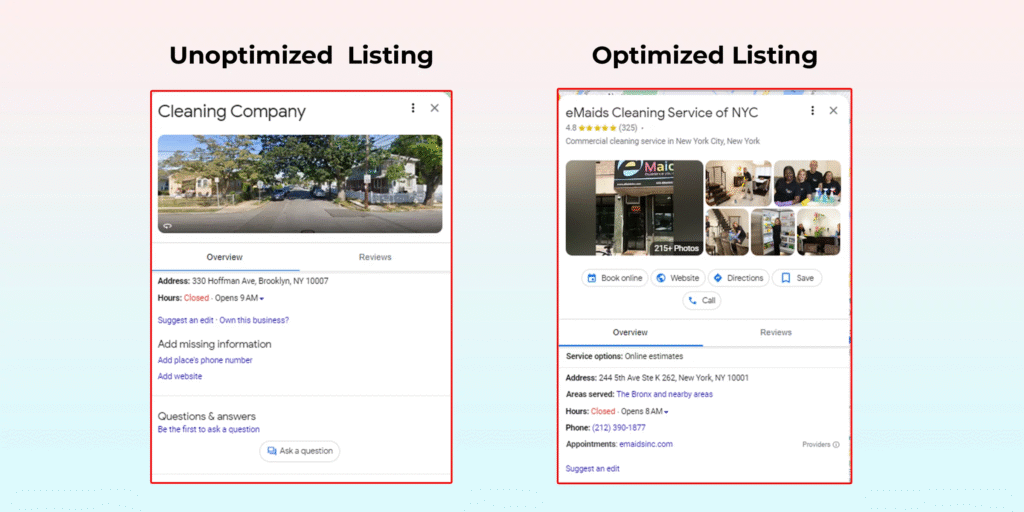
Your GBP is the foundation of local SEO. Claim your listing, verify your business, and fill out every field completely — business name, address, phone, hours, website, category, services, and photos. A fully optimised GBP accounts for 32% of local pack rankings.
An active Business Profile shows Google and users that you’re an engaged business owner, which can improve rankings and attract more customers.
Keeping your business details updated (e.g., holiday hours or new addresses) is one of the best ways to stay active and ensure users have accurate and comprehensive information.
Also consider posting Business Profile updates about news, events, and offers.
Use Semrush’s Social Content AI to generate fresh, on-brand ideas for GBP posts.

Then, turn those ideas into ready-to-publish content using AI.
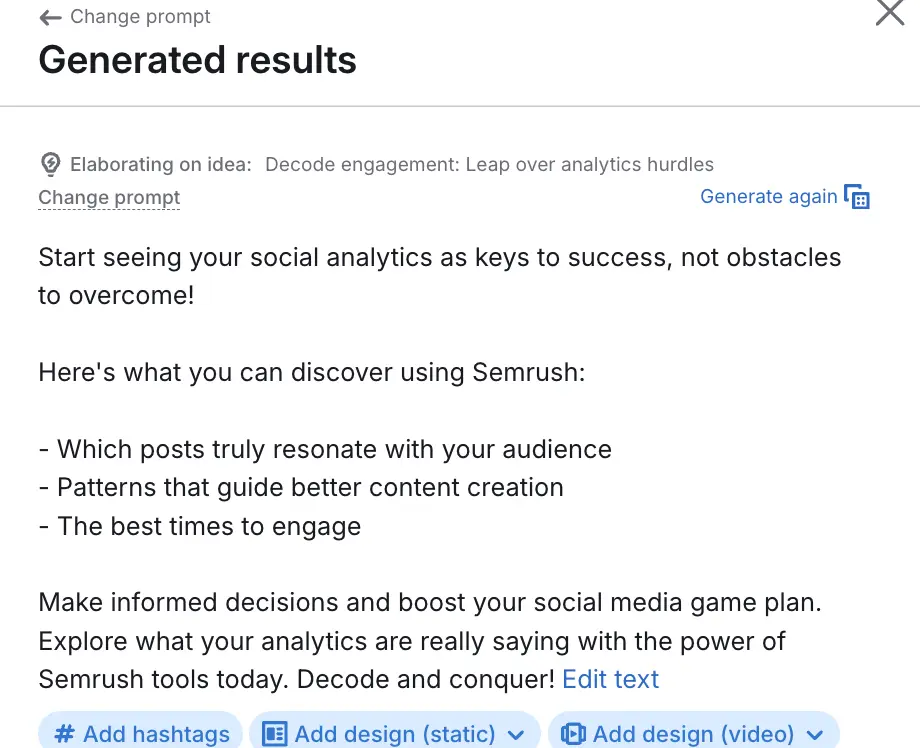
Schedule/publish these posts directly from an interactive calendar using the Social Poster tool.
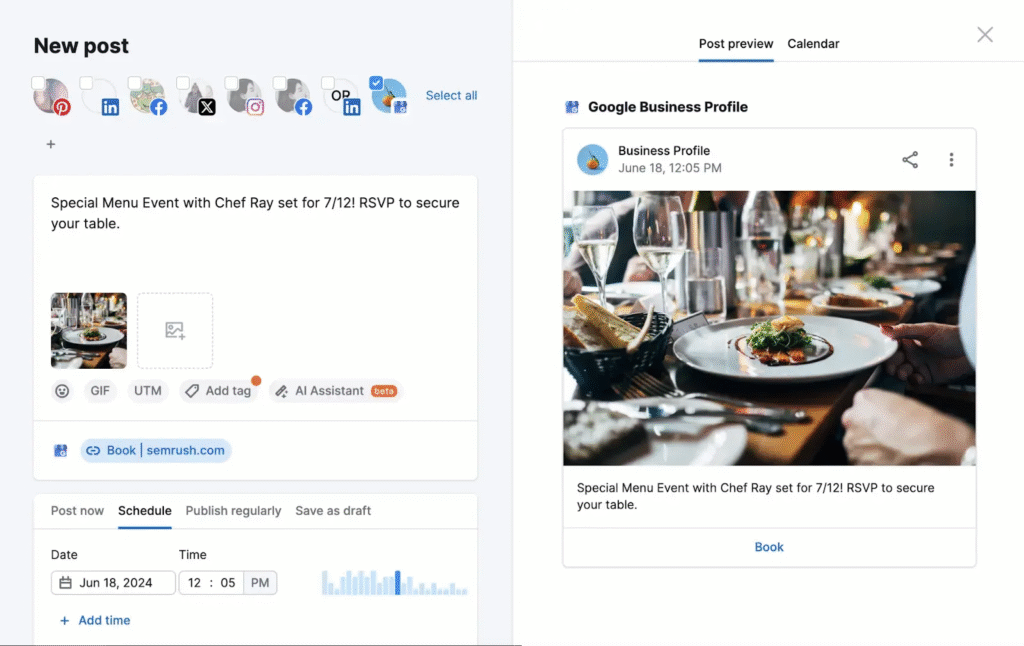
Both tools are part of Semrush’s Social Toolkit, which is a smart AI solution built to simplify and automate social media marketing.
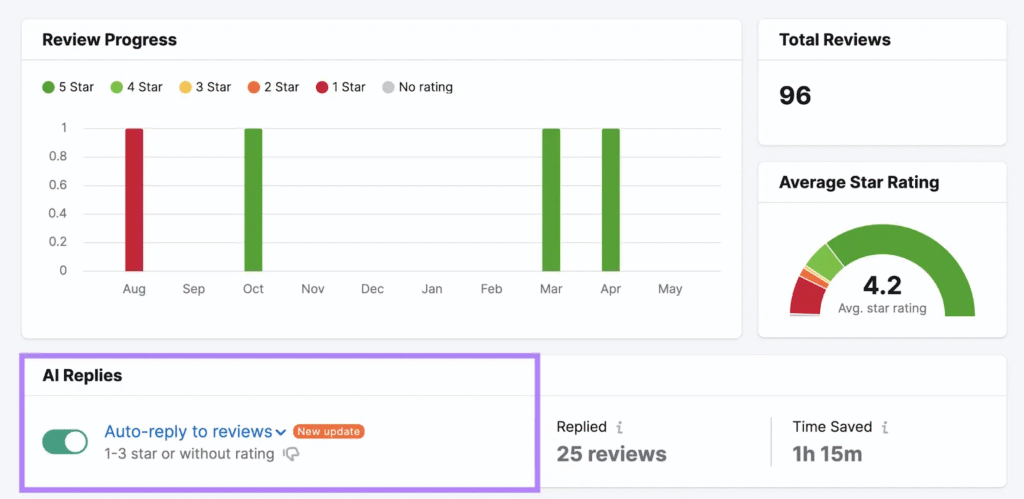
Respond to Google reviews as well. To show you value customer feedback and provide you with opportunities to address negative comments when necessary.
Semrush’s Review Management tool allows you to set up automatic, AI-generated replies.
Step 2: Conduct Local Keyword Research & Competitor Research
How to do keyword research for local SEO starts with identifying what your target customers are actually searching for in your area. Use tools like Google Keyword Planner, SEMrush, or Ahrefs. Switch to your target market’s region and look for:
- Localised short-tail keywords (e.g., “digital marketing Singapore”)
- Long-tail conversational queries (e.g., “affordable SEO agency in Kuala Lumpur”)
- “Near me” and “open now” variations
How to identify long-tail keywords for local SEO involves looking at Google’s autocomplete suggestions, the “People Also Ask” box, and the related searches at the bottom of results pages. These reveal exactly how real users phrase their queries.
How to find keywords for local SEO is also made easier by reviewing your competitors’ GBP listings and the keywords they appear for in the local pack. Tools like BrightLocal or Whitespark can surface these insights.
#1 Research Competitors with Semrush Tool
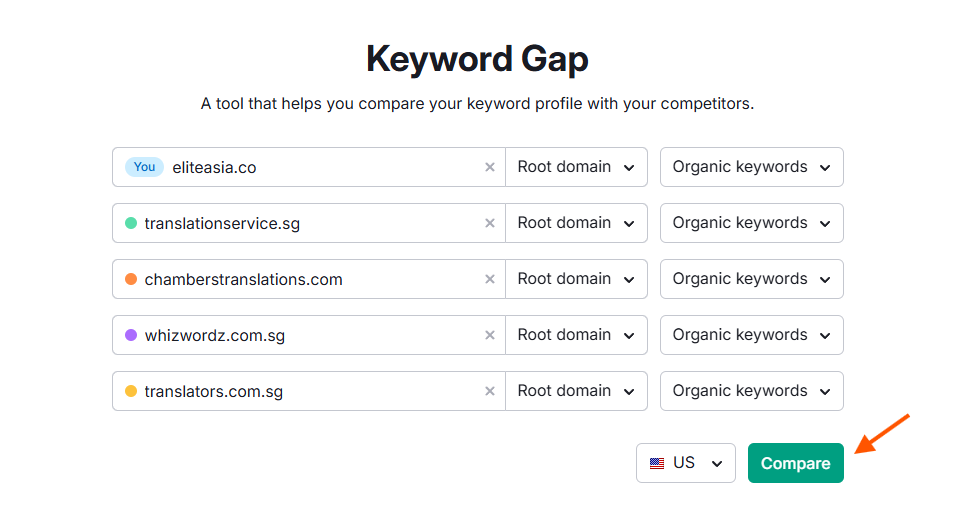
Use Semrush’s Keyword Gap tool to identify the keywords your competitors are ranking for.
Enter your website and up to four other websites. The tool provides suggestions to assist you, and it does so in a variety of ways.
Select your target country and click “Compare.”
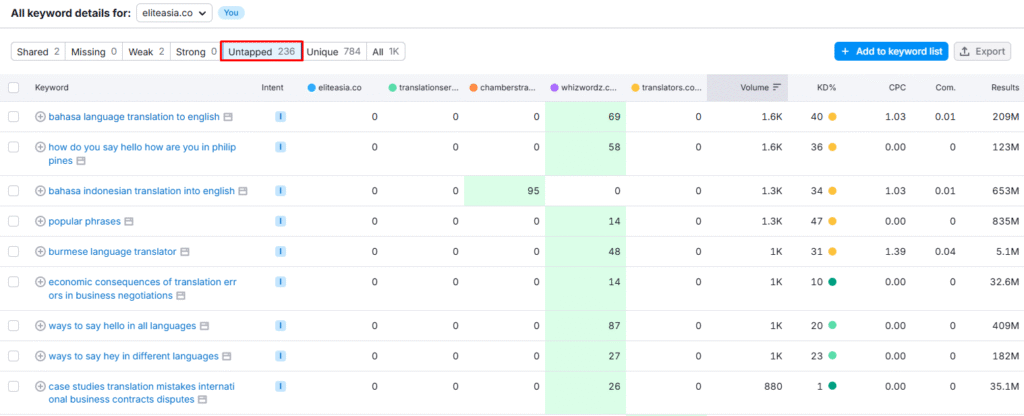
Scroll to the keyword table. Select “Untapped.” This will reveal keywords that at least one competitor ranks for but you don’t. These will highlight potential opportunities.
To exclude irrelevant keywords, such as those containing competitors’ business names, select “Advanced filters.”
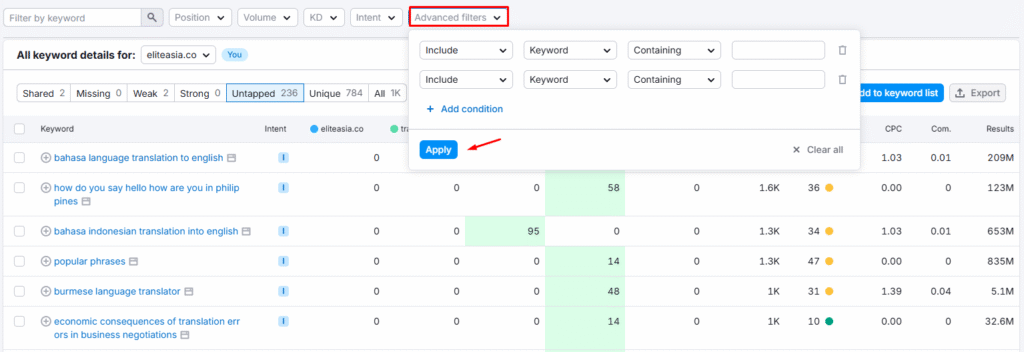
You can also filter based on the following:
- Volume: The keyword search volume is the average number of monthly searches for a keyword.
- KD%: The keyword difficulty score indicates how difficult it is to rank highly for the keyword.
- Intent: The search’s primary function (whether it is transactional, commercial, navigational, or informational)
The best keywords for your local SEO strategy can be identified by filtering with the above metrics and analysing the results.
#2 Use Google Autocomplete
Google Autocomplete predicts search queries as you type, and it allows you to discover valuable long-tail keywords for local SEO since predictions partly depend on your location.
For instance, searching for “best [product or service] in” followed by the name of a city might produce the following suggestions:
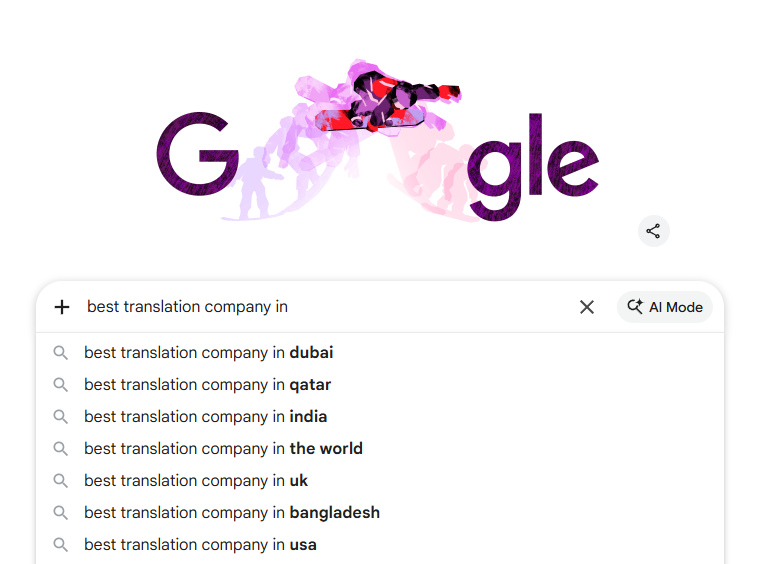
These locations are in close proximity to the searcher.
To find valuable local keywords, start typing terms related to your business. This will show you local keyword suggestions:
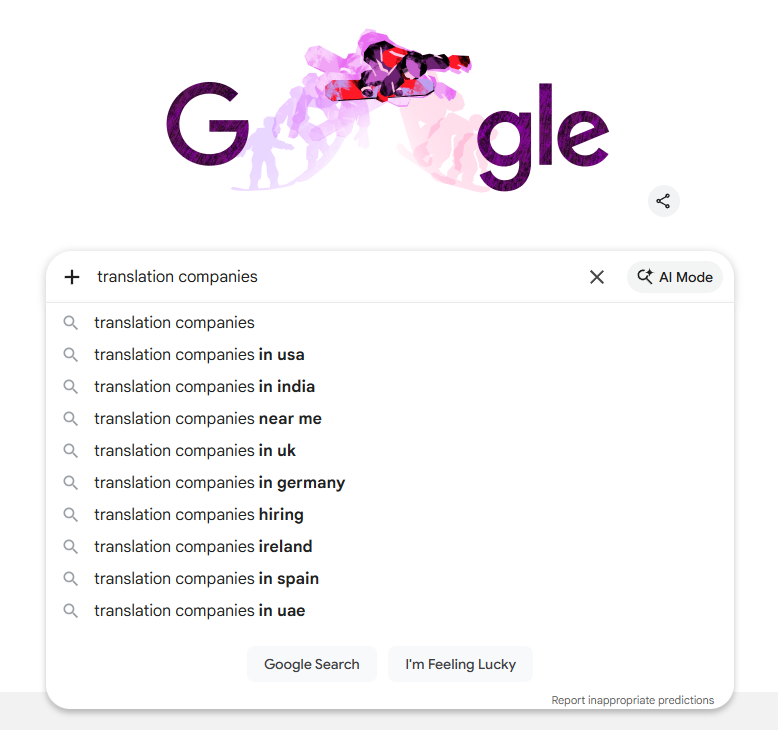
Using local modifiers, such as the name of a particular city, can reveal more useful keywords.
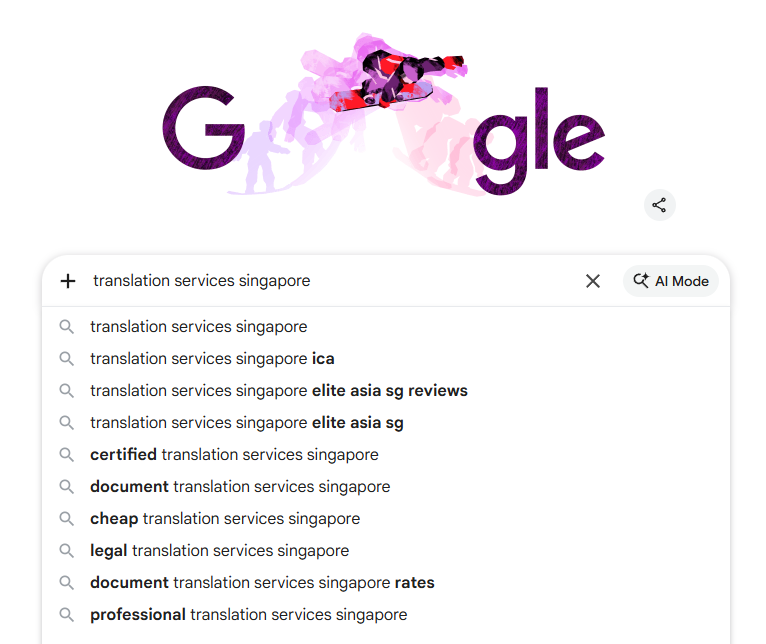
To build your list for local SEO, experiment with different local keywords.
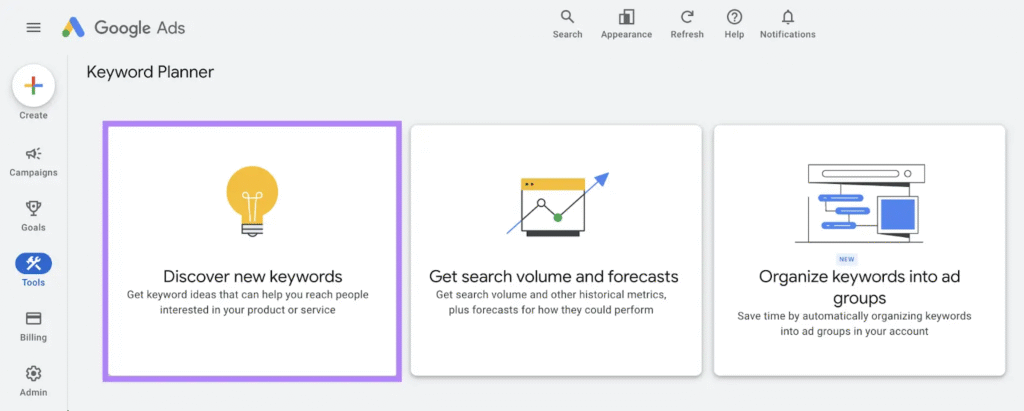
#3 Use Google Keyword Planner
The Google Keyword Planner is a tool used for researching keywords for paid search campaigns. However, it can also be used to find new keywords related to your business for local SEO.
Go to the “Discover new keywords” section.
Click the “Start with a website” tab and enter a competitor’s domain.
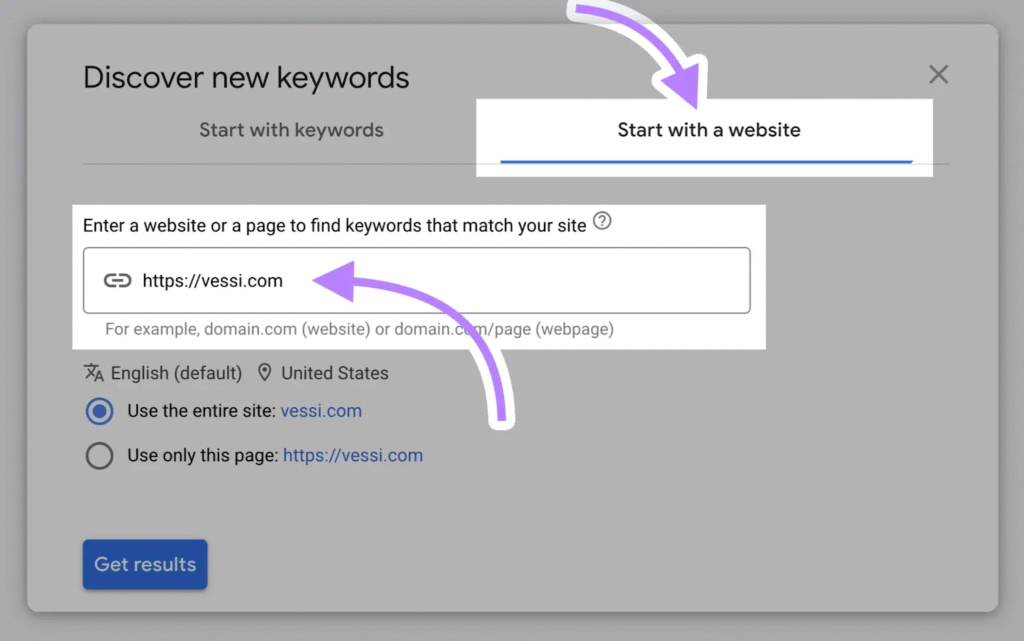
Click “Get results” to see keyword suggestions based on that website.
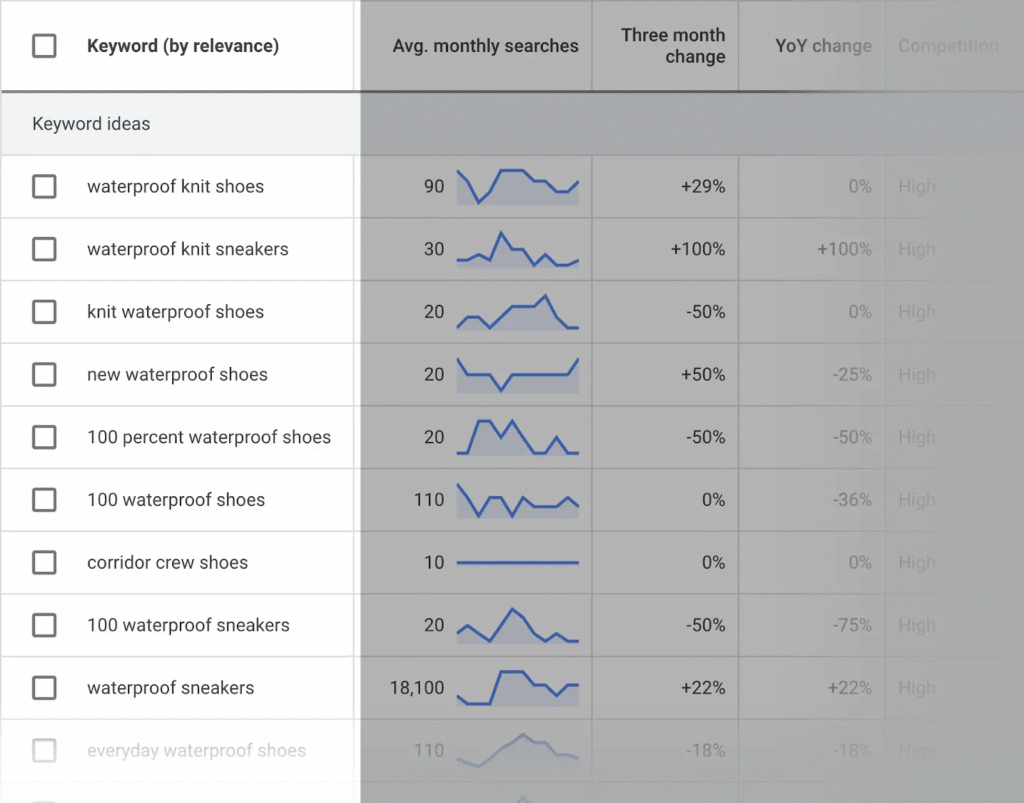
Repeat with other competitors and add relevant keywords to your list.
Keyword Planner also provides monthly search data for specific locations that you can use to decide which keywords to target first.

Read our guide on how to create multilingual website content that speaks to your audience — especially useful if you are doing research for local SEO across multiple language markets.
Step 3: Optimise On-Page Content for Local SEO
On-page SEO is the process of optimizing webpages to rank higher in organic search results. It is essential for local SEO. Good organic rankings improve your chances of appearing in the local pack.
Perform a fast review using Semrush’s On Page SEO Checker to assess your website’s on-page SEO performance.
Enter your domain name and click “Get ideas.”
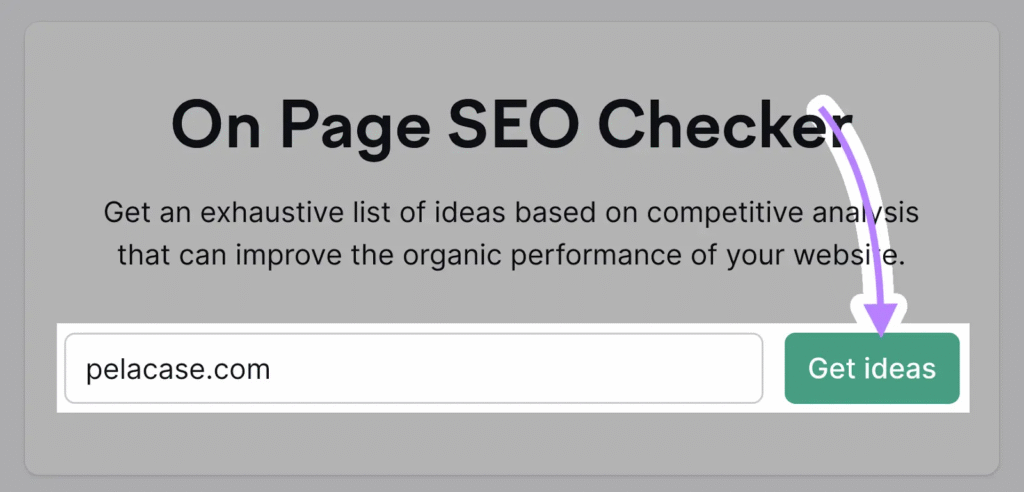
To set up your project, follow the configuration guide.
The tool will audit the site and present a dashboard with elements that can be optimised.
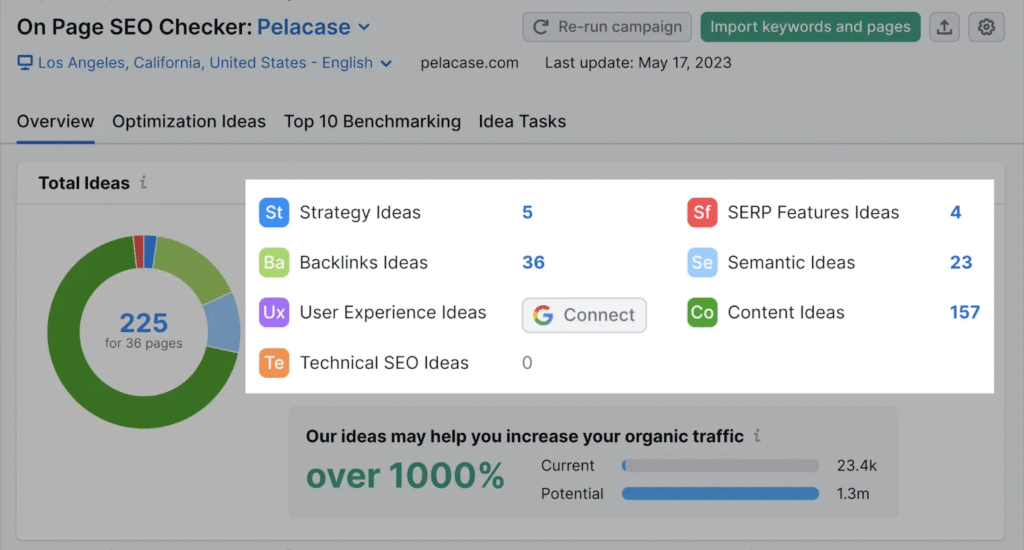
Scroll down to see pages sorted by “Priority.”
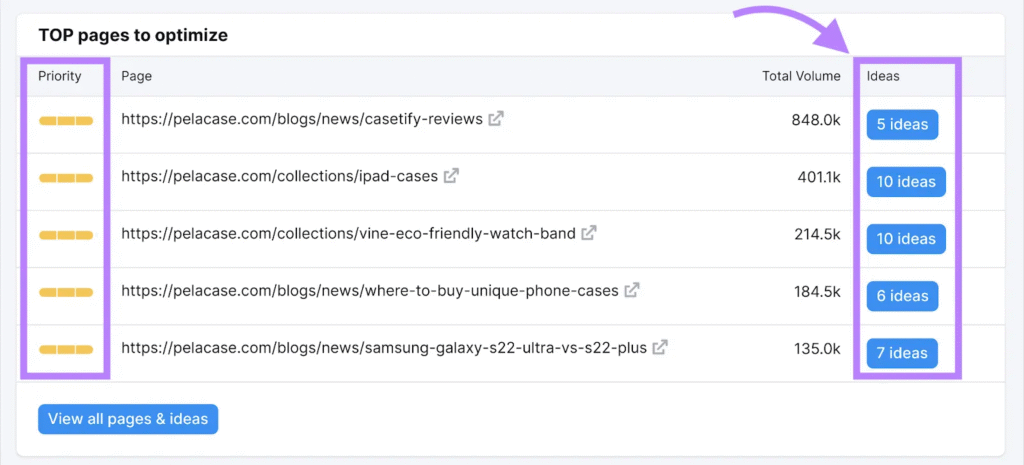
Optimise pages in this “TOP pages to optimise” section first for maximum impact.
Click the “# ideas” button next to each page for specific optimisation suggestions.
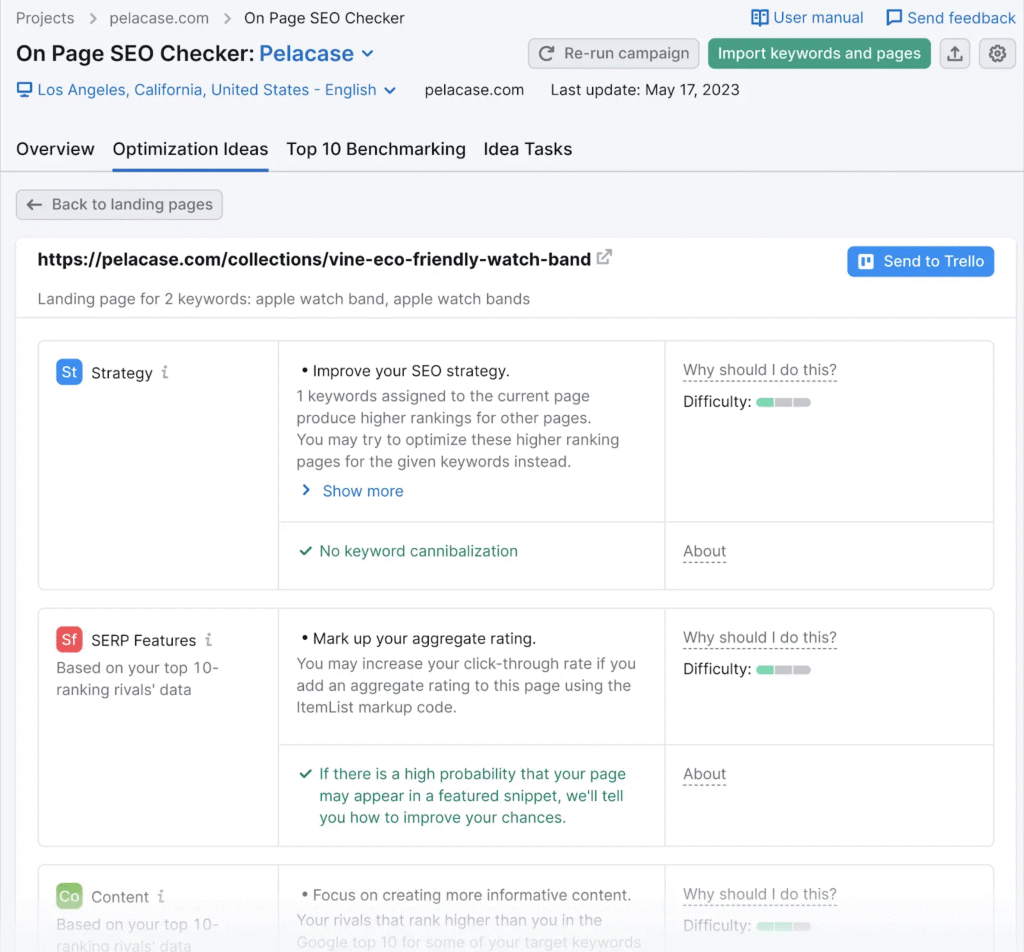
Every page of your website that targets a local audience should include:
- Your city or region in the title tag, H1, and meta description
- NAP details consistently formatted
- Locally relevant content (mention landmarks, neighbourhoods, regional services)
- Schema markup (LocalBusiness schema) to help Google understand your location and services
- Internal links to related location pages and service pages
Explore how to boost your SEO with localisation — a practical guide on using localised content to strengthen your search rankings.
Step 4: Build and Maintain Citation Consistency
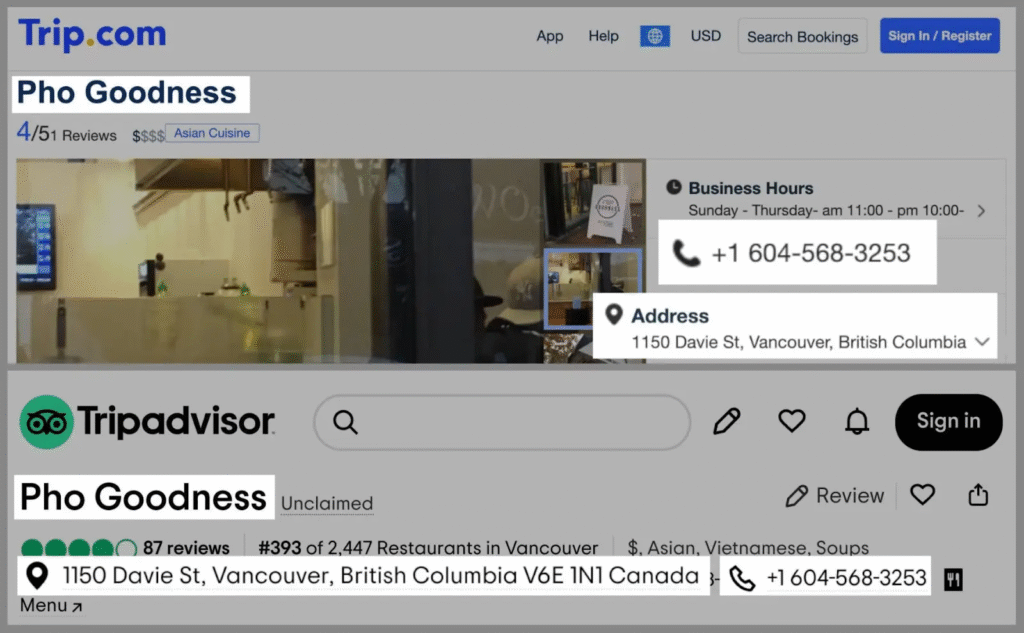
Citations are online mentions of your business’s NAP details across directories, review sites, and platforms. Consistency is critical — even a small variation in your address format can reduce Google’s confidence in your listing.
Submit your business to major directories such as Google, Bing Places, Apple Maps, and industry-specific directories. Use a tool like Moz Local or BrightLocal to audit and correct inconsistencies.
Step 5: Generate and Manage Customer Reviews
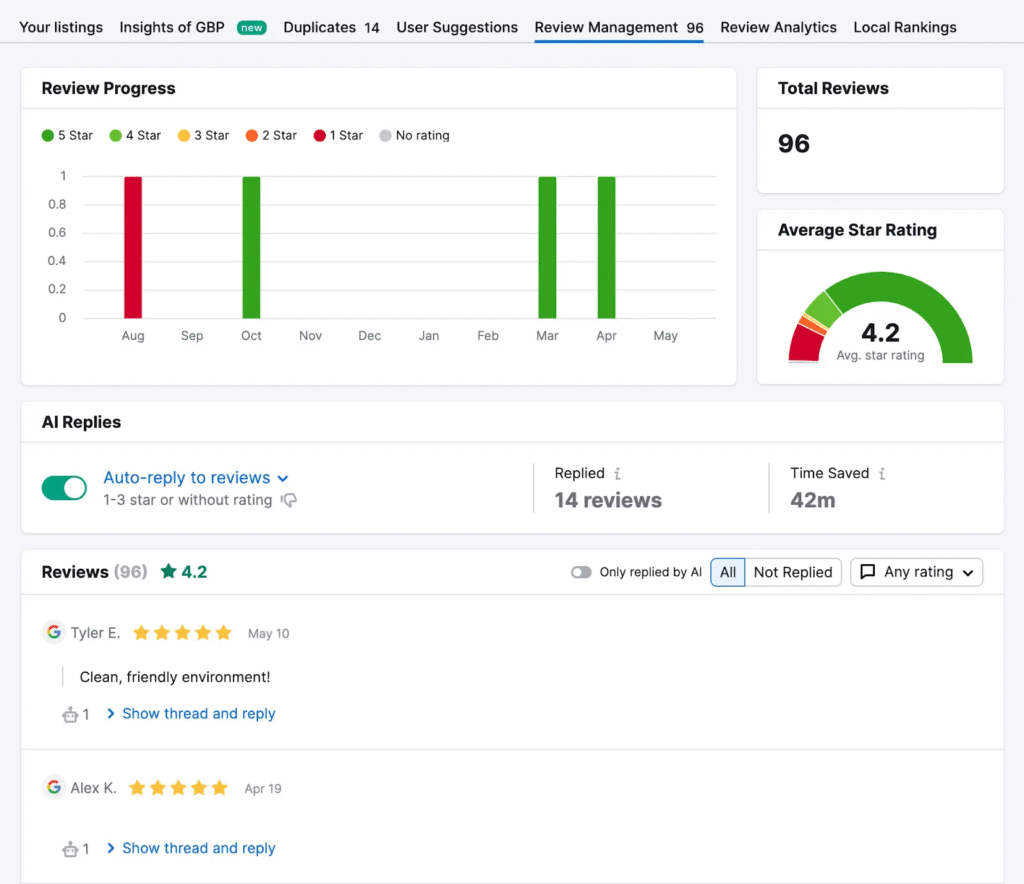
Reviews account for 20% of local pack rankings. Actively encourage satisfied customers to leave Google reviews, and always respond to reviews — both positive and negative. This signals to Google (and to potential customers) that your business is active, trustworthy, and engaged.
Reviews provide social proof, validate your expertise, and instill confidence in potential buyers.
Focus on getting reviews on Google because they’re prominent in search results and impact rankings.
Gathering reviews on other platforms, such as Tripadvisor, can also be helpful.
Here are some quick tips for succeeding with online reviews:
- Get satisfied customers to leave reviews on the platforms you prefer.
- Use posters or business cards to encourage online reviews and include QR codes for easy access.
- Embed widgets on your website. These widgets make it easy to view and leave reviews.
- Don’t offer or accept money for reviews because it violates the terms of Google and other platforms.
Use Semrush’s Review Management tool to track reviews across platforms.
Step 6: Build Local Backlinks
Links from local newspapers, community websites, industry associations, and local business directories signal to Google that your business is a trusted part of the local community. You can earn local backlinks by:
- Sponsoring local events
- Getting featured in local press
- Collaborating with complementary local businesses
- Writing guest posts for local industry publications
Learn how multilingual SEO copywriting works in Hong Kong — a model that applies equally well to any multilingual local SEO strategy.
Step 7: Create Content for Local Landing Pages
How to create content for local landing pages for SEO requires a different approach to standard blog writing. Each landing page should:
- Target one specific location or neighbourhood
- Include location-specific keywords naturally throughout the content
- Feature locally relevant testimonials or case studies
- Embed a Google Maps widget showing your location
- Have a clear call to action for local customers (phone number, directions, booking link)
Avoid creating dozens of thin, templated location pages. Each page should offer genuine, unique value for users in that area.
Discover how website localisation can make your site globally relevant and locally effective — including tips on country-specific domains that strengthen local SEO.
Step 8: Monitor, Measure, and Improve
Local SEO is not a one-time task. You must track performance regularly to understand what is working and what needs adjustment.
How to Monitor Your Local SEO Results
Tracking your local SEO progress requires a mix of tools and metrics. Key areas to monitor include:
- Google Search Console: Track clicks, impressions, and average position for local keywords
- Google Maps: Use the Map Rank Tracker to see your Business Profile’s ranking in Google Maps.
- Google Business Profile Insights: Monitor views, searches, direction requests, and calls from your GBP listing
- Rank tracking tools (e.g., BrightLocal, SEMrush): Track your position in the local pack for target keywords
- Google Analytics (GA4): Measure organic traffic, engagement, and conversions from local visitors
- Review monitoring: Track review volume, average rating, and response rate across all platforms
Review your metrics monthly at minimum. Look for patterns — if a particular location page is generating strong engagement, create more content around that area. If a keyword is slipping in rank, revisit the on-page optimisation and check for new competitors.
Local SEO Tools
Having the right tools makes how to do local SEO significantly more efficient. Here are the essential tools for 2026:
- Google Business Profile Manager: Free, essential for managing your GBP
- Google Keyword Planner: For identifying local search volumes
- SEMrush / Ahrefs: For comprehensive keyword research and competitor analysis
- BrightLocal: Specialist local SEO platform for citation audits, rank tracking, and review management
- Moz Local: Citation management and local listing distribution
- Whitespark: Local citation finder and GBP audit tool
- Google Search Console: For monitoring indexing, search performance, and technical issues
- Schema Markup Generators: For implementing LocalBusiness structured data
- Screaming Frog: For on-page SEO audits of your local landing pages
Learn about Elite Asia’s content generation services — which can support your local SEO content strategy with professionally created, keyword-optimised material.
How AI and GEO Improve Local SEO
Generative Engine Optimisation (GEO) is the practice of optimising content so that AI-powered search tools — like Google AI Overviews, ChatGPT, and Perplexity — are more likely to cite or surface your business in their responses.
In 2026, AI search visibility has become a distinct ranking environment with its own set of signals. On-page content quality (24%), reviews (16%), and citations (13%) are the top three factors for AI search visibility. This means:
- Your content must be structured clearly, with headings, FAQs, and concise answers
- Your business must have consistent, trustworthy citations across authoritative sources
- Your reviews must be abundant and recent — AI tools interpret a strong review profile as a trust signal
- You should implement speakable schema markup to help AI tools “read” your content for voice and conversational search
Sites that build strong topical clusters — interconnected, in-depth content around a core local topic — are seeing 20–30% increases in local organic rankings and higher visibility in AI Overviews.
Read about SEO in China in 2026 — a market where AI-driven search tools are evolving rapidly, and where local and multilingual SEO strategies must adapt fast.
Explore the top 10 Chinese search engines to understand how AI search is reshaping local visibility in Asia’s most complex digital market.
How to Do Research for Local SEO
How to do research for local SEO goes beyond keyword tools. A complete research process includes:
- Competitor analysis: Identify the top 3–5 local competitors ranking in the Local Pack for your target keywords. Analyse their GBP, reviews, on-page content, and backlinks
- Customer persona research: Understand the language your customers use, the questions they ask, and the problems they are trying to solve
- Search intent mapping: Classify keywords by intent (informational, navigational, transactional) and create content that matches each intent type
- Local content gap analysis: Find topics and keywords your competitors are not covering well, and fill those gaps with superior content
- Review mining: Read reviews of your own business and competitors to identify recurring themes, pain points, and language patterns that you can incorporate into your content
Avoid the most common multilingual SEO mistakes — including the critical error of not conducting separate keyword research per target market and language.
Expand Local SEO Across Asian Markets
For businesses operating across Southeast Asia, East Asia, or the broader APAC region, local SEO is not a single strategy — it is a collection of localised strategies adapted for each market.
What works in Singapore may not work in Indonesia. What ranks on Google in Malaysia will not appear on Baidu in China. Every market has its own dominant search engines, cultural nuances, content preferences, and keyword behaviours.
Read about Baidu SEO to understand how local SEO operates in China’s unique search ecosystem, where platform-specific optimisation is essential for visibility.
Learn how to localise your brand for the Asian market — a strategic foundation for any business planning a regional local SEO expansion.
Explore how to succeed in digital marketing in China — covering WeChat marketing, ICP licensing, and how to adapt your local strategy to China’s unique digital environment.
For businesses entering new Asian markets, understanding marketing localisation is the strategic layer that ensures your local SEO efforts resonate culturally and linguistically with each target audience.
See how Elite Asia’s website development services can build multilingual, locally optimised web presences designed to rank — whether in Singapore, Hong Kong, or across the wider APAC region.
Ready to Strengthen Your Local SEO?
Local SEO in 2026 is a multi-layered discipline — combining technical optimisation, content strategy, reputation management, and increasingly, AI-readiness. The businesses that invest in it consistently are the ones that show up first when their customers are searching.
If your business is ready to build a stronger, more visible presence in local and regional search — across English and Asian language markets — Elite Asia’s Digital Marketing services provide end-to-end support: from keyword research and on-site SEO to multilingual content generation, GBP management, and performance reporting across Asian markets.