AI Translation for E-commerce: A Complete Guide
Quick Answer
AI translation for e-commerce websites uses neural machine translation to convert product listings, checkout pages, and customer content into multiple languages within hours rather than weeks. It works best when paired with human post-editing, since machine output alone typically reaches only around 70% quality before cultural nuance and tone need correcting. Retailers who skip this step risk literal, awkward copy that damages trust and conversions on high-traffic pages.
Key Takeaways:
- AI translation converts e-commerce content into multiple languages quickly using neural machine translation technology
- Shoppers strongly prefer buying from stores written in their own language, which directly affects conversion rates
- A hybrid approach combining AI translation with human post-editing typically delivers the best balance of speed, cost, and quality
- Common mistakes include literal translations, poor keyword research, and skipping quality checks on high-traffic pages
- Technical SEO steps like hreflang tags and proper URL structure are essential for translated pages to rank correctly
In This Article:
- What Is AI Translation for E-commerce
- Why Online Stores Need Multilingual Content
- How AI Translation Actually Works
- Key Benefits for E-commerce Businesses
- Common Pitfalls to Avoid
- AI Translation vs Human Translation vs Hybrid
- How to Add AI Translation to Your E-commerce Site
- SEO Considerations for Translated Stores
- How to Order a Hybrid Solution from Elite Asia Singapore
- Translation vs Localisation: Knowing the Difference
- Choosing the Right Approach for Your Store
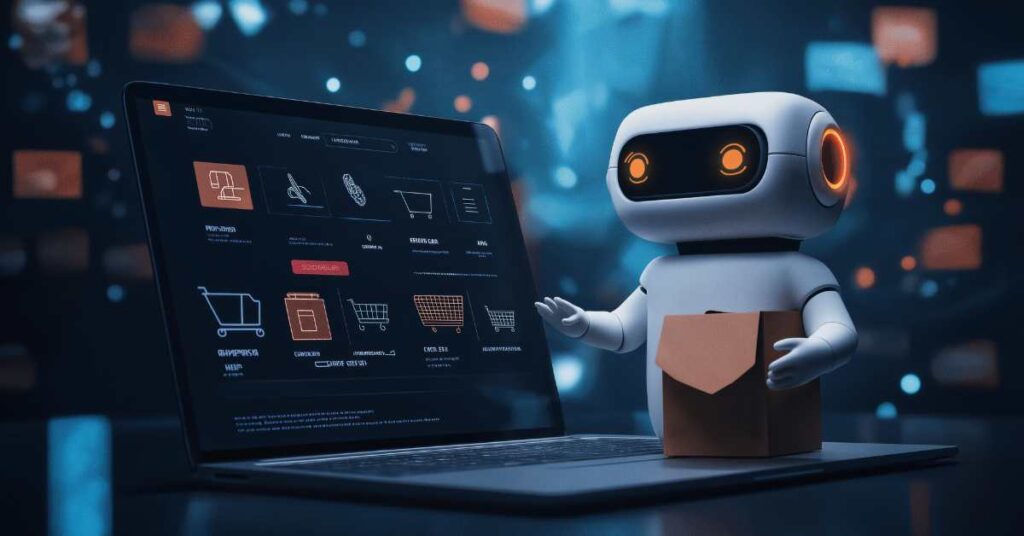
AI translation for e-commerce websites uses machine learning to convert product listings, checkout pages, and customer support content into multiple languages quickly and at scale. For online retailers hoping to sell across borders, this technology has become one of the fastest ways to reach new markets without hiring a large in-house translation team.
What Is AI Translation for E-commerce
AI translation, often powered by neural machine translation (NMT) or large language models, automatically converts website text from one language into another using patterns learned from huge amounts of existing text. Unlike older rule-based tools, modern systems process whole sentences at once, which makes the output sound more natural and grammatically correct. If you want a plain-language breakdown of how this technology actually works behind the scenes, the simplest guide to neural machine translation explains the encoder-decoder process step by step.
For online shops, this usually means translating product titles, descriptions, category pages, FAQs, and checkout instructions so that a shopper in Jakarta, Bangkok, or Manila sees the store in their own language. Some brands go a step further and use AI tools such as Weglot or DeepL that plug directly into platforms like Shopify or WooCommerce, translating pages automatically as new content is added.
THE BEST OF AI. THE TRUST OF HUMAN EXPERTISE.
Why choose one when you can have both? Our Hybrid Solutions combine the speed of AI with the cultural precision of native linguists.
- Hybrid Translation — AI-driven translation, refined by industry-specialist linguists
- Hybrid Transcription — automated voiceovers and captions that stay on-brand
- Hybrid Interpretation — host global events in any language, from any location
- AI Captioning — instant multilingual captions for meetings, webinars & beyond
Why Online Stores Need Multilingual Content
Shoppers are far more likely to buy from a website written in their own language, and this preference does not disappear just because a browser has an auto-translate button. A store that only speaks English is quietly closing the door on huge segments of Southeast Asia, where local languages such as Bahasa Indonesia, Thai, and Vietnamese dominate everyday search behaviour. Translating key pages also helps stores rank for local search terms, since search engines reward content written in the language people actually type into the search bar.
Beyond visibility, translated content builds trust. Customers read product details more carefully when the wording feels natural, and this comfort directly affects whether they complete a purchase. This is why localised product descriptions are treated as a priority page type by retailers expanding into new markets, rather than an afterthought.
Other Related Articles:
How AI Translation Actually Works
Modern AI translation tools rely on neural networks trained on millions of sentence pairs across many languages. The system breaks a sentence down, encodes its meaning, and then reconstructs it in the target language while trying to preserve tone and context, not just individual words. This is different from older word-for-word translation, which often produced clumsy or confusing results.
Accuracy varies by language pair. European languages like French or Spanish tend to translate very well because there is so much training data available, while some Southeast Asian languages such as Thai or Vietnamese can be trickier due to less digital text to learn from. For a deeper look at how these accuracy differences play out and what businesses should realistically expect, AI translation: expectations vs reality is a useful reference.
Key Benefits for E-commerce Businesses
AI translation offers several practical advantages for online retailers looking to grow internationally.
- Speed: thousands of product listings can be translated in hours rather than weeks
- Cost savings: automated translation is far cheaper than translating every page manually from scratch
- Scalability: as your catalogue grows, AI tools can translate new listings automatically without extra staffing
- Consistency: the same terminology and tone can be applied across thousands of pages
- Faster market entry: stores can test a new region quickly before committing to a full localisation budget
Common Pitfalls to Avoid
AI translation is powerful, but it is not flawless, and several mistakes come up again and again when e-commerce teams rely on it without any human oversight.
- Literal translations that miss local expressions or slang, making copy feel robotic
- Untranslated or awkward checkout and payment pages, which can cause shoppers to abandon their cart
- Copying English keywords directly instead of researching how local buyers actually search
- Ignoring cultural context, such as measurements, currency, or imagery that does not suit the target market
- Skipping quality checks on high-traffic pages, leaving embarrassing errors live on the site
These issues are exactly why 5 common mistakes in e-commerce website translation is worth reading before launching a translated storefront, since it walks through real examples of what goes wrong.
AI Translation vs Human Translation vs Hybrid
Choosing between fully automated translation, fully human translation, and a blended approach depends on your budget, timeline, and how much your brand voice matters.
| Approach | Speed | Cost | Best for |
|---|---|---|---|
| Pure AI translation | Very fast | Low | Large catalogues, low-risk content like size guides |
| Human translation only | Slow | High | Legal pages, brand storytelling, sensitive content |
| Hybrid (AI + human editing) | Fast | Moderate | Product pages, marketing copy, checkout flows |
Most established retailers land on the hybrid model, where AI generates a first draft and a native linguist reviews it for tone, accuracy, and cultural fit. This process, known as machine translation post-editing, typically cuts translation time by more than a third compared to translating everything from scratch by hand. To understand how this workflow is structured in practice, the machine translation post-editing guide breaks down the different quality levels businesses can choose from.
How to Add AI Translation to Your E-commerce Site
Setting up multilingual content does not need to be overwhelming if you follow a clear sequence.
- Identify your target markets using website analytics to see where international visitors already come from
- Prioritise high-impact pages first, including the homepage, product pages, cart, and checkout
- Choose an AI translation tool or service that integrates with your existing platform
- Add a visible language switcher so shoppers can easily change languages
- Review translated content with native speakers before publishing, especially on pages that drive sales
- Track performance by language using analytics tools to see which markets convert best
For stores that also sell in Southeast Asia specifically, understanding language priorities upfront saves time later. Expanding into Southeast Asia: a language and localisation roadmap covers how to sequence language rollouts across the region’s most active e-commerce markets.
SEO Considerations for Translated Stores
Translating your site is only half the job; search engines also need to understand which page belongs to which language and audience. This is where hreflang tags come in, since they tell Google which language version to show a given searcher, preventing your French page from appearing to a German user by mistake. Getting URL structure right matters too, with subdirectories such as yourstore.com/id/ generally recommended over subdomains for easier management.
It is also worth noting that keywords should never simply be translated word for word. Local shoppers often search using completely different phrasing than a literal translation would suggest, so researching how people actually search in each target language protects your rankings. A structured approach to this is laid out in the complete guide to SEO translation, which walks through keyword mapping, metadata, and technical setup for multilingual sites.
How to Order a Hybrid Solution from Elite Asia Singapore
Elite Asia’s Hybrid Solution combines the speed and scale of AI technology with the accuracy of human linguists. Here is a step-by-step guide to getting started.
Step 1: Identify Your Hybrid Service Type
Visit the Elite Asia Hybrid Solution page and choose the service that best fits your business need:
| Service | What It Does |
|---|---|
| Hybrid Translation | Machine translation + post-editing by native linguists — ideal for large volumes of legal, financial, or technical content |
| Hybrid Transcription | Automated transcriptions, captions, and voiceovers created in minutes |
| Hybrid Interpretation | AI translates the speaker’s words into multiple target languages in real time, with human expertise available when needed. |
| AI Captioning | AI-powered real-time captioning, translation, and transcription for meetings and events |
Step 2: Prepare Your Files
Before submitting your project, ensure your source files are in a supported format. Elite Asia’s cloud-based Translation Management System (TMS) accepts a wide range of file types:
- Documents: DOC/DOCX, XLS/XLSX, PPT/PPTX, TXT, RTF, ODT
- Subtitles: SRT
- Images (via OCR): JPG, PNG, TIFF, BMP, GIF
- Web/Code: HTML, XHTML, PHP
- Localisation files: XML, Android XML, RESX, STRINGS
- Desktop publishing: IDML, MIF
- Bilingual interchange: XLIFF, SDLXLIFF, PO
Step 3: Request a Free Quote
Submit your project details through either of these two channels:
✅ Option A — Online Quotation Form
Go to eliteasia.co/request-free-quotation/ and select “Corporate” as your request type. Include the following details for the most accurate quote:
- Service type needed (Hybrid Translation, Transcription, Interpretation, or AI Captioning)
- Language pair(s) required
- File format and approximate word/page count
- Desired turnaround time
✅ Option B — Direct Contact / Client Portal
Log in or register at the Elite Asia Client Portal to upload documents directly and communicate with the team via Live Chat. Alternatively, reach the team at:
- 📞 Singapore: +65 6681 6717
- 📞 Hong Kong: +852 3904 1138
- 📞 Malaysia: +60 3 9212 8558
Step 4: Project Setup & Glossary Preparation
Once your order is confirmed, Elite Asia’s team begins the PREPARE stage:
- File analysis — the TMS analyses your document structure, word count, and format
- Glossary preparation — industry-specific terminology lists are built or updated to ensure consistency
- Machine Translation (MT) & Translation Memory (TM) — your files are run through Elite Asia’s private AI engine, which covers 17 language pairs including Simplified/Traditional Chinese, Japanese, Korean, major Southeast Asian languages, and European languages
Step 5: Post-Editing & Quality Review
The AI-generated output enters the POST-EDITING stage, handled by native linguists with domain expertise:
- Post-editing — a human linguist with industry knowledge reviews and refines the AI output
- Proofreading/Review — a second pass ensures accuracy, fluency, and cultural alignment
- Export from TMS — the finalised translation is exported in the original document format and layout
This hybrid workflow is 40–50% faster than traditional translation and reduces cost by 20–60%, without compromising quality.
Step 6: Client Review & Finalisation
The completed translation is submitted to you for review. Elite Asia provides a 4-week revision period to accommodate any feedback or changes needed. Once approved:
- Translation Memory (TM) is updated for future projects, ensuring cost savings on repeated content
- Final files are delivered in your original document format
Step 7: Optional — Platform Integration
For businesses with high-volume or ongoing translation needs, Elite Asia can establish a plug-in connection directly with your operating portal or CMS. This allows documents to flow automatically into the TMS without manual uploads, streamlining your entire localisation pipeline.
Translation vs Localisation: Knowing the Difference
Many store owners use “translation” and “localisation” interchangeably, but they are not the same thing. Translation converts words from one language to another, while localisation adapts the entire experience, including currency, imagery, payment methods, and cultural references, to suit a specific market. For e-commerce specifically, this distinction affects real revenue, since a well-translated but poorly localised page can still feel foreign to a shopper.
If you are weighing up how far to take your multilingual strategy, translation and localisation: what’s the difference explains which businesses genuinely need full localisation versus straightforward translation. Retailers focused specifically on cross-border selling may also find e-commerce localisation services useful for understanding what a complete localisation package typically includes.
Choosing the Right Approach for Your Store
There is no single “best” AI translation tool for every business, since the right choice depends on catalogue size, target languages, and how much brand tone matters to your customers. Smaller stores testing a new market might start with a lightweight AI plugin, while larger retailers handling thousands of SKUs across Southeast Asia often benefit from a managed hybrid service that pairs AI speed with human quality checks. Retailers already investing in this space have reported measurable gains, which is discussed further in why Singapore retailers are investing in professional translation.
Ready to combine the speed of AI translation with the accuracy of expert human review for your e-commerce store? Explore Elite Asia’s Hybrid Translation Solution to see how a blended approach can help your store connect with shoppers across Asia.
Elite Asia’s team covers 30+ languages across Singapore, Malaysia, Hong Kong, Japan, South Korea, China, Taiwan, and Thailand — with full technical support, ISO 9001:2015 certification, and a dedicated MICE division ready to support your next event.

Frequently Asked Questions (FAQs)
1. Is AI translation good enough for e-commerce product pages?
AI translation can produce a solid first draft for most product pages, especially for straightforward details like size or material, but human review is recommended for marketing copy and brand messaging.
2. How much does AI translation cost compared to human translation?
AI translation is generally much cheaper per word than human translation, though a hybrid model with human editing adds moderate cost while improving accuracy.
3. Which languages work best with AI translation?
European language pairs with lots of training data, such as English-French or English-Spanish, tend to perform very well, while some Southeast Asian languages can require more careful human review.
4. Will translating my store hurt my SEO?
Translating your store will not hurt SEO if done correctly with proper hreflang tags, unique URLs per language, and locally researched keywords rather than direct translations.
5. Can I use AI translation for checkout and payment pages?
Yes, but these pages carry higher risk since errors can cause cart abandonment, so many retailers prioritise human review specifically for checkout flows.


Last Modified:
Contact Us
Working across languages? Our team can support your company’s translation and interpretation needs. For business enquiries, get in touch to explore what fits your requirements.
Request a Quote