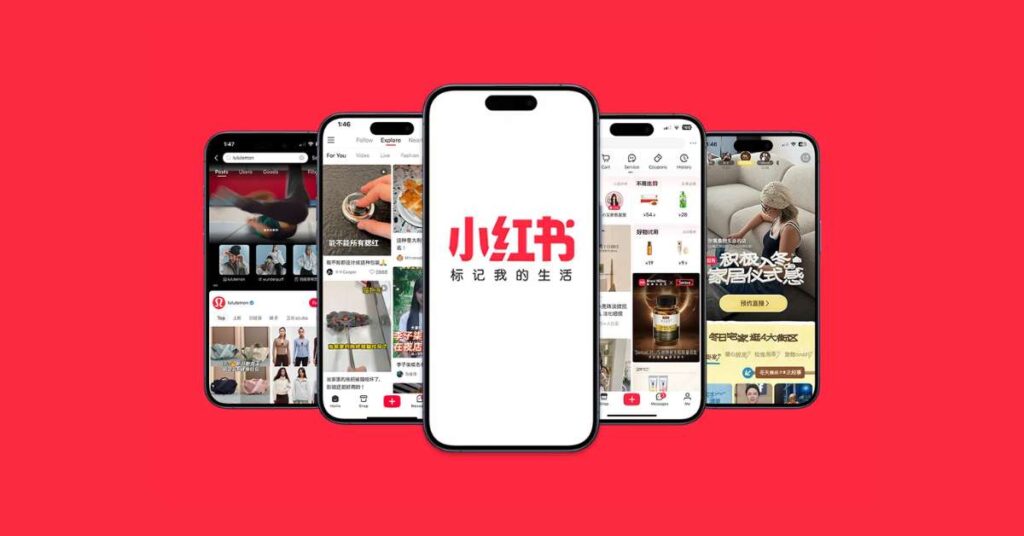
What Is Xiaohongshu (Red Note) and How to Use It in 2026
Quick Answer
Xiaohongshu (also known as RedNote or Little Red Book) is China’s leading lifestyle and social commerce platform, blending user-generated content with in-app shopping. Founded in Shanghai in June 2013 by Miranda Qu and Charlwin Mao, it functions as a hybrid of Instagram and Pinterest, letting users discover product reviews, travel guides, and beauty tips through posts called “Notes”. It now counts over 300 million monthly active users.
Key Takeaways:
- Massive scale: Xiaohongshu has surpassed 300 million monthly active users and 170,000 brand accounts as of 2026, with users averaging 40 minutes per day on the app.
- Social commerce hybrid: The platform blends Instagram-style visual content with Pinterest-like discovery and built-in shopping, letting users browse reviews and purchase products without leaving the app.
- “Grass planting” culture: Xiaohongshu’s marketing power rests on zhongcao (种草)—organic, authentic storytelling that drives desire for products more effectively than traditional ads.
- Young, affluent, female-skewed audience: Roughly 70% of users are female, aged 18–35, based in China’s tier-one and tier-two cities, with 83% discovering products through user-generated content rather than branded ads.
- Regulatory scrutiny is rising: Despite its commercial success, the platform faces geopolitical friction, exemplified by Taiwan’s December 2025 ban affecting roughly three million Taiwanese users.
In This Article:
- What is Xiaohongshu?
- Why It’s Called the ‘Instagram of China’
- Statistics
- History
- Is RedNote the Same Thing as Xiaohongshu?
- Who Owns Xiaohongshu?
- How Long Has It Been Around?
- Key Features of Xiaohongshu
- Content Moderation and Censorship
- Reception
- Strategic Audience Targeting
- Trending Topics & Hashtags
- Do You Have to Use Your Real Name on Xiaohongshu?
- Why Is Xiaohongshu Popular?
- Who Can Create a Xiaohongshu Account?
- How to Access and Use Xiaohongshu
- Navigating the Xiaohongshu Interface
- Creating and Interacting with Content
- Exploring Xiaohongshu’s Shopping Features
- Xiaohongshu Marketing: How Brands Can Win
- Setting Up an Official Brand Account
- Content Types on Xiao Hong Shu
- Thriving Industries on Xiao Hong Shu
- Benefits of a Blue Checkmark and Advertising on XHS
- Xiaohongshu Influencer Marketing
- How Can You Leverage Xiaohongshu for E-Commerce Success?
- Powerful Brand Strategies
- Case Study: Brand Success Examples
- Taiwan’s Xiaohongshu Ban and Freedom of Expression
- Why Does It Matter to Your Brand?
- Ready to Grow Your Brand on Xiaohongshu?
What is Xiaohongshu?
Xiaohongshu (小红书) is a Chinese social media and e-commerce platform that blends user-generated content (UGC) with online shopping. The name xiao hong shu in Chinese literally means “Little Red Book.” Users share product reviews, travel guides, beauty tutorials, and lifestyle tips through short posts called “Notes.”
Think of it as a cross between Instagram and Pinterest — but with a built-in shopping function. Users don’t just browse for inspiration; they discover products, read real reviews, and make purchases without ever leaving the app.
The xiao hong shu app is available in Simplified Chinese, Traditional Chinese, and English, running on iOS, Android, and HarmonyOS.
READY TO WIN ACROSS ASIA’S DIGITAL LANDSCAPE?
Your competitors are already speaking the local language. Don’t fall behind.
- Multilingual SEO — get discovered on Baidu, Google & local platforms
- Transcreation — copy that feels native, not foreign
- Social & video content — localised for every Asian platform
- Regional expertise — SE Asia, China, Japan & Korea covered
Why It’s Called the ‘Instagram of China’
Xiaohongshu earned the nickname “Instagram of China” because of its strong focus on visual content and aspirational lifestyle posts. Like Instagram, users share curated photos and short videos. But Xiaohongshu goes a step further — it directly connects content to commerce in a way very few social platforms worldwide have managed to do.
The platform creates a seamless loop of discovery, recommendation, and purchase. When a user spots a skincare product they like, they can read reviews, click the product link, and buy it — all within seconds. This makes it far more commercially powerful than a standard photo-sharing app.
Other Related Articles:
Statistics
Here is a quick snapshot of Xiaohongshu’s reach and influence in 2026.
Monthly Active Users
Xiaohongshu has over 300 million monthly active users (MAUs), a figure that saw a notable spike in early 2025 following global attention during the TikTok ban period in the United States. Users spend an average of 40 minutes per day on the platform — a clear sign of deeply engaged behaviour.
Registered Accounts
The platform has surpassed 300 million registered accounts, with over 170,000 brand accounts active as of 2026. Around 70% of users are female and aged between 18 and 35, predominantly living in China’s tier-one and tier-two cities.
Daily Average User Search Penetration
Xiaohongshu functions as much as a search engine as it does a social feed. Research shows that 83% of shoppers on the platform discover products through UGC — making peer recommendations more influential than branded advertising. Many younger Chinese consumers now go directly to Xiaohongshu — rather than traditional search engines — when researching products or services before buying. If you’re curious how this fits into China’s broader search landscape, Elite Asia’s guide to China’s top search engines is a useful starting point.
History
Etymology
The name “Xiaohongshu” (小红书) breaks down as follows in Chinese:
- 小 (xiǎo) = small / little
- 红 (hóng) = red
- 书 (shū) = book
So, xiao hong shu in Chinese literally translates to “Little Red Book.” While this shares a name with the famous red-covered booklet associated with Mao Zedong, the platform has no political affiliation. It’s simply a memorable and playful brand choice.
Xiaohongshu was founded in June 2013 by Miranda Qu and Charlwin Mao in Shanghai, China. It began as an online travel and shopping guide, helping Chinese consumers discover and review products available abroad. It then evolved rapidly into the full-scale social commerce ecosystem it is today.
2025 Influx of American Users
In January 2025, Xiaohongshu experienced a sudden and dramatic surge in international users. As the United States moved closer to enforcing a ban on TikTok, hundreds of thousands of American TikTok users — many calling themselves “TikTok refugees” — began migrating to Xiaohongshu. The xiao hong shu app shot to the number one spot on the US Apple App Store within days of the story going viral. According to Reuters, over half a million new US users joined in a matter of days. This event transformed global awareness of the platform and brought it firmly onto the international marketing radar.
Is RedNote the Same Thing as Xiaohongshu?
Yes — RedNote and Xiaohongshu are the exact same platform. “RedNote” is the English-friendly label that gained international traction during the 2025 TikTok refugee wave. Inside China, the app is always called Xiaohongshu (小红书). Outside of China, “RedNote” is used by many international users and marketers for ease of reference. Both names refer to the same interface, the same community, and the same features.
Who Owns Xiaohongshu?
Xiaohongshu is owned and operated by Xingyin Information Technology Co., Ltd, a private company headquartered in Shanghai, China. The platform has significant backing from major Chinese tech investors, including Tencent and Alibaba. In 2023, Xiaohongshu achieved profitability — reporting a net profit of $500 million on revenues of $3.7 billion. It is not publicly listed on any stock exchange as of 2026.
How Long Has It Been Around?
Xiaohongshu was founded in 2013, making it over 12 years old in 2026. It started as a simple PDF shopping guide for Chinese travellers. By 2016, it had grown into a full social-UGC platform. By 2019, it had surpassed 100 million MAUs. By 2023, that number had more than doubled to 300 million. Few digital platforms in the world have grown so consistently over a decade.
Key Features of Xiaohongshu
1. Social Networking
User-Generated Content
The backbone of Xiaohongshu is user-generated content. Every post — called a “Note” — is created by real users sharing their genuine experiences. This creates a sense of authenticity that polished brand ads simply can’t replicate. Notes can include images, short videos, and long-form text.
Community Engagement
Users can follow each other, like posts, comment, and save content into personalised collections. There are also interest-based topic communities — similar to Reddit’s subreddits — where users gather around specific passions like skincare, fitness, travel, or interior design.
2. E-Commerce Integration
Seamless In-App Shopping
Xiaohongshu allows users to buy products directly within the app. Product links can be embedded into Notes, and brands can run official storefronts. This removes friction from the discovery-to-purchase journey — a key advantage for both brands and shoppers.
Influencer-Driven Sales
Influencers — known as KOLs (Key Opinion Leaders) and KOCs (Key Opinion Consumers) — play a central role in driving purchases on the platform. Their reviews carry far more trust than traditional brand adverts.
3. Content Discovery
Personalised Feeds
Xiaohongshu’s algorithm builds a personalised “Explore” feed based on your interests, search history, and past interactions. The more you engage, the more relevant your feed becomes — driving up time-on-platform and purchase intent.
4. Grass Planting
One of the most important concepts in xiao hong shu marketing is “grass planting” — known in Chinese as zhongcao (种草). This refers to creating genuine, organic desire for a product through authentic storytelling and real-life recommendations. It’s the complete opposite of a hard sell. A user shares how a particular foundation improved their skin, and readers feel inspired to try it. When the purchase follows, it’s called “pulling grass” (拔草). For brands, this cultural behaviour makes Xiaohongshu one of the most powerful word-of-mouth channels in China.
5. Search
Xiaohongshu has become a search engine for lifestyle content. Users actively search queries like “best moisturiser for dry skin” or “where to eat in Chengdu” and get results from real people — not paid ads. This search-driven behaviour is especially important for younger consumers who trust peer recommendations above all else.
6. Shopping
Beyond product links in Notes, Xiaohongshu’s commerce infrastructure includes live-stream shopping and Xiaohongshu Mini-Programmes — lightweight in-app storefronts where brands display full catalogues, host reviews, and complete transactions without redirecting users to external websites.
7. Business Model
Xiaohongshu generates revenue through three main channels:
- Advertising: Sponsored posts and display ads targeted to user segments
- E-commerce commissions: Fees charged on transactions made through brand storefronts
- Influencer marketing fees: Paid campaigns run through its creator marketplace
This three-way commercial model — combining social, search, and sales — makes Xiaohongshu commercially unique among social media platforms globally.
Content Moderation and Censorship
Like all platforms operating within China, Xiaohongshu is subject to Chinese government regulations and content rules. Politically sensitive topics, content critical of the Chinese government, and certain foreign news items are restricted or removed. The platform has its own moderation team enforcing both Chinese law and platform-specific community guidelines. When American users flooded the app in January 2025, many noted that political content was visibly moderated. Brands operating on Xiaohongshu must ensure their content complies with Chinese advertising laws and local platform policies.
Reception
Xiaohongshu is broadly well-received in mainland China as a trusted, authentic lifestyle resource. Its UGC culture gives it an edge over more ad-heavy platforms.
In Taiwan
In Taiwan, Xiaohongshu has a smaller but growing audience. Taiwanese users — particularly younger demographics — access the platform to follow lifestyle trends and engage with Chinese-language creators. The app is not officially distributed via local app stores in Taiwan, but it remains accessible through alternative channels.
Strategic Audience Targeting
One of the strongest suits of the xiao hong shu app for marketers is precision audience targeting. The platform’s data is rich: age, gender, location, purchase behaviour, content preferences, and search intent are all available for ad targeting. Brands can run paid campaigns that serve content to users based on keyword searches, interests, or demographics — making every campaign highly relevant. For B2B brands in lifestyle-adjacent sectors, Xiaohongshu also offers access to high-value decision-makers who use the platform for personal purchasing decisions. For a broader view of where Xiaohongshu sits in Asia’s marketing landscape, Elite Asia’s guide to marketing platforms in Asian countries is worth exploring.
Trending Topics & Hashtags
Hashtags on Xiaohongshu work similarly to Instagram. Each post supports up to 20 hashtags, which improves content discoverability across the platform. Trending topics and challenges can go viral within days — especially around major Chinese cultural moments like Chinese New Year, Qixi Festival (Chinese Valentine’s Day), or shopping events like 618 and Singles’ Day (11.11). Brands that engage with trending topics early tend to earn significantly more organic reach.
Do You Have to Use Your Real Name on Xiaohongshu?
No — personal users do not need to use their real name. You can choose any display name or username. However, verified brand and business accounts require identity and business registration documents during the verification process. For individual users, pseudonymity is common — and it actually encourages more open, authentic sharing of personal reviews and experiences.
Why Is Xiaohongshu Popular?
Several factors explain the platform’s rapid rise:
- Trust: 83% of product discoveries happen through UGC, making it one of the most trusted shopping discovery platforms in China
- Authenticity: The grass-planting culture rewards genuine recommendations over polished advertising
- Young, affluent users: The core audience (aged 18–35, predominantly female) has strong spending power and a love of premium, international brands
- All-in-one convenience: Social media, search, and shopping in a single app, eliminating friction at every stage of the buying journey
- Thriving influencer ecosystem: A large community of KOLs and KOCs generates authentic content at scale, keeping the platform fresh and credible
Who Can Create a Xiaohongshu Account?
Anyone can register a personal account — you don’t need to be based in China or have a Chinese phone number. The app is available globally on the Apple App Store and Google Play Store. That said, some features — particularly around in-app payments and e-commerce — work most smoothly with a Chinese payment method such as Alipay or WeChat Pay. Businesses can register Official Brand Accounts, which unlock advertising tools, advanced analytics, and dedicated storefronts.
How to Access and Use Xiaohongshu
How to Download the App on iOS and Android
- Open the Apple App Store or Google Play Store
- Search for “Xiaohongshu” or “RedNote”
- Tap Download / Install
- Open the app and register using your phone number or email address
Creating an Account and Setting Preferences
Once downloaded, follow these steps:
- Register with a mobile number (international numbers are accepted)
- Set your username and upload a profile photo
- Select your interest categories (beauty, travel, food, fitness, fashion, etc.)
- Begin browsing your personalised feed
Switching Language to English
By default, Xiaohongshu launches in Simplified Chinese. To switch to English:
- Go to Profile → Settings (gear icon)
- Select General (通用)
- Find the Language option and change it to English
Bear in mind that most content on the platform is still in Chinese. Switching the interface language makes the app navigable, but you’ll still encounter predominantly Chinese-language posts.
Navigating the Xiaohongshu Interface
Understanding the Homepage Tabs: Follow, Explore, Nearby
- Follow: Displays posts from accounts you already follow
- Explore: An algorithm-driven feed of content tailored to your interests and behaviour
- Nearby: Locally relevant content based on your geographic location — particularly useful for restaurants, events, and local service businesses
Using the Bottom Navigation Bar
The five icons at the bottom of the screen give you access to:
- 🏠 Home: Your main content feed
- 🔍 Search / Explore: Discover content and trending topics
- ➕ Create: Post a new Note
- 🛒 Shop: Browse the in-app marketplace
- 👤 Profile: Manage your account settings and saved content
How the Algorithm Curates Your Feed
The Xiaohongshu algorithm weighs several signals to decide what content appears in your Explore feed:
- Engagement rate: Likes, comments, saves, and shares on a post
- Relevance: Based on your past searches and interactions
- Recency: Newer posts receive an initial visibility boost
- Authenticity: Genuine UGC consistently outperforms overly polished branded content
Creating and Interacting with Content
How to Create a Post (Note)
- Tap the ➕ icon at the bottom of the screen
- Choose your content format: image, video, or text
- Upload your media
- Write a keyword-rich title — the first 20 characters carry the most SEO weight on the platform
- Add a description, relevant hashtags, product tags, and a location tag if applicable
- Tap Publish
Types of Notes: Image, Video, Text
- Image Notes: The most common format on the platform, supporting up to 18 photos per post
- Video Notes: Short-form video clips similar in style to Instagram Reels or TikTok videos
- Text Notes: Long-form diary or review-style posts — less visual, but highly effective for detailed product breakdowns and in-depth lifestyle guides
Using Hashtags and Tagging
Add up to 20 hashtags per post to improve discoverability. You can tag brands, locations, and other users to boost cross-visibility and engagement. Xiaohongshu’s search autocomplete is a valuable tool for identifying trending hashtags within your niche.
How to Like, Comment, and Collect Posts
- Like (❤️): Tap the heart icon beneath any Note
- Comment (💬): Leave a response directly under a post
- Collect (⭐): Save posts to personal or themed collections — this is one of the strongest engagement signals the algorithm tracks, and it directly influences content rankings
Exploring Xiaohongshu’s Shopping Features
How In-App Shopping Works
Xiaohongshu’s shopping experience is embedded directly into content. Product links appear inside Notes, and tapping them leads straight to a product listing within the app. Purchases can be completed using WeChat Pay or Alipay, with no need to visit an external website.
Finding and Following Brand Accounts
Search for a brand name using the search bar. Verified brand accounts carry a blue verification badge. Following a brand means their content will appear in your Follow feed, keeping you informed about new products and campaigns.
Using Xiaohongshu to Research Products
Xiaohongshu is increasingly used as a pre-purchase research tool by Chinese consumers. Before buying a beauty product, a luxury item, or even booking a hotel, many shoppers turn to Xiaohongshu for real user opinions. For brands, this means that having a presence supported by high-quality UGC is essential to influence purchase decisions before they’re made.
Xiaohongshu Marketing: How Brands Can Win
Effective xiao hong shu marketing requires a clear shift in mindset — away from broadcasting advertisements and towards becoming part of the community. The most successful brands on the platform invest in authentic storytelling, influencer partnerships, and UGC-driven campaigns. To understand how Xiaohongshu fits into the broader Chinese social media landscape, Elite Asia’s guide to the top China social media platforms in 2026 is an excellent resource.
Setting Up an Official Brand Account
To register an Official Brand Account on Xiaohongshu:
- Register a business account on the Xiaohongshu Business Platform (品牌号)
- Submit official business registration documents for verification
- Customise your brand profile with logo, bio, and website link
- Access the Creator Hub for analytics, ad management, and storefront tools
A verified brand account significantly boosts your credibility and discoverability on the platform.
Content Types on Xiao Hong Shu
Understanding what kinds of content perform well on Xiaohongshu is the first step towards building a strategy that actually works. The platform rewards content that feels useful, honest, and relatable — not content that reads like an advertisement. Here are the five content types that consistently generate strong engagement.
1. Product Reviews
Product reviews are the single most powerful content format on Xiaohongshu. Users actively search for real, unsponsored opinions before they buy — and a well-written review Note can continue driving traffic and sales for months after it is published. The most effective reviews include before-and-after comparisons, honest pros and cons, and personal usage context. Brands that seed products with KOCs to generate authentic reviews see consistently higher conversion rates than those relying solely on paid advertising.
2. Lifestyle Tips
Lifestyle tips — covering everything from morning routines to home organisation hacks — are extremely popular on the platform. This content format aligns directly with the grass-planting concept: when a user shares how a particular product or habit improved their life, readers naturally develop interest and desire. For brands in wellness, beauty, fitness, and home categories, lifestyle tip content is one of the most cost-effective formats for building long-term brand affinity.
3. Travel Recommendations
Travel content has been a core pillar of Xiaohongshu since its earliest days as a travel shopping guide. Users share city guides, restaurant lists, hidden gems, hotel reviews, and packing tips — all enriched with beautiful photos and personal storytelling. Travel Notes tend to have strong shelf life on the platform, as users return to reference them during trip planning. Hotels, airlines, tourism boards, and travel agencies can all benefit significantly from a well-crafted travel content strategy on the platform.
4. Product Comparisons
Side-by-side product comparisons are one of the most searched content formats on Xiaohongshu. Users want to know: “Is Product A or Product B better for my skin type?” or “Which laptop should I buy for university?” These comparison Notes drive enormous search traffic because they answer a specific, high-intent question. For brands, proactively seeding favourable comparison content through KOCs can directly influence purchase decisions at the most critical stage of the buying journey.
5. Educational and Learning Content
Educational content — tutorials, how-to guides, explainers, and study tips — performs exceptionally well with Xiaohongshu’s young, aspirational user base. Topics range from language learning and career development to cooking techniques and investment basics. For B2B brands and service providers, educational content is one of the most effective ways to establish authority and credibility on the platform. It positions your brand as a helpful, knowledgeable resource rather than just another advertiser.
Thriving Industries on Xiao Hong Shu
Not every industry is equally represented on Xiaohongshu — but for the right sectors, the platform is virtually unmatched as a marketing channel in China. Below are the five industries that consistently see the strongest results.
1. Travel and Tourism
Travel is woven into the DNA of Xiaohongshu. The platform was originally built for Chinese travellers looking for shopping guides abroad, and that travel-first spirit has never left. Today, Xiaohongshu is where Chinese tourists plan their entire trip — from destination inspiration and hotel selection to restaurant bookings and activity recommendations. Travel brands that invest in rich, visually compelling content on Xiaohongshu reach consumers at the very start of their travel planning journey, which is when brand preference is formed.
2. Food and Beverage
Food content is among the most engaged-with categories on the platform. Restaurant reviews, recipe tutorials, café recommendations, and food delivery guides all thrive on Xiaohongshu. Food and beverage brands — from artisan coffee labels to global fast-food chains — use the platform to build local buzz ahead of product launches. The platform’s location-tagging feature also helps food businesses attract nearby customers searching for dining options in specific areas.
3. Beauty and Skincare
Beauty is arguably the single most dominant industry on Xiaohongshu. Skincare routines, make-up tutorials, product hauls, and ingredient deep-dives generate enormous volumes of UGC every day. International beauty brands have found that a single well-placed KOC campaign on Xiaohongshu can sell out a product faster than any traditional campaign. Consumers trust peer skincare reviews deeply — and the platform’s search functionality means a popular skincare Note can keep converting new buyers for years after it is published.
4. Fashion and Apparel
Fashion content on Xiaohongshu spans street style photography, outfit-of-the-day (OOTD) posts, wardrobe organisation tips, and seasonal trend guides. Both luxury and fast-fashion brands maintain active presences on the platform, each targeting different segments of Xiaohongshu’s predominantly young, female audience. The platform’s aspirational aesthetic lends itself perfectly to fashion storytelling — making it a natural home for brands that want to build desire before driving a sale.
5. Luxury and Lifestyle
Xiaohongshu is one of the few social platforms in the world where luxury brands can market effectively without appearing out of touch. The platform’s affluent, aspirational user base actively seeks out premium products and experiences — and luxury purchases are often heavily researched on Xiaohongshu before being made. From watches and handbags to premium skincare and designer homeware, luxury brands that invest in authentic, community-driven content consistently outperform those relying on traditional paid placements.
Benefits of a Blue Checkmark and Advertising on XHS
A verified blue checkmark on Xiaohongshu is far more than a cosmetic badge. It signals credibility, unlocks a suite of commercial tools, and meaningfully improves your brand’s visibility across the platform. Here is what it brings — and how to make the most of it.
Verified brand accounts receive priority placement in search results, access to the Xiaohongshu Business Hub (with detailed analytics), and the ability to run paid advertising campaigns. Users are also significantly more likely to follow and engage with a verified account, as the blue checkmark signals that the brand has been formally vetted by the platform.
1. Influencer Collaborations
Verified brand accounts gain access to Xiaohongshu’s Creator Marketplace — an official platform that connects brands directly with KOLs and KOCs for paid collaboration campaigns. This removes the guesswork from influencer outreach, providing data on each creator’s audience demographics, engagement rate, and past campaign performance. A verified status also makes creators more willing to collaborate, as it confirms the brand’s legitimacy. For maximum impact, pair high-reach KOL campaigns for awareness with targeted KOC campaigns for grassroots trust-building.
2. Types of Advertising on Xiao Hong Shu
Xiaohongshu offers several distinct advertising formats to suit different campaign objectives:
- Splash Ads: Full-screen display ads shown when users first open the app — ideal for brand awareness and major product launches
- Feed Ads (信息流广告): Native-looking sponsored posts that appear within the Explore feed, blending seamlessly with organic content
- Search Ads (搜索广告): Ads triggered by specific keyword searches — highly effective for capturing high-intent users actively researching a purchase
- Topic Campaign Ads: Branded hashtag challenges or sponsored topic pages that drive community-wide participation around your brand
- KOL/KOC Sponsored Content: Paid Notes created by influencers that appear as organic content — consistently among the highest-performing ad formats on the platform
3. Advertising Targeting Options
One of the clearest advantages of advertising on Xiaohongshu is the precision of its targeting capabilities. Brands can reach users based on:
- Demographics: Age, gender, city tier, and language preference
- Behavioural signals: Past searches, content interactions, and purchase history within the app
- Interest categories: Skincare, travel, fitness, food, fashion, luxury, and more
- Lookalike audiences: Targeting users who share similar profiles to your existing customers
- Retargeting: Re-engaging users who have previously visited your brand page or interacted with your content
This level of targeting granularity means brands can run highly efficient campaigns with minimal wasted spend — a significant advantage over broader social media ad platforms.
4. Paid Search Advertising
Paid search on Xiaohongshu works similarly to Google’s pay-per-click model, but with an important distinction — users on Xiaohongshu are searching for lifestyle and product content, not just information. When a user searches “best serum for sensitive skin” or “luxury hotels in Tokyo,” your brand’s sponsored Note can appear at the top of those results. Because the user is actively seeking recommendations, the intent level is extremely high — making paid search one of the strongest ROI-generating ad formats on the platform. Combining paid search with a library of well-optimised organic Notes creates a dominant search presence that is very difficult for competitors to displace.
5. Cross-Promotion
Xiaohongshu does not operate in isolation — the most effective brands treat it as one channel within a broader, joined-up China digital marketing strategy. Cross-promotion strategies include:
- WeChat integration: Driving Xiaohongshu followers to your WeChat Official Account or Mini-Programme for deeper CRM engagement. Explore Elite Asia’s WeChat Marketing guide to understand how this connection works
- Douyin (TikTok China) synergy: Repurposing short-form video content across both platforms to maximise content ROI
- Offline-to-online (O2O) campaigns: Using QR codes in physical retail environments to direct in-store customers to your Xiaohongshu brand page
- China SEO alignment: Ensuring your Xiaohongshu content strategy complements your Baidu search presence — a strategy covered in depth in Elite Asia’s SEO in China guide
- Influencer cross-platform seeding: Working with creators who have strong followings on both Xiaohongshu and other Chinese platforms to maximise content amplification
A truly integrated approach — combining Xiaohongshu with the full ecosystem of Chinese digital platforms — is what separates brands that merely exist in China from those that genuinely thrive. For an expert perspective on building that full-funnel China strategy, Elite Asia’s China Digital Marketing Services offers comprehensive support across every channel.
Xiaohongshu Influencer Marketing
Influencer marketing is the heartbeat of xiao hong shu marketing. There are two key influencer tiers:
- KOLs (Key Opinion Leaders): High-follower accounts (typically 100k+) with broad reach and aspirational positioning
- KOCs (Key Opinion Consumers): Everyday users with smaller but deeply engaged audiences who generate the most authentic-feeling content — often delivering strong ROI for brands at a lower cost
A well-balanced campaign combines KOL reach for awareness with KOC authenticity for trust-building. Understanding the nuances of Chinese consumer culture is critical here. Elite Asia’s China Digital Marketing Services can help brands build influencer strategies that feel native to the platform.
How Can You Leverage Xiaohongshu for E-Commerce Success?
To turn the platform’s engaged audience into paying customers:
- Build a keyword-optimised brand profile so users find you through search
- Partner with relevant KOCs to generate authentic UGC at scale
- Use in-app storefronts and Mini-Programmes for frictionless purchasing
- Run targeted paid ads aligned with major Chinese shopping festivals
- Monitor and respond to comments — active community engagement directly improves algorithm performance
For a broader e-commerce and brand strategy across Asia, explore Elite Asia’s Marketing Localisation services for expert support in adapting your brand for Chinese-speaking markets.
Powerful Brand Strategies
Top-performing brands on Xiaohongshu consistently follow these principles:
- Localise your content: Word-for-word translation is never enough. Content must reflect local aesthetics, values, and consumer psychology. Read more in Elite Asia’s guide to localising your brand for the Asian market
- Search-first thinking: Optimise your Notes for in-platform search — not just for feed browsing
- Seasonal campaign calendars: Build content around Chinese festivals, 618, Singles’ Day, and other culturally significant shopping events
- Combine paid and organic: Use paid advertising to amplify your best-performing organic UGC rather than replace it
- Build community, not just reach: Engage with your followers, respond to comments, and foster genuine brand relationships over time
Case Study: Brand Success Examples
Several global brands have demonstrated the real power of xiao hong shu marketing:
- Luxury fashion houses: International fashion brands have used KOL seeding campaigns to build aspirational brand perception ahead of major China launches — generating millions of organic impressions without a single traditional advert.
- Beauty and skincare brands: Global beauty labels have built dedicated content strategies combining KOL reviews, KOC UGC, and in-app storefronts to dominate product discovery — making Xiaohongshu their primary China marketing channel.
- Hotels and travel brands: Hospitality companies use Xiaohongshu to reach affluent Chinese travellers in the research phase — a strategy closely aligned with the digital-first approach outlined in Elite Asia’s guide to succeeding in digital marketing in China
Over 170,000 brands now maintain a presence on Xiaohongshu — a powerful signal that the platform is no longer optional for brands targeting Chinese consumers.
Taiwan’s Xiaohongshu Ban and Freedom of Expression
On 4 December 2025, Taiwan’s Ministry of the Interior imposed a one-year ban on Xiaohongshu, implementing DNS Response Policy Zone (DNS-RPZ) blocking to prevent the platform’s domain name from resolving for users in Taiwan. With approximately three million Taiwanese users on the platform at the time of the ban, the decision triggered an immediate and fierce public debate — pitting national security and fraud prevention concerns against fundamental rights to freedom of expression and access to information. Taiwan’s opposition parties swiftly labelled the move as politically motivated censorship, while the ruling Democratic Progressive Party (DPP) defended it as a necessary legal and cybersecurity measure.
Rationales for Regulation
The Ministry of the Interior invoked Article 42 of Taiwan’s Fraud Crime Hazard Prevention Act as its primary legal basis, offering two principal justifications for the ban.
First, officials cited significant fraud concerns directly tied to the platform. Official statistics at the time of the ban referenced over 1,700 reported fraud cases since 2024, resulting in financial losses of approximately 247.7 million New Taiwan Dollars (roughly US$7.9 million). These cases spanned investment scams, romance fraud, and deceptive commercial schemes targeting Taiwanese users.
Second, and arguably more consequentially, the Ministry emphasised Xiaohongshu’s deliberate failure to cooperate with Taiwanese regulatory authorities. Despite formal requests made through the Straits Exchange Foundation in October 2025, Xiaohongshu’s Shanghai-based parent company, Xingyin Information Technology, failed to:
- Establish a local legal representative office in Taiwan
- Implement requested content moderation measures
- Create mechanisms for law enforcement information sharing
- Submit a plan to improve its cybersecurity standards
Taiwan’s Deputy Interior Minister offered a blunt analogy: Xiaohongshu was like a “smuggled bus” — offering free rides and entertainment but unregistered, uninspected, and entirely outside Taiwan’s legal reach. The government’s core argument was not purely about fraud statistics, but about a more fundamental principle: any platform accessing Taiwan’s market must also accept Taiwan’s laws.
Critics, however, pointed to what they called a double standard. Other major social media platforms — including Facebook and LINE — are also rife with fraudulent advertisements, yet remain unblocked. The government’s defence rested on degrees of legal compliance: unlike Xiaohongshu, those platforms had established local legal representation and integrated into Taiwan’s anti-fraud “Green Channel” system for rapid intelligence sharing with police.
The Constitutional Right to Receive Information
Taiwan is a constitutional democracy, and its courts have long recognised that freedom of expression encompasses not just the right to speak, but the right to receive information. For Taiwan’s approximately three million Xiaohongshu users — many of them younger people using the platform for everyday lifestyle content such as food reviews, travel guides, and nail art tutorials — the ban represented a direct restriction on an information source they relied upon daily.
Legal scholars argued that the ban is constitutionally problematic precisely because it is a blanket prohibition rather than a targeted measure. The DNS block prevents all Taiwanese users from accessing all content on Xiaohongshu — including the vast majority of content that is entirely lawful, non-fraudulent, and unrelated to any national security concern. Taiwan’s constitutional doctrine does not exempt collateral restrictions on speech from scrutiny simply because the government’s stated intent is non-expressive.
Taiwan’s opposition parties made this argument forcefully after the ban was announced. Kuomintang (KMT) Chairperson Cheng Li-wun stated that “Taiwan’s long-prized internet and speech freedoms have now been suppressed and strangled by the ruling DPP under the banner of national security.” Taipei Mayor Chiang Wan-an similarly questioned why the fraud rationale applied uniquely to Xiaohongshu when other platforms with comparable scam volumes faced no equivalent action.
Defenders of the ban countered that legal compliance — not ideology — was the threshold. As one Taiwan academic put it: “Legal compliance is not censorship; it is the minimum condition for accountability in a digital age.” In a cross-Strait context where digital platforms have increasingly become arenas for political influence operations, Taiwan’s government contended that the regulatory intervention was not only justified but overdue.
Content-Neutral Regulation
Under constitutional analysis, Taiwan’s Xiaohongshu ban qualifies as content-neutral regulation — a government action undertaken for non-speech regulatory purposes (fraud prevention and cybersecurity compliance) that nonetheless substantially impacts expressive activity. This distinction matters greatly in constitutional law.
Content-neutral regulations in Taiwan’s constitutional doctrine must satisfy three requirements to be deemed proportionate and lawful:
- They must promote a legitimate governmental interest without intent to suppress expression
- They must employ reasonable measures that impose only incidental restraints on speech
- They must preserve adequate alternative channels for communication
Legal analysts argued that the Xiaohongshu ban fails the second requirement. The ban is simultaneously overinclusive and underinclusive:
- Overinclusive: It blocks all Taiwanese users from accessing all content on the platform, including the vast majority of content that has nothing to do with fraud or cybersecurity risk
- Underinclusive: Fraud cases linked to Xiaohongshu represent only a fraction of total fraud cases in Taiwan — and other platforms with comparable fraud exposure remain fully accessible
Scholars writing on the Verfassungsblog argued that rather than a blanket ban, Taiwan’s government should have pursued targeted and proportionate measures — for instance, shorter suspension periods with clear compliance benchmarks, giving Xiaohongshu an opportunity to remedy its regulatory deficiencies before the most severe sanction of comprehensive blocking was imposed. The legal debate highlights a broader global challenge: how democracies can enforce platform accountability without resorting to measures that mirror the censorship practices of the authoritarian governments they seek to distinguish themselves from.
Are There Alternative Channels?
The third constitutional requirement — that a content-neutral regulation must preserve adequate alternative channels for communication — is where the Taiwan ban faces perhaps its most practical challenge.
For Taiwanese users, the practical impact of the ban differs significantly depending on technical literacy. The DNS-RPZ blocking method used by Taiwan’s authorities is relatively straightforward to circumvent via:
- VPN services (Virtual Private Networks)
- Alternative DNS providers (such as Google DNS or Cloudflare DNS)
- Proxy services and other circumvention tools
This means technically proficient users can — and largely do — continue accessing Xiaohongshu despite the ban. However, the need to use circumvention tools creates a meaningful barrier for less technically literate users, disproportionately affecting older users and those with limited digital literacy. The existence of circumvention methods also raises the question of whether the ban achieves its stated fraud-prevention objectives at all — or whether it primarily functions as a symbolic regulatory statement.
From a platform substitution standpoint, alternative channels do exist for some of the content categories Xiaohongshu serves. Taiwanese users can access lifestyle and food content on Instagram, Pinterest, and local Taiwanese social platforms. However, critics argue that no existing platform replicates Xiaohongshu’s specific blend of Chinese-language peer reviews, grassroots community knowledge, and social commerce features — meaning there is no direct like-for-like alternative for users who relied on it for those specific functions.
The Taiwan ban serves as a significant case study for digital marketers and brands operating across the Asia-Pacific region. It underscores the importance of regulatory compliance as a business-critical function — not merely a legal formality. For international brands active on Xiaohongshu, the Taiwan situation is a reminder that platform access in complex geopolitical markets is never guaranteed, and that diversified, multi-platform strategies are essential to long-term resilience. Elite Asia’s Brand Localisation guide for Greater China explores how to build culturally intelligent and legally sound marketing strategies across these sensitive markets.
Why Does It Matter to Your Brand?
Xiaohongshu matters because it sits at the precise intersection of trust, discovery, and commerce. Unlike traditional advertising, the platform turns consumers into brand advocates — and when authentic peer recommendations drive a sale, the cost per acquisition is often dramatically lower than paid media.
For B2B brands, it provides access to high-value professionals in lifestyle-adjacent industries. For influencers and content creators, it’s a highly monetisable platform with a commercially active, quality audience.
Pairing a strong Xiaohongshu presence with a well-built SEO in China strategy creates a joined-up approach — covering both social discovery and search-intent traffic across China’s digital landscape. Platforms like Xiaohongshu sit alongside WeChat as essential touchpoints in any China strategy; if you haven’t explored WeChat Marketing yet, it’s worth adding to your roadmap.
If your brand is targeting Chinese consumers — whether in mainland China, Southeast Asia, or among the global Chinese diaspora — ignoring Xiaohongshu in 2026 is simply not a viable option.
Ready to Grow Your Brand on Xiaohongshu?
Xiaohongshu is no longer a niche platform — it is one of the most commercially powerful social media ecosystems in the world. With over 300 million monthly active users, a deeply trusted UGC culture, and a seamless social-commerce loop, it represents a significant and largely underpenetrated opportunity for brands outside of mainland China.
Whether you are a global brand looking to enter the Chinese market, an influencer building your presence across Asia, or a B2B company trying to reach high-value Chinese consumers, Xiaohongshu deserves a dedicated place in your 2026 strategy.
The key to success on Xiaohongshu is authenticity, localisation, and consistency — three things that require genuine cultural insight and strategic expertise to get right. Understanding the nuances of xiao hong shu marketing goes hand-in-hand with understanding how Chinese consumers think, communicate, and make decisions. For brands serious about winning in China and across Asia, investing in expert support is not optional — it is essential.
🚀 Ready to build your brand presence on Xiaohongshu and other leading Asian social platforms?
At Elite Asia, we help brands connect with Chinese and Asian audiences through culturally intelligent, data-driven social media marketing strategies. From xiao hong shu marketing campaigns to full-scale content localisation, our team is ready to take your brand where it needs to go.
Explore our Social Media Marketing Services →
Elite Asia’s team covers 30+ languages across Singapore, Malaysia, Hong Kong, Japan, South Korea, China, Taiwan, and Thailand — with full technical support, ISO 9001:2015 certification, and a dedicated MICE division ready to support your next event.
Latest Articles on Digital Marketing:



Frequently Asked Questions (FAQs)
1. Is RedNote the same as Xiaohongshu?
Yes, they are identical platforms — “RedNote” is simply the English-friendly label that gained traction during the 2025 TikTok refugee wave, while the app is called Xiaohongshu (小红书) inside China.
2. Do you need a Chinese phone number to join?
No, anyone can register a personal account globally via the Apple App Store or Google Play Store without a Chinese phone number, though in-app payments work best with Alipay or WeChat Pay.
3. Do you have to use your real name on Xiaohongshu?
No, personal users can choose any display name, though verified brand and business accounts must submit identity and business registration documents.
4. Who owns Xiaohongshu?
It’s owned by Xingyin Information Technology Co., Ltd, headquartered in Shanghai, with backing from Tencent and Alibaba, and it reported a $500 million net profit on $3.7 billion in revenue in 2023.
5. Why did Xiaohongshu get banned in Taiwan?
On December 4, 2025, Taiwan’s Ministry of the Interior imposed a one-year ban citing over 1,700 fraud cases since 2024 and the company’s refusal to establish local legal representation or cooperate with authorities.


Last Modified:
Contact Us
Working across languages? Our team can support your company’s translation and interpretation needs. For business enquiries, get in touch to explore what fits your requirements.
Request a Quote