![Stakeholder: Definitions, Types & Examples [2026 Insight]](https://www.eliteasia.co/wp-content/uploads/2026/01/What-Is-a-Stakeholder-Definitions-Types-Examples-1024x536.jpg)
What Is a Stakeholder? Definitions, Types & Examples
In today’s interconnected business landscape, understanding stakeholders is fundamental to organisational success. Whether you’re managing a multinational corporation, leading a healthcare project, or running a small enterprise, stakeholders shape your decisions, influence your outcomes, and ultimately determine your success. This comprehensive guide explores everything you need to know about stakeholders, from fundamental definitions to practical management strategies.
What Is a Stakeholder?
A stakeholder is any individual, group, or organisation that has an interest in, can influence, or is affected by a business, project, or initiative. The term originated in 1963 at the Stanford Research Institute, where it was defined as members of “groups without whose support the organisation would cease to exist“. Since then, stakeholder theory has become central to strategic management, corporate governance, and business operations worldwide.
What is a stakeholder in simple terms?
Put simply, a stakeholder is anyone who cares about what your organisation does and how it performs. This includes people within your company, such as employees and managers, as well as people outside your company, such as customers, suppliers, and local communities. Stakeholders have a “stake” in your business because they are either affected by your decisions or have the power to influence your success.
What is a stakeholder in a company?
In a company setting, stakeholders represent a diverse ecosystem of interests. They include shareholders who own equity in the business, employees who contribute their time and skills, customers who purchase products or services, suppliers who provide necessary resources, and even competitors who operate in the same market space. Each stakeholder group brings unique perspectives, expectations, and levels of influence that companies must carefully balance.
Why Are Stakeholders Important?

Stakeholders are not merely peripheral participants in business operations; they are essential drivers of organisational success. Research demonstrates that effective stakeholder engagement correlates directly with improved project outcomes, enhanced decision-making, and long-term sustainability.
- Enhanced Knowledge and Innovation: Stakeholders possess valuable insights and expertise that can transform business strategies. When organisations actively engage stakeholders, they gain access to diverse perspectives, specialised knowledge, and innovative ideas that might otherwise remain untapped. Customers provide product feedback, employees offer operational insights, and community members highlight social impacts.
- Risk Mitigation and Early Warning Systems: Engaged stakeholders serve as an early warning system for potential problems. They can identify risks, flag concerns, and alert organisations to issues before they escalate into crises. This proactive approach saves time, resources, and reputation whilst preventing costly mistakes.
- Improved Decision-Making: Informed decisions require comprehensive input. By consulting stakeholders early and often, organisations avoid expensive missteps and make choices that align with broader interests and expectations. Stakeholder input ensures that decisions consider multiple perspectives, reducing blind spots and enhancing strategic alignment.
- Competitive Advantage and Market Position: Organisations that excel at stakeholder management gain significant competitive advantages. They build stronger reputations, attract loyal customers, secure committed employees, and establish resilient supply chains. These advantages translate into tangible business benefits, including increased market share, improved profitability, and enhanced brand value.
- Resource Allocation and Support: Stakeholders, particularly senior management and external partners, play critical roles in securing necessary resources, both financial and human. When stakeholders are fully invested and engaged, they willingly provide funding, assign talented personnel, and offer strategic support that accelerates project success.
Research from stakeholder engagement studies confirms that businesses prioritising stakeholder relationships achieve better outcomes across education, connection, engagement, and profitability metrics. Conversely, organisations that neglect stakeholder management face increased project delays, budget overruns, misaligned expectations, and ultimately, project failure.
For organisations committed to sustainable business practices, understanding ESG (Environmental, Social, and Governance) principles provides a structured framework for stakeholder engagement and value creation.
How does ESG relate to stakeholders?
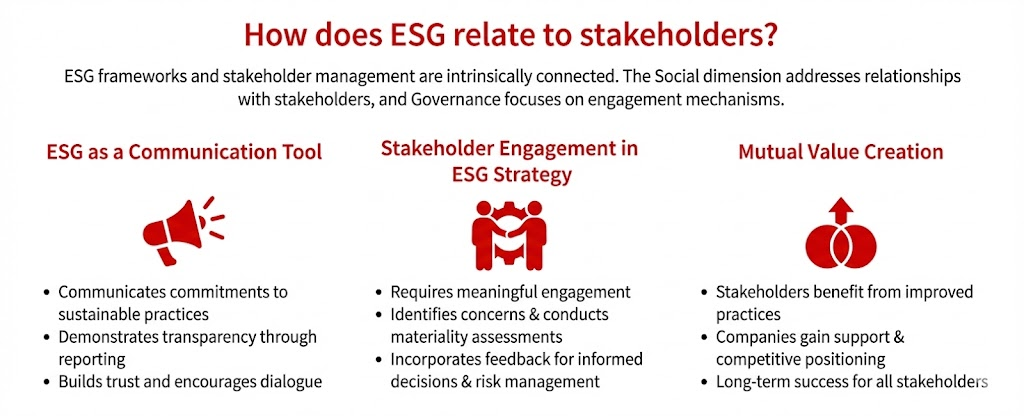
Environmental, Social, and Governance (ESG) frameworks and stakeholder management are intrinsically connected. The Social dimension of ESG specifically addresses relationships with stakeholders, including employees, customers, communities, and regulators. Meanwhile, governance focuses on leadership practices, board structures, and mechanisms for stakeholder engagement.
- ESG as a Communication Tool: ESG frameworks serve as powerful tools for communicating a company’s commitments to sustainable and responsible business practices to stakeholders. Through ESG reporting, companies demonstrate transparency and build trust with diverse stakeholder groups, encouraging active participation and dialogue.
- Stakeholder Engagement in ESG Strategy: Effective ESG performance requires meaningful stakeholder engagement. Companies must identify stakeholder concerns, conduct materiality assessments to determine which ESG issues matter most, and incorporate stakeholder feedback into strategic decision-making. This engagement leads to more informed decisions, better risk management, enhanced reputation, and long-term sustainability.
- Mutual Value Creation: The intersection of ESG and stakeholder engagement creates mutual value. Stakeholders benefit from improved environmental practices, fair labour standards, and ethical governance, whilst companies gain stakeholder support, reduced regulatory friction, and enhanced competitive positioning. Organisations embracing this approach recognise that long-term success depends on creating value for all stakeholders, not just shareholders.
For businesses seeking to integrate ESG principles effectively, Elite Asia’s ESG consultation services provide expert guidance on stakeholder engagement, materiality assessments, and strategic ESG implementation.
Identifying Stakeholders
Stakeholder identification is the foundational step in effective stakeholder management. This systematic process ensures that all relevant individuals and groups are recognised, understood, and appropriately engaged.
The Stakeholder Identification Process
1. Review Operations and Scope: Begin by examining your project or business operations comprehensively. Consider both internal and external stakeholders who may have interests in or be affected by your activities. Review project documentation, organisational charts, meeting minutes, and relevant materials to identify stakeholders mentioned or implied in the scope.
2. Ask Key Questions: Structure your identification process around critical questions:
- Who is directly impacted by the project or organisation?
- Who may influence the project’s outcomes?
- Who has decision-making authority?
- Who possesses relevant knowledge or expertise?
- Who has financial interests or dependencies?
- Who represents affected communities or groups?
3. Utilise Multiple Identification Methods: Employ diverse techniques to ensure comprehensive stakeholder identification:
- Stakeholder Registers: Create or consult existing databases listing individuals and groups with vested interests
- Stakeholder Workshops: Host brainstorming sessions with project teams to identify relevant stakeholders collaboratively
- Document Review: Examine project charters, contracts, and organisational documents for stakeholder references
- Surveys and Interviews: Conduct direct consultations with internal and external parties to gather perspectives
- Expert Consultation: Seek input from subject matter experts and industry professionals
- Social Media Monitoring: Track online discussions and forums to identify stakeholders engaging with relevant topics
- Community Engagement: Participate in public meetings and outreach activities to identify affected parties
4. Categorise Stakeholders: Once identified, categorise stakeholders into meaningful groups:
- Internal vs. External: Distinguish between those within the organisation and those outside
- Primary vs. Secondary: Differentiate direct participants from those indirectly affected
- Direct vs. Indirect: Separate daily operational stakeholders from outcome-focused parties
For organisations developing comprehensive stakeholder strategies, understanding stakeholder engagement in ESG contexts provides additional frameworks for identification and categorisation.
How to Do a Stakeholder Analysis
Stakeholder analysis is a structured process that evaluates stakeholders’ interests, influence, and potential impact on organisational success. This analysis enables organisations to prioritise engagement efforts and develop targeted communication strategies.
Step-by-Step Stakeholder Analysis Process

Step 1: Gather Stakeholder Information
Collect comprehensive data about each identified stakeholder. Document their roles, responsibilities, expectations, concerns, preferred communication methods, and organisational relationships. Use interviews, surveys, and stakeholder analysis tools to gather detailed intelligence.
Step 2: Assess Influence and Interest Levels
Evaluate each stakeholder’s ability to impact project outcomes (influence) and their degree of concern with project results (interest). Use consistent rating scales, such as 1-5 or high/medium/low, to ensure fair comparisons across stakeholders. Consider both formal authority and informal influence when making assessments.
Step 3: Analyse Current Attitudes
Determine each stakeholder’s current position regarding your project or organisation. Are they supportive, neutral, or resistant? Understanding attitudes helps predict behaviours and tailor engagement strategies accordingly.
Step 4: Plot Stakeholders on Analysis Matrix
Map stakeholders visually using appropriate frameworks. The most common approach is the Power/Interest Grid, which categorises stakeholders into four quadrants based on their influence and interest levels.
Step 5: Develop Engagement Strategies
Based on the analysis, create tailored engagement approaches for each stakeholder group. Different quadrants require different management strategies, which we’ll explore in detail in the stakeholder analysis matrix section.
Organisations implementing stakeholder analysis as part of broader sustainability initiatives can benefit from ESG frameworks and reporting standards that provide structured approaches to stakeholder assessment.
Benefits of Creating a Stakeholder Analysis

Stakeholder analysis delivers substantial benefits that directly contribute to organisational success:
- Prevents Misunderstandings: A Clear understanding of stakeholder expectations and concerns reduces miscommunication and prevents conflicts before they arise.
- Reduces Project Risks: Early identification of stakeholder concerns allows proactive risk management, avoiding costly surprises and project disruptions.
- Increases Project Buy-In: When stakeholders feel heard and valued, they become project advocates rather than obstacles, increasing support and commitment.
- Enhances Decision-Making: Comprehensive stakeholder insights enable informed decisions that balance diverse interests and align with strategic objectives.
- Improves Resource Allocation: Understanding stakeholder priorities helps organisations focus efforts and resources where they matter most, maximising efficiency.
- Minimises Resistance to Change: Engaging stakeholders early and addressing their concerns reduces opposition and streamlines change management.
How to Make a Stakeholder Analysis Matrix
The stakeholder analysis matrix is a practical tool that transforms stakeholder data into actionable insights. This visual representation helps prioritise stakeholders and guide engagement strategies.
Creating Your Stakeholder Analysis Matrix
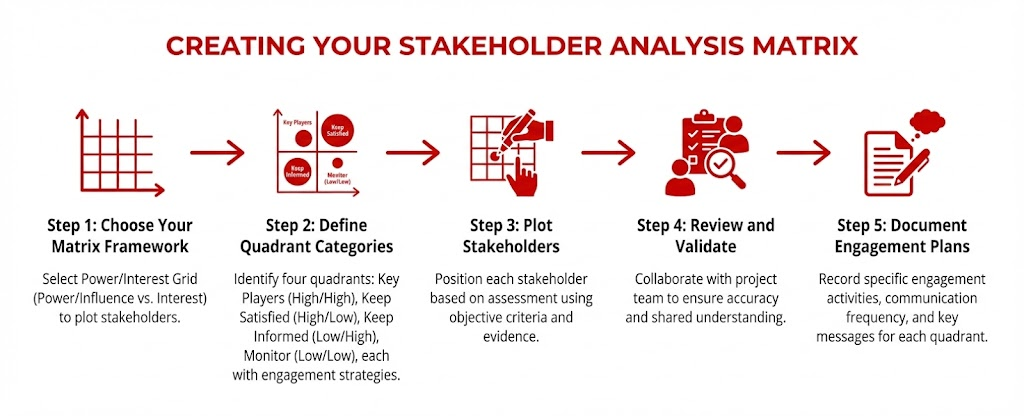
Step 1: Choose Your Matrix Framework
The Power/Interest Grid is the most widely used stakeholder matrix. This two-dimensional framework plots stakeholders based on:
- Vertical Axis: Power or Influence (ability to affect project outcomes)
- Horizontal Axis: Interest (level of concern with project results)
Step 2: Define Quadrant Categories

The matrix creates four distinct quadrants, each requiring different engagement approaches:
| Quadrant | Power | Interest | Engagement Strategy |
|---|---|---|---|
| Key Players | High | High | Manage closely; engage regularly; involve in decisions |
| Keep Satisfied | High | Low | Meet their needs; keep satisfied; consult actively |
| Keep Informed | Low | High | Provide regular updates; maintain interest; communicate frequently |
| Monitor | Low | Low | Minimal effort; monitor periodically; provide basic information |
Step 3: Plot Stakeholders
Position each stakeholder in the appropriate quadrant based on your assessment. Use objective criteria and documented evidence to support placement decisions.
Step 4: Review and Validate
Review stakeholder positions with your project team. Adjust placements as needed to ensure accuracy and consensus. The matrix should reflect shared understanding across your organisation.
Step 5: Document Engagement Plans
For each quadrant, document specific engagement activities, communication frequency, and key messages. This documentation serves as the foundation for your stakeholder engagement plan.
For projects requiring sophisticated stakeholder management, particularly in regulated industries, ESG compliance frameworks offer additional guidance on stakeholder prioritisation and engagement.
Stakeholder Analysis Example

Consider a healthcare technology company launching a new patient management system. Their stakeholder analysis matrix might look like this:
High Power, High Interest (Key Players):
- Hospital administrators (decision-makers and budget holders)
- Chief Medical Officers (influence adoption and usage)
- IT directors (technical implementation authority)
High Power, Low Interest (Keep Satisfied):
- Board of directors (oversight authority, but limited daily involvement)
- Regulatory agencies (compliance requirements, but passive unless issues arise)
- Major investors (financial interests, but delegated operational decisions)
Low Power, High Interest (Keep Informed):
- Nurses and medical staff (daily users with operational insights)
- Patients (beneficiaries of improved systems)
- Patient advocacy groups (community representatives)
Low Power, Low Interest (Monitor):
- General public (awareness but limited direct impact)
- Competing vendors (market awareness)
- Industry analysts (observational interest)
This matrix enables the healthcare technology company to allocate resources appropriately, investing heavily in engaging hospital administrators and medical officers whilst keeping staff informed and monitoring public perception.
How Stakeholders Work

Understanding how stakeholders function within organisational ecosystems is crucial for effective management. Stakeholders operate through various mechanisms, exerting influence and responding to organisational actions in distinct ways.
Stakeholder Influence Mechanisms
- Direct Economic Transactions: Primary stakeholders engage in economic exchanges with organisations. Customers purchase products, employees provide labour in exchange for compensation, suppliers deliver goods, and investors contribute capital in exchange for returns. These transactions create direct financial dependencies and influence organisational decisions.
- Regulatory and Legal Frameworks: Government agencies and regulatory bodies shape organisational behaviour through laws, standards, and enforcement mechanisms. Compliance requirements directly impact operations, whilst regulatory changes can fundamentally alter business models and strategies.
- Social and Reputational Pressure: External stakeholders, particularly communities and advocacy groups, influence organisations through public opinion, social media campaigns, and reputational impacts. Positive stakeholder relationships enhance brand reputation, whilst conflicts can damage public perception and market position.
- Resource Control: Stakeholders controlling critical resources, whether financial capital, specialised expertise, market access, or regulatory approvals, exercise significant influence over organisational decisions. Understanding these dependencies enables organisations to manage stakeholder relationships strategically.
Stakeholder Relationship Dynamics
Stakeholder relationships are characterised by interdependence and mutual influence. Organisations depend on stakeholders for resources, legitimacy, and support, whilst stakeholders depend on organisations for employment, products, services, and economic activity.
- Long-Term Orientation: Unlike shareholders who can quickly divest shares, most stakeholders maintain long-term relationships with organisations. Employees build careers, communities develop around facilities, and suppliers establish operational dependencies. This long-term orientation encourages sustainable business practices that create enduring value.
- Varying Perspectives and Priorities: Different stakeholder groups view organisations through distinct lenses. Employees focus on workplace quality and job security; customers prioritise product value and service; suppliers emphasise stable relationships and timely payments; whilst communities consider environmental and social impacts. Effective stakeholder management balances these diverse perspectives.
Organisations seeking to strengthen stakeholder relationships through structured engagement can explore sustainable marketing approaches that effectively communicate ESG commitments.
Stakeholder Examples
Stakeholders span diverse groups across all industries and sectors. Understanding specific stakeholder examples helps organisations recognise their unique stakeholder ecosystems.
Common Business Stakeholders

- Employees: Workers at all organisational levels represent critical internal stakeholders. They contribute skills, time, and effort whilst maintaining vested interests in workplace quality, compensation, job security, and career development. Employee engagement directly impacts productivity, innovation, and organisational performance.
- Customers: Purchasers of products or services are primary external stakeholders. Customer satisfaction, preferences, and feedback shape product development, service delivery, and market positioning. Loyal customers provide sustainable revenue streams and positive word-of-mouth advocacy.
- Shareholders and Investors: Equity owners and financial backers have direct financial stakes in organisational success. They expect returns on investment, capital appreciation, and dividend payments. Shareholders exercise influence through voting rights and can change management or strategic direction.
- Suppliers and Vendors: Providers of goods and services depend on stable business relationships and timely payments. Supplier stakeholders influence product quality, delivery timelines, and cost structures whilst relying on organisations for revenue generation.
- Management and Board Members: Senior leaders and directors guide strategic direction, allocate resources, and oversee operations. They balance diverse stakeholder interests whilst maintaining fiduciary responsibilities and ensuring organisational sustainability.
- Local Communities: Residents, businesses, and organisations near operational facilities experience direct impacts from organisational activities. Communities care about environmental effects, employment opportunities, economic development, and social contributions.
- Government and Regulatory Bodies: Federal, state, and local government agencies establish operational frameworks, enforce compliance, and protect public interests. Regulatory stakeholders focus on legal adherence, safety standards, environmental protection, and fair business practices.
- Competitors: Other organisations in the same industry are affected by competitive dynamics, market positioning, and strategic decisions. Whilst not traditionally considered stakeholders, competitors influence and are influenced by organisational actions.
For companies navigating complex stakeholder environments in international markets, understanding market entry strategies helps identify and engage diverse stakeholder groups effectively.
Issues Concerning Stakeholders

Stakeholder management presents several challenges that organisations must navigate carefully.
Conflicting Interests and Priorities
Different stakeholder groups frequently have competing or contradictory interests. Shareholders may prioritise short-term profits, whilst employees seek long-term job security. Customers want lower prices, but suppliers need higher payments to maintain quality. Communities desire environmental protection, which may conflict with expansion plans for production. Balancing these tensions requires sophisticated stakeholder management and clear prioritisation frameworks.
Communication Challenges
Maintaining effective communication across diverse stakeholder groups poses significant challenges. Stakeholders have different communication preferences, varying levels of technical understanding, and distinct information needs. Organisations must tailor messages, select appropriate channels, and maintain consistent yet customised communication approaches.
Power Imbalances
Not all stakeholders possess equal influence or voice in organisational decisions. Power imbalances can marginalise critical perspectives, particularly from vulnerable communities or less organised stakeholder groups. Effective stakeholder management addresses these imbalances through inclusive engagement processes and proactive outreach to underrepresented stakeholders.
Resource Constraints
Comprehensive stakeholder engagement requires substantial time, personnel, and financial resources. Organisations face practical limitations in how extensively they can engage all stakeholder groups. Strategic prioritisation becomes essential to allocate resources where they generate maximum value.
Measuring Stakeholder Impact
Quantifying stakeholder engagement effectiveness and stakeholder relationship quality presents methodological challenges. Unlike financial metrics, stakeholder satisfaction and relationship strength are often qualitative and subjective, making them difficult to measure consistently. Organisations must develop robust metrics and feedback mechanisms to track stakeholder engagement outcomes.
Companies addressing stakeholder challenges through systematic approaches can benefit from ESG marketing strategies that build transparent stakeholder communications.
Stakeholders vs. Shareholders
The distinction between stakeholders and shareholders is fundamental to understanding modern corporate governance.
Defining the Difference
- Shareholders: Individuals or entities that own equity shares in a company. Shareholders have specific legal rights, including voting on major corporate decisions, receiving dividends when declared, and participating in residual value if the company is sold or liquidated. Their primary interest centres on financial returns through share price appreciation and dividend payments.
- Stakeholders: A broader category encompassing anyone affected by or able to affect a company’s operations and decisions. Stakeholders include shareholders, employees, customers, suppliers, communities, regulators, and many others. Most stakeholders lack formal ownership rights, yet they maintain significant interests in organisational success.
Key Distinctions
| Dimension | Shareholders | Stakeholders |
|---|---|---|
| Relationship | Own equity in company | Affected by or affect company actions |
| Rights | Voting rights, dividend claims, liquidation preferences | Vary by stakeholder type; often contractual or regulatory |
| Primary Interest | Financial returns, share price growth | Diverse: wages, product quality, environmental impact, community welfare |
| Time Horizon | Often short to medium-term | Typically long-term relationships |
| Exit Options | Can sell shares and exit quickly | Often cannot easily sever ties |
| Influence Mechanism | Voting, board representation, market transactions | Purchasing decisions, labour markets, regulatory enforcement, social pressure |
Shareholder vs. Stakeholder Theory
- Shareholder Theory: Suggests that corporations’ sole responsibility is maximising shareholder value. Under this model, directors’ primary obligation is to generate financial returns for equity owners. Decisions centre on share price appreciation, dividend policy, and capital allocation.
- Stakeholder Theory: Contends that corporations should create value for all stakeholders, not just shareholders. This approach recognises that long-term organisational success depends on balanced relationships across diverse stakeholder groups. Stakeholder theory emphasises ethical business practices, social responsibility, and sustainable value creation.
- Modern Convergence: Contemporary corporate governance increasingly recognises that shareholder and stakeholder interests are interconnected rather than contradictory. Organisations that treat employees well, satisfy customers, maintain supplier relationships, and contribute to communities often achieve superior long-term financial performance, benefiting shareholders whilst creating broader stakeholder value.
For organisations seeking to balance shareholder and stakeholder interests through structured frameworks, ESG reporting services provide comprehensive approaches to measuring and communicating multi-stakeholder value creation.
Types of Stakeholders: Internal vs External Stakeholders
Stakeholders are commonly categorised into two primary groups based on their relationship to the organisation.
Internal Stakeholders
Internal stakeholders, also known as primary stakeholders, are individuals or entities with direct involvement in organisational operations. Their participation is crucial because organisational processes and outcomes directly impact them.
Characteristics of Internal Stakeholders:
- Direct employment, ownership, or investment relationships
- Participation in daily operations and decision-making
- Financial or operational dependence on organisational success
- Access to internal information and resources
- Formal roles and responsibilities within organisational structure
Examples of Internal Stakeholders:
- Employees: All workers, regardless of position or level
- Management: Supervisors, department heads, and senior executives
- Owners and Shareholders: Equity holders and proprietors
- Board of Directors: Governance and oversight bodies
- Investors: Financial backers with ownership stakes
Internal Stakeholder Interests:
Internal stakeholders prioritise operational efficiency, profitability, internal targets, job security, workplace culture, compensation, career development, and organisational alignment with personal goals.
External Stakeholders
External stakeholders, or secondary stakeholders, are parties outside the organisation who are affected by or can affect organisational actions without direct operational involvement.
Characteristics of External Stakeholders:
- No direct employment or ownership relationship
- Affected by organisational decisions and outcomes
- Influence through market mechanisms, regulations, or social pressure
- Diverse interests and varying levels of engagement
- Represent broader societal, environmental, or economic concerns
Examples of External Stakeholders:
- Customers: Product and service purchasers
- Suppliers and Vendors: Goods and service providers
- Government and Regulatory Bodies: Federal, state, and local agencies
- Local Communities: Residents and businesses near operations
- Creditors and Lenders: Financial institutions providing capital
- Trade Unions: Labour organisations representing workers’ interests
- Media: News organisations and journalists
- Advocacy Groups and NGOs: Special interest and non-profit organisations
- Competitors: Other organisations in the same industry
External Stakeholder Interests:
External stakeholders focus on product quality, value, pricing, availability, regulatory compliance, environmental protection, community impact, fair business practices, and social responsibility.
Perspective Differences
Internal and external stakeholders view organisations through fundamentally different lenses. Internal stakeholders see projects and decisions based on operational feasibility, resource constraints, and internal processes. External stakeholders evaluate organisations based on impacts on them, product value, community effects, financial returns, or regulatory compliance. These divergent perspectives create both challenges and opportunities for stakeholder engagement.
Organisations managing complex internal and external stakeholder ecosystems can leverage digital technology for ESG reporting to streamline stakeholder communications and data management.
What is a Stakeholder in Business?
In business contexts, stakeholders represent the full spectrum of parties with vested interests in organisational outcomes. Business stakeholders include all individuals and groups who contribute to, benefit from, or are affected by business operations.
Core Business Stakeholders:
- Employees: The workforce driving daily operations, innovation, and customer service
- Customers: Revenue generators whose satisfaction determines market success
- Shareholders: Equity owners providing capital and expecting returns
- Suppliers: Partners delivering essential goods and services
- Management: Leaders steering strategic direction and operational execution
- Creditors: Financial institutions providing debt capital
- Communities: Local populations experiencing operational impacts
Business stakeholder management focuses on identifying these groups, understanding their interests and influence, and developing strategies that balance competing priorities whilst driving sustainable business success.
What is a Stakeholder in Project Management?
In project management, stakeholders are individuals, groups, or organisations that can impact or be impacted by project decisions, activities, or outcomes. Effective stakeholder management is recognised as a critical success factor in project delivery.
Project Stakeholder Categories
Internal Project Stakeholders:
- Project sponsors (authorise and fund projects)
- Project managers (lead execution)
- Project team members (perform work)
- Functional managers (provide resources)
- Executive management (set strategic priorities)
External Project Stakeholders:
- Clients and customers (receive deliverables)
- End users (utilise project outputs)
- Suppliers and contractors (provide services)
- Regulatory bodies (enforce compliance)
- Community groups (experience project impacts)
Project Stakeholder Management Processes:
- Identify Stakeholders: Recognise all parties with project interests
- Analyse Stakeholders: Assess influence, interest, and expectations
- Plan Engagement: Develop targeted communication and involvement strategies
- Manage Engagement: Execute planned stakeholder interactions
- Monitor Relationships: Track stakeholder satisfaction and adjust approaches
Effective project stakeholder management aligns expectations, secures necessary resources, minimises resistance, and increases the likelihood of successful project delivery on time and within budget.
What is a Stakeholder Analysis?
Stakeholder analysis is a systematic process for identifying, assessing, and understanding stakeholders’ interests, influence, and potential impacts on organisational or project success. This analytical framework enables organisations to prioritise stakeholders and develop appropriate engagement strategies.
Purpose of Stakeholder Analysis
- Strategic Planning: Stakeholder analysis informs strategic decision-making by revealing who matters most, what they care about, and how they might respond to organisational actions.
- Risk Management: Understanding stakeholder positions, concerns, and influence helps identify potential risks and opportunities early in project or organisational lifecycles.
- Resource Allocation: Analysis results guide efficient resource deployment, ensuring engagement efforts focus on stakeholders with the most significant influence or impact.
- Communication Planning: Stakeholder analysis identifies appropriate communication channels, frequencies, and messages for different stakeholder groups.
- Conflict Prevention: Early identification of conflicting stakeholder interests enables proactive conflict management strategies before issues escalate.
Organisations conducting stakeholder analysis as part of comprehensive engagement programmes can reference stakeholder engagement frameworks in ESG contexts for structured approaches.
What is a Stakeholder in Healthcare?
Healthcare stakeholders include individuals, groups, and organisations with interests in healthcare outcomes, service delivery, and system performance. The healthcare sector features particularly complex stakeholder ecosystems given the life-and-death nature of services and extensive regulatory oversight.
The Four Ps of Healthcare Stakeholders
- Patients: The most crucial healthcare stakeholders, as their health outcomes and personal data security depend on healthcare systems. Patients have the highest investment and risk, making their feedback crucial for improving care standards.
- Providers: Includes individual practitioners (doctors, nurses, surgeons) and institutions (hospitals, clinics, urgent care centres). Providers balance patient outcomes with treatment costs, evaluate options, and navigate insurance and regulatory systems.
- Payors: Hospital networks, private insurers, Medicare, and other entities funding healthcare services. Payors focus on cost containment whilst ensuring quality and appropriate treatments.
- Policymakers: State and federal government entities that develop care standards, oversee quality metrics, and monitor patient outcomes to ensure providers deliver appropriate care.
Additional Healthcare Stakeholders
- Research institutions and universities
- Pharmaceutical and medical device companies
- Public health organisations
- Health information technology vendors
- Patient advocacy groups
- Professional medical associations
- Healthcare facility investors
- Supply chain partners
Healthcare stakeholder engagement emphasises patient-centred care, treating patients holistically whilst seeking their input and feedback to improve outcomes for all parties involved.
What is a Key Stakeholder?
A key stakeholder, also known as a primary stakeholder, is an individual or group with the highest level of interest in and influence over organisational or project outcomes. Key stakeholders are directly affected by decisions and actively contribute to success or failure.
Characteristics of Key Stakeholders:
- High Influence: Possess significant power to affect outcomes through decision-making authority, resource control, or political leverage
- High Interest: Maintain strong concern about project or organisational results due to direct impacts
- Active Participation: Engage regularly in planning, decision-making, and implementation processes
- Critical Resources: Control essential assets, approvals, funding, or expertise
- Make-or-Break Impact: Their support or opposition can determine project success or failure
Examples of Key Stakeholders:
- In business: Major investors, executive leadership, board members
- In projects: Project sponsors, client decision-makers, regulatory authorities
- In healthcare: Hospital administrators, chief medical officers, and major insurance providers
- In government: Elected officials, department heads, regulatory commissioners
Managing Key Stakeholders: Key stakeholders require intensive engagement, including frequent communication, involvement in major decisions, regular updates, and proactive management of expectations. The stakeholder analysis matrix places key stakeholders in the “high power, high interest” quadrant, demanding close management and sustained attention.
What is a Stakeholder in a Company?
As previously discussed, company stakeholders encompass all parties with interests in the firm’s operations, decisions, and outcomes. This includes internal stakeholders (employees, management, shareholders, board members) and external stakeholders (customers, suppliers, creditors, communities, regulators).
Company stakeholder relationships are governed by various mechanisms, including employment contracts, commercial agreements, regulatory frameworks, and social expectations. Effective company stakeholder management balances diverse interests whilst pursuing sustainable value creation for all parties.
What is the difference between a stakeholder and a shareholder?
This critical distinction was explored comprehensively in the “Stakeholders vs. Shareholders” section. In summary, shareholders own equity and focus on financial returns, whilst stakeholders represent a broader category of individuals affected by or affecting the company’s actions. Shareholders are a subset of stakeholders, possessing specific ownership rights that other stakeholders lack.
What is a stakeholder engagement plan?
A stakeholder engagement plan is a strategic document outlining how organisations will identify, communicate with, and manage relationships with stakeholders throughout project or organisational lifecycles. This plan ensures stakeholder interests, concerns, and expectations are actively considered, minimising risks and increasing the likelihood of success.
Components of a Stakeholder Engagement Plan
- Stakeholder Register: Detailed list including names, roles, contact information, influence levels, interest levels, and relevant background for all identified stakeholders.
- Stakeholder Analysis: Assessment of each stakeholder’s interests, concerns, influence, and potential impact on objectives.
- Engagement Objectives: Clear goals for stakeholder engagement aligned with overall strategy, such as building trust, gathering feedback, or fostering collaboration.
- Communication Strategy: Specification of communication channels, frequency, content, and responsible parties for each stakeholder group.
- Engagement Activities: Outline of planned activities including meetings, presentations, consultations, surveys, and feedback sessions.
- Responsibilities and Timelines: Assignment of team members responsible for stakeholder engagement activities with clear deadlines.
- Feedback Mechanisms: Processes for stakeholders to share concerns, ask questions, and provide input throughout engagement.
- Measurement and Evaluation: Metrics and methods for tracking engagement effectiveness and stakeholder satisfaction.
- Grievance Procedures: Mechanisms for addressing stakeholder complaints or conflicts.
Stakeholder engagement plans are living documents that require regular review and adjustment in response to changing circumstances, stakeholder feedback, and project evolution.
What is a Stakeholder Engagement?
Stakeholder engagement is the process organisations use to involve relevant stakeholders to achieve acceptable outcomes. It encompasses the practices and activities through which organisations include individuals or groups who may be affected by decisions or can influence implementation.
Levels of Stakeholder Engagement:
- Informing: One-way communication providing stakeholders with information
- Consulting: Seeking feedback from stakeholders on specific issues
- Involving: Working with stakeholders to develop solutions and initiatives
- Collaborating: Partnering with stakeholders to achieve shared goals
- Empowering: Giving stakeholders decision-making authority over issues
Three Pillars of Stakeholder Engagement:
- Communication: Establishing open, transparent, and continuous communication channels to share information and gather feedback
- Collaboration: Working together with stakeholders to develop and implement strategies, ensuring their input is integrated into decision-making
- Accountability: Taking responsibility for actions and impacts, regularly reporting on progress and outcomes
Effective stakeholder engagement builds trust, enhances decision-making, identifies risks and opportunities, drives innovation, and creates long-term value for organisations and stakeholders alike.
What is a Stakeholder Map?
A stakeholder map is a visual representation that identifies and categorises stakeholders based on their relationships, influence, interests, and other relevant criteria. Stakeholder maps transform complex stakeholder ecosystems into accessible, actionable visual tools.
Types of Stakeholder Maps
- Power/Interest Grid: The most common stakeholder map, plotting stakeholders on two axes, power (influence) and interest, creating four quadrants for prioritisation.
- Multi-Dimensional Maps: More sophisticated approaches assessing stakeholders across multiple criteria such as influence, impact, interest, criticality, position, and effort.
- Network Diagrams: Visual representations of relationships and connections among stakeholders, helpful in understanding stakeholder interactions and coalitions.
- Geographical Maps: Location-based visualisations showing where stakeholders are situated relative to projects or operations.
- Stakeholder Circles: Concentric circle diagrams with projects at the centre and stakeholders positioned based on their proximity or influence level.
Benefits of Stakeholder Mapping:
- Visualises complex stakeholder relationships
- Identifies key stakeholders requiring priority attention
- Reveals potential conflicts or alliance opportunities
- Guides resource allocation for engagement activities
- Facilitates team alignment on stakeholder priorities
- Supports communication planning and strategy development
Stakeholder mapping is an iterative process that should be revisited regularly as stakeholder positions, interests, and influence evolve throughout project or organisational lifecycles.
What is the Purpose of a Stakeholder Analysis?
The primary purpose of stakeholder analysis is to systematically identify and understand stakeholders’ interests, influence, and potential impacts to inform strategic decision-making and engagement planning.
Specific Purposes:
- 1. Informed Strategic Planning: Stakeholder analysis reveals who matters most, what they care about, and how they might respond to organisational actions, enabling more informed strategic choices.
- 2. Effective Resource Allocation: By identifying stakeholder priorities and influence levels, organisations can deploy resources efficiently, focusing on stakeholders with the most significant impact.
- 3. Risk Identification and Mitigation: Understanding stakeholder concerns, positions, and power dynamics helps identify potential risks before they materialise, enabling proactive management.
- 4. Communication Optimisation: Analysis results inform communication planning by identifying appropriate channels, frequencies, messages, and engagement approaches for different stakeholder groups.
- 5. Conflict Prevention and Resolution: Early identification of conflicting stakeholder interests enables the development of strategies to address tensions before they escalate into damaging conflicts.
- 6. Stakeholder Prioritisation: Analysis provides objective criteria for ranking stakeholders, ensuring engagement efforts focus where they generate maximum value.
- 7. Relationship Building: Systematic analysis demonstrates organisations value stakeholder perspectives, building trust and laying foundations for positive long-term relationships.
Stakeholder analysis ultimately aims to increase project success rates, enhance organisational performance, and create sustainable value for both organisations and their stakeholder communities.
What is a Stakeholder in Public Health?
Public health stakeholders include individuals, groups, and organisations with interests in population health outcomes, health promotion initiatives, and public health system performance.
Primary Public Health Stakeholders:
- The Public: General population whose health and well-being public health systems protect
- Patients: Individuals receiving public health services and interventions
- Healthcare Providers: Doctors, nurses, and public health professionals delivering services
- Government Agencies: Federal, state, and local health departments implementing programmes
- Schools and Educational Institutions: Settings for health education and promotion
- Community Organisations: Local groups addressing health disparities and social determinants
- Pharmaceutical Companies: Vaccine and medication providers
- Research Institutions: Universities and organisations conducting public health research
- International Bodies: WHO and other global health organisations
- Policy Makers: Elected officials and regulators shaping public health policy
Public Health Stakeholder Characteristics:
Public health stakeholders often focus on population-level outcomes rather than individual care, emphasising prevention over treatment, and addressing social determinants of health, including education, housing, employment, and environmental conditions.
Primary vs. Secondary Public Health Stakeholders:
- Primary: Those without whose continuing participation, public health initiatives could not succeed (e.g., schools for childhood nutrition programmes)
- Secondary: Those with influence or affected by initiatives but whose engagement is not essential for success (e.g., car manufacturers for road safety programmes)
Public health stakeholder engagement is essential for addressing complex challenges such as infectious disease control, chronic disease prevention, health equity, and emergency preparedness.
What is a Stakeholder in Government?
Government stakeholders include individuals, groups, and organisations with interests in government decisions, policies, and service delivery. Government stakeholder ecosystems are characteristically complex, given multiple levels of authority, diverse constituencies, and extensive public accountability requirements.
Government Stakeholder Categories
Internal Government Stakeholders:
- Elected officials
- Government employees and civil servants
- Department heads and agency directors
- Regulatory bodies and commissions
- Inter-governmental working groups
External Government Stakeholders:
- Citizens and taxpayers
- Regulated industries and businesses
- Non-governmental organisations
- Advocacy groups and special interests
- International governments and bodies
- Media organisations
- Academic and research institutions
Government Stakeholder Engagement Mechanisms:
- Public Consultations: Formal processes for gathering citizen and stakeholder input on proposed regulations, policies, or projects.
- Regulatory Participation: Mechanisms allowing affected parties to comment on, influence, or challenge regulatory decisions.
- Transparency and Accountability: Public reporting, open data initiatives, and disclosure requirements ensure that government actions are visible to stakeholders.
- Advisory Committees: Formal bodies bringing together diverse stakeholders to provide expertise and guidance on specific policy areas.
- Stakeholder Dialogues: Structured conversations between government agencies and affected stakeholder groups.
Government stakeholder engagement is increasingly recognised as essential for effective governance, policy legitimacy, democratic participation, and public trust.
What is a Stakeholder Relationship?
A stakeholder relationship is the ongoing connection between an organisation and its stakeholders, characterised by mutual dependencies, shared interests, and continuous interaction. These relationships form the foundation for organisational success and sustainability.
Characteristics of Stakeholder Relationships:
- Interdependence: Organisations depend on stakeholders for resources, legitimacy, market access, and social license to operate, whilst stakeholders depend on organisations for employment, products, services, economic activity, and community contributions.
- Continuity: Unlike transactional interactions, stakeholder relationships extend over time, developing depth, trust, and mutual understanding through repeated engagement.
- Mutual Influence: Both parties affect each other; organisations impact stakeholders through decisions and actions, whilst stakeholders influence organisations through feedback, purchasing decisions, regulatory pressure, or social advocacy.
- Value Exchange: Healthy stakeholder relationships involve reciprocal value creation, with both organisations and stakeholders benefiting.
Building Strong Stakeholder Relationships:
- Identify and Map: Recognise who your stakeholders are and understand their interests, influence, and importance
- Active Listening: Genuinely hear stakeholder concerns, perspectives, and feedback
- Transparent Communication: Maintain open, honest, consistent communication across stakeholder groups
- Deliver on Commitments: Follow through on promises and maintain accountability
- Collaborative Problem-Solving: Involve stakeholders in finding solutions to challenges
- Regular Engagement: Maintain consistent contact rather than only reaching out when problems arise
- Adapt and Evolve: Adjust approaches based on stakeholder feedback and changing circumstances
Strong stakeholder relationships generate tangible benefits, including enhanced reputation, reduced risks, improved decision-making, increased trust, stronger partnerships, and sustainable long-term success.
For organisations seeking to strengthen stakeholder relationships through systematic approaches, ESG-conscious business practices provide frameworks for building trust and demonstrating commitment to stakeholder value creation.
What is a Stakeholder in Marketing?
Marketing stakeholders are individuals, groups, or organisations that influence or are affected by marketing activities, strategies, and outcomes. Understanding marketing stakeholders is crucial for developing and executing successful marketing initiatives.
Key Marketing Stakeholders
Internal Marketing Stakeholders:
- Chief Marketing Officer (CMO): Executive leader owning marketing strategy and budget
- Marketing Directors: Functional leaders overseeing specific marketing domains
- Campaign Managers: Specialists designing and executing campaigns
- Marketing Team Members: Coordinators, analysts, content creators, and designers
- Sales Teams: Partners converting marketing leads to customers
- Product Teams: Collaborators shaping product positioning and messaging
- Executive Leadership: Final decision-makers on marketing investments and priorities
External Marketing Stakeholders:
- Customers: Target audiences and existing clients whose behaviour determines marketing success
- Media: Journalists, influencers, and content platforms amplifying marketing messages
- Advertising Agencies: External partners creating campaigns and creative assets
- Marketing Technology Vendors: Software and platform providers enabling marketing execution
- Regulators: Agencies enforcing advertising standards and consumer protection laws
- Competitors: Other organisations vying for the same target audiences
Stakeholder Marketing Approach:
Stakeholder marketing recognises that brands engage in conversations with diverse audiences rather than homogenous masses. Effective stakeholder marketing:
- Identifies all parties with interests in marketing outcomes
- Understands stakeholder values, needs, and expectations
- Tailors messaging and engagement strategies by stakeholder group
- Measures value creation and exchange across stakeholder relationships
- Balances priorities across customer, employee, shareholder, and community stakeholders
Marketing stakeholder management ensures campaigns align with diverse interests, secure necessary approvals and resources, and create value for multiple constituencies simultaneously.
How to Manage Project Stakeholders
Project stakeholder management is a systematic discipline essential for project success. Effective management ensures stakeholders remain engaged, informed, and supportive throughout project lifecycles.
Project Stakeholder Management Framework
Step 1: Identify Stakeholders
Create comprehensive lists of all individuals, groups, and organisations that can impact or be impacted by projects. Use multiple identification methods, including brainstorming sessions, document reviews, organisational charts, and expert consultations. Document stakeholders in stakeholder registers, including their names, roles, interests, and contact information.
Step 2: Analyse and Prioritise
Assess each stakeholder’s influence, interest, expectations, and potential impact. Use stakeholder analysis matrices, power/interest grids, or multi-criteria decision analysis to categorise and rank stakeholders. Prioritise engagement efforts based on stakeholder importance and influence levels.
Step 3: Plan Engagement
Develop tailored engagement strategies for different stakeholder groups. Define communication channels, frequencies, key messages, and responsible team members. Create stakeholder engagement plans documenting how you will keep stakeholders informed and involved.
Step 4: Execute Engagement
Implement planned stakeholder interactions through meetings, reports, presentations, surveys, and collaborative sessions. Maintain consistent, transparent communication and actively involve stakeholders in relevant decisions.
Step 5: Monitor and Adjust
Regularly assess stakeholder satisfaction, relationship quality, and engagement effectiveness. Track stakeholder positions, concerns, and feedback. Adjust engagement approaches based on changing circumstances and stakeholder responses.
Stakeholder Management Best Practices
- Early Identification: Recognise stakeholders from the project outset to incorporate their needs during planning phases.
- Involved in Decisions: Engage stakeholders in decision-making processes to build ownership and reduce resistance.
- Track Interactions: Maintain detailed records of stakeholder communications, commitments, and concerns.
- Resolve Conflicts Promptly: Address stakeholder conflicts quickly before they escalate and impact project progress.
- Consult Regularly: Schedule consistent stakeholder consultations to gather input, address questions, and maintain alignment.
- Manage Expectations: Clearly communicate project scope, constraints, and trade-offs to prevent misunderstandings.
For project managers navigating complex stakeholder landscapes in dynamic environments, understanding digital transformation challenges provides context for stakeholder management in rapidly changing industries.
Keys to Stakeholder Communication: 3 Tips
Effective stakeholder communication forms the cornerstone of successful stakeholder management. These three essential tips enhance the effectiveness of stakeholder communication.
1. Establish Transparency and Build trust
- Open Dialogue: Maintain honest communication about both successes and challenges. When projects face setbacks, timelines shift, or budgets change, inform stakeholders as early as possible. Transparency fosters trust and allows stakeholders to adjust expectations and plans accordingly.
- Clear Objectives: Explicitly communicate project objectives, scope, constraints, and success criteria. Ambiguity breeds misunderstandings. Clarity prevents confusion and aligns stakeholder expectations with project realities.
- Consistent Messaging: Use standardised communication templates and maintain uniform messaging across stakeholder groups. Consistency builds reliability and credibility, demonstrating organisational professionalism and attention to stakeholder needs.
2. Create Two-Way Feedback Mechanisms
- Encourage Stakeholder Input: Design communication processes that actively solicit stakeholder feedback, concerns, and suggestions. Provide multiple channels for stakeholder contributions, including surveys, feedback forms, meetings, emails, and online platforms.
- Active Listening: Genuinely hear what stakeholders communicate rather than simply waiting to respond. Demonstrate empathy, ask clarifying questions, paraphrase to confirm understanding, and provide thoughtful, timely responses.
- Act on Feedback: Take stakeholder input seriously and implement changes where appropriate. When stakeholder suggestions cannot be adopted, explain why transparently. Demonstrating that stakeholder voices matter encourages continued engagement and strengthens relationships.
3. Tailor Communication to Stakeholder Needs
- Identify Communication Preferences: Understand how each stakeholder prefers to receive information. Some stakeholders favour detailed written reports, others prefer brief verbal updates, and still others prefer visual presentations or interactive meetings.
- Segment Stakeholders: Group stakeholders with similar communication needs, interests, or characteristics. Develop targeted communication strategies for each segment rather than using one-size-fits-all approaches.
- Match Channels to Content: Select appropriate communication channels based on message complexity, urgency, and stakeholder preferences. Use emails for detailed documentation, phone calls for urgent matters, meetings for collaborative discussions, and social media for broad awareness campaigns.
Additional Communication Best Practices:
- Maintain regular communication rhythms rather than sporadic contact
- Personalise interactions when possible to demonstrate individual stakeholder value
- Be responsive to stakeholder inquiries and concerns
- Measure communication effectiveness through stakeholder feedback and engagement metrics
- Continuously improve communication approaches based on results and stakeholder input
Organisations developing comprehensive stakeholder communication strategies can explore sustainable marketing frameworks that integrate stakeholder engagement with brand positioning.
Are Some Stakeholders More Important Than Others?
The question of stakeholder importance is complex and context-dependent. Whilst all stakeholders matter, practical resource constraints and strategic considerations require organisations to prioritise stakeholder engagement efforts.
The Case for Stakeholder Prioritisation
- Resource Constraints: Organisations face finite time, personnel, and financial resources. Comprehensive engagement with all stakeholders simultaneously is impractical. Strategic prioritisation ensures resources are deployed where they generate maximum value and impact.
- Varying Influence: Stakeholders possess different levels of power to affect organisational outcomes. Some stakeholders control critical resources, possess decision-making authority, or wield significant social influence. Others have limited ability to impact success or failure. Recognising these differences enables appropriate engagement intensity.
- Different Interest Levels: Stakeholders maintain varying degrees of concern about organisational activities. Some are deeply invested in outcomes, whilst others have peripheral interests. Engagement strategies should reflect these variations in interest.
- Impact on Success: Certain stakeholders are essential for achieving objectives; without their participation or support, initiatives cannot succeed. These stakeholders naturally merit priority attention compared to those with minimal impact on outcomes.
Stakeholder Prioritisation Approaches
- Power/Interest Matrix: This classic framework categorises stakeholders into priority groups based on their influence and interest levels. Key players with high power and high interest receive the closest management, whilst low-power, low-interest stakeholders require only monitoring.
- Salience Model: This approach prioritises stakeholders based on three attributes, power, legitimacy, and urgency. Stakeholders possessing all three attributes demand immediate, intensive engagement.
- Multi-Criteria Decision Analysis: More sophisticated prioritisation uses multiple weighted criteria, including influence, impact, interest, criticality, position, and required effort. This approach provides nuanced stakeholder rankings based on objective assessments.
Balancing Stakeholder Importance
Whilst prioritisation is necessary, organisations must avoid completely neglecting lower-priority stakeholders. Even stakeholders with limited current influence may become more critical as circumstances change. Moreover, ethical considerations and social responsibility principles suggest organisations should consider impacts on all affected parties, not only powerful ones.
Best Practice Approach: Prioritise engagement intensity based on stakeholder importance, but maintain baseline communication with all stakeholders. Focus intensive resources on key stakeholders whilst providing informational updates to broader stakeholder communities. Regularly reassess priorities as stakeholder positions, interests, and influence evolve.
For organisations seeking balanced stakeholder approaches aligned with contemporary governance standards, ESG frameworks provide guidance on stakeholder inclusivity and multi-stakeholder value creation.
What Are the Stakeholders in a Business?
Business stakeholders encompass diverse parties with interests in organisational success, operations, and outcomes. As comprehensively discussed throughout this guide, business stakeholders include:
Internal Business Stakeholders:
- Employees (all levels and functions)
- Management (supervisors, directors, executives)
- Owners and shareholders (equity holders)
- Board of directors (governance bodies)
- Investors (financial backers)
External Business Stakeholders:
- Customers (product and service purchasers)
- Suppliers and vendors (goods and service providers)
- Creditors and lenders (debt capital providers)
- Communities (local populations near operations)
- Government and regulators (compliance authorities)
- Trade unions (worker representatives)
- Media (news organisations)
- Competitors (industry participants)
- Advocacy groups (special interest organisations)
Each stakeholder group brings unique perspectives, interests, and influence to business relationships. Effective business stakeholder management identifies these parties, understands their needs and expectations, and develops strategies that balance competing interests whilst pursuing sustainable success.
Taking Action: Your Next Steps in Stakeholder Management
Understanding stakeholders is only the beginning. Truly successful organisations transform stakeholder knowledge into strategic action through systematic engagement, transparent communication, and genuine commitment to multi-stakeholder value creation.
As business environments become increasingly complex and stakeholder expectations evolve, organisations must adopt sophisticated frameworks that balance diverse interests whilst pursuing sustainable success. Environmental, Social, and Governance (ESG) principles provide structured approaches for stakeholder engagement, offering organisations pathways to measure, manage, and communicate stakeholder value creation effectively.
Whether you’re launching a new project, navigating regulatory changes, expanding into new markets, or transforming your organisation’s sustainability approach, stakeholder management remains fundamental to success. By identifying your stakeholders, understanding their interests and influence, engaging them meaningfully, and adapting to their evolving needs, you create foundations for resilient, sustainable, and prosperous organisational futures.
Ready to strengthen your stakeholder engagement through comprehensive ESG strategies? Elite Asia offers expert ESG consultation, reporting services, and stakeholder engagement frameworks tailored to your organisational needs. Explore Elite Asia’s ESG Solutions to transform stakeholder management from a challenge into a competitive advantage.