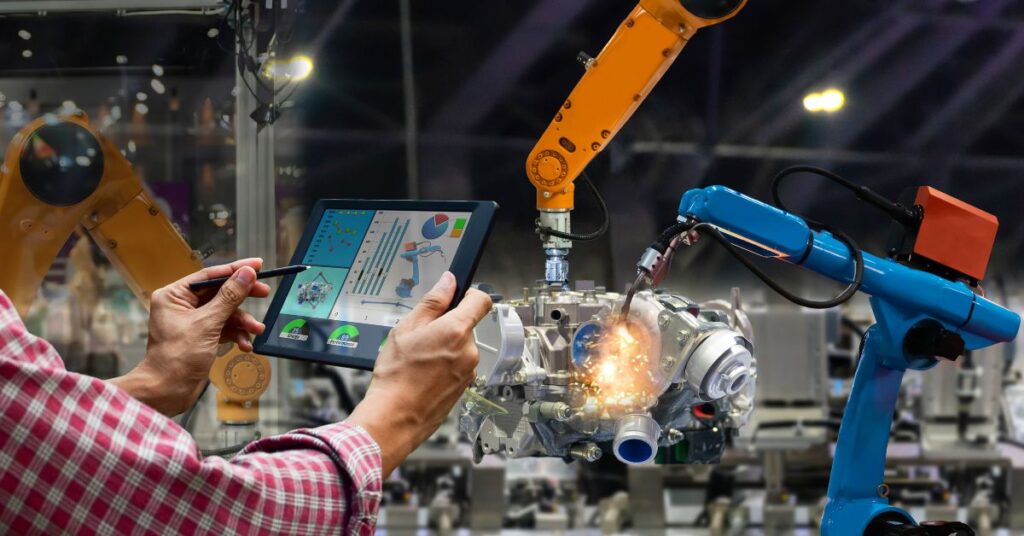
20 Challenges the Manufacturing Industry Faces in 2026
The manufacturing industry stands at a critical crossroads in 2026. Global manufacturers confront an unprecedented combination of workforce shortages, technological disruptions, geopolitical tensions, and sustainability pressures that threaten operational efficiency and profitability. This comprehensive analysis explores the twenty most pressing challenges facing the sector and provides actionable insights for business leaders navigating this complex landscape.
1. Skilled Labour Shortage and Workforce Development
The manufacturing talent crisis has intensified dramatically in 2026. More than half of manufacturing executives identify talent shortage as their primary operational challenge. The problem stems from multiple converging factors: baby boomer retirements, limited interest from younger generations in manufacturing careers, and fierce competition from technology and service sectors for qualified workers.
The skills gap extends beyond entry-level positions. Manufacturers struggle to find technicians with expertise in robotics, artificial intelligence, automation systems, and data analytics. These advanced capabilities have become essential as factories embrace Industry 4.0 technologies. Companies that fail to address workforce development risk falling behind competitors who successfully attract and retain skilled talent.
Many manufacturers now partner with educational institutions to create apprenticeship programmes and work-study arrangements. They invest in comprehensive training programmes to upskill existing employees, particularly focusing on digital literacy and advanced manufacturing techniques. ESG practices also play a role, as younger workers increasingly prioritise employers committed to sustainability and social responsibility.
The workforce challenge becomes more acute as manufacturers deploy sophisticated technologies requiring new skill sets. The transition demands not just technical training but also cultural change within organisations. Companies must create environments where continuous learning becomes embedded in daily operations.
2. Supply Chain Volatility and Disruptions
Supply chain resilience remains a top concern entering 2026. Manufacturers continue experiencing volatile lead times, geopolitical shifts, freight cost fluctuations, and supplier instability. Even organisations that diversified sourcing in previous years find that visibility into second-tier and third-tier suppliers remains limited.
Trade policy uncertainty compounds these difficulties. Over 78% of manufacturers report trade uncertainty as their primary concern, with input costs expected to rise by an average of 5.4% over the coming year. Tariff structures have become increasingly unpredictable, with some products now assessed based on Country of Diffusion rather than traditional Country of Origin, introducing new complexity layers for importers.
The challenge extends beyond cost management. Manufacturers must build responsive supply chain designs that detect disruptions early, recalibrate plans instantly, and unify data across procurement, logistics, and production. This requires investment in digital tools providing real-time visibility across the entire supply network.
Globalisation impacts create additional complexity as companies navigate diverse regulatory environments, cultural differences, and fluctuating exchange rates. Successful manufacturers adopt modular supply chain networks that can reconfigure based on cost, risk, or customer requirements. They maintain strategic inventory buffers and develop contingency plans for various disruption scenarios.
3. Cybersecurity Threats and Data Protection
Cybersecurity has emerged as a critical vulnerability for manufacturing operations in 2026. Ransomware attacks targeting manufacturing and industrial sectors surged 46% from Q4 2024 to Q1 2025. The increasing connectivity of production systems through Internet of Things devices and cloud computing platforms creates expanded attack surfaces that cybercriminals actively exploit.
Nearly 44% of manufacturers expect to face AI-enhanced threats, yet only 32% feel adequately prepared for them. These sophisticated attacks identify vulnerabilities faster than humans can patch them, launching adaptive, coordinated campaigns that overwhelm traditional defences. Legacy operational technology systems, many never designed with cybersecurity considerations, represent particularly vulnerable targets.
The convergence of information technology and operational technology systems introduces new pathways for attackers to move from accessible business systems into critical production environments. A successful cyberattack can halt production, damage expensive equipment, compromise worker safety, and disrupt entire supply chains.
Manufacturers must implement robust cybersecurity measures, including network segmentation, zero-trust architecture, continuous monitoring, and employee training programmes. Data security protocols become essential as companies digitise operations and collect vast amounts of operational data. Edge computing offers advantages by processing sensitive manufacturing data locally rather than transmitting it across potentially vulnerable networks.
4. Rising Operational Costs and Inflation
Inflation continues to pressure manufacturers across all cost categories in 2026. Raw material procurement, freight and transportation, energy consumption, and labour expenses have all increased substantially. During inflationary periods, manufacturers face difficult decisions about whether to absorb costs, potentially reducing margins, or raise prices, potentially losing customers.
The challenge extends beyond simple price increases. Cost volatility makes financial planning and forecasting significantly more difficult. Manufacturers struggle to provide accurate quotes to customers when input costs fluctuate unpredictably. Long-term contracts become riskier as companies cannot reliably predict their cost structure months in advance.
Many manufacturers respond by reassessing their entire cost structure, renegotiating supplier contracts, and auditing supply chains to identify inefficient areas that can be improved without compromising quality. They invest in automation and process improvements that reduce per-unit costs over time, though these investments require significant upfront capital.
Energy costs represent a particularly volatile component. Many facilities now prioritise energy efficiency improvements and explore renewable energy options to reduce exposure to fossil fuel price fluctuations. Sustainability initiatives often align with cost reduction goals, as more efficient operations typically consume less energy and generate less waste.
5. Tariff Uncertainty and Geopolitical Risks
Geopolitical tensions have fundamentally reshaped the manufacturing landscape in 2026. An overwhelming 90% of manufacturers report that geopolitical risk is stalling strategic development, with 94% stating tariff uncertainty impacts investment and sourcing decisions. This unprecedented level of concern reflects the rapid policy shifts, retaliatory trade measures, and economic statecraft that characterise current international relations.
The evolving relationship between major economic powers has created persistent uncertainty. Trade policies that seemed stable can change within weeks, forcing manufacturers to maintain expensive contingency plans and hold higher inventory levels. Some companies front-load inventory ahead of potential tariff increases, straining working capital and warehouse capacity.
Manufacturers respond by diversifying their geographic footprint, though this strategy requires substantial investment and time. Companies evaluate “capex-light” strategies, repurposing existing facilities or forming regional partnerships to localise operations efficiently. Many shift production away from traditional low-cost hubs toward lower-risk markets that offer greater stability, even if initial costs prove higher.
The USMCA (United States-Mexico-Canada Agreement) review scheduled for mid-2026 adds another layer of uncertainty for North American manufacturers. The outcome could either reduce trade barriers and boost regional manufacturing or introduce new restrictions that further complicate supply chain planning. Market entry strategies must account for this regulatory volatility when companies expand into new territories.
6. Digital Transformation and Legacy System Integration
Many manufacturing facilities still operate with legacy systems spread across procurement, production, supply chain, finance, and human resources. As operations scale across multiple plants and geographies, these disconnected processes create limited real-time visibility, slow response cycles, inconsistent quality and compliance, and redundant planning efforts.
Digital transformation has evolved from an optional upgrade to a fundamental requirement for competitive survival. However, integrating modern technologies with brownfield environments—facilities operating mixed old and new equipment from various manufacturers with proprietary protocols—presents significant technical challenges. This lack of interoperability creates data silos that prevent the seamless information flow needed for truly smart factories.
The high cost of comprehensive digital transformation deters many organisations, particularly small and medium-sized enterprises. Capital justification becomes difficult when return on investment timelines extend several years into an uncertain future. Companies fear making expensive technology investments that may become obsolete or fail to deliver promised benefits.
Successful digital transformation requires more than technology deployment. It demands process standardisation, data governance frameworks, and cultural change throughout the organisation. Manufacturers must adopt phased implementation approaches, focusing on high-impact areas first and gradually expanding capabilities. Technology adoption succeeds when companies prioritise employee training and change management alongside technical implementation.
7. Automation Implementation Challenges
Automation presents enormous potential for addressing labour shortages and improving efficiency, yet implementation proves remarkably difficult. Recent surveys reveal that 50% of manufacturers struggle to identify appropriate technology, 39% cite insufficient internal expertise, and 32% face budget overruns on automation projects.
The challenge extends beyond simply purchasing robots or automated equipment. Integration difficulties, including installation complexity, maintenance requirements, and system adaptability, affect nearly half of manufacturers. Companies often underestimate the technical expertise required to design, deploy, and maintain automated systems, leading to projects that stall in “pilot purgatory”—successful small-scale trials that never scale enterprise-wide.
Many facilities also grapple with justifying automation investments when production volumes fluctuate unpredictably. The business case becomes less clear when companies cannot guarantee the utilisation rates needed to recoup substantial capital expenditures. Automation projects compete for limited capital with other urgent needs like facility maintenance, regulatory compliance, and working capital.
Worker concerns about job displacement create additional implementation barriers. Successful automation strategies emphasise augmentation rather than replacement, positioning technology as tools that eliminate dangerous, repetitive tasks whilst allowing workers to focus on higher-value activities. Digital transformation programmes that include comprehensive worker training and transparent communication about changing roles achieve better adoption rates.
8. Sustainability and Environmental Compliance
Sustainability has transitioned from a voluntary initiative to a business imperative in 2026. Manufacturers face pressure from multiple directions: regulatory mandates, investor expectations, customer preferences, and employee values all demand demonstrated environmental responsibility. Companies that dismiss sustainability as a passing trend risk losing customers, investors, and talented workers to more progressive competitors.
Regulatory requirements have become particularly stringent. Manufacturers must reduce energy consumption and emissions, meet regional compliance mandates, ensure supplier environmental responsibility, track materials and carbon across supply chains, and improve product circularity whilst reducing waste. Malaysia’s carbon tax implementation in 2026 exemplifies this trend, directly impacting steel, cement, and energy-intensive manufacturers.
The compliance burden extends throughout the supply chain. Even companies not directly covered by regulations face pressure from customers demanding Scope 3 emissions data—indirect emissions from their value chain. Global buyers increasingly require suppliers to demonstrate environmental credentials, making ESG performance a competitive prerequisite rather than differentiator.
However, achieving sustainability goals typically requires significant investment. Companies must evaluate trade-offs between environmental improvements and short-term costs. ESG certification processes help manufacturers systematically assess their environmental impact and develop improvement roadmaps. Forward-thinking companies recognise that sustainability investments often generate long-term cost savings through improved efficiency, reduced waste, and lower energy consumption.
9. Quality Control and Product Consistency
Maintaining consistent product quality becomes increasingly challenging as supply chains grow more complex and production volumes increase. Quality control issues stem from diverse sources: inconsistent measurement methods, equipment calibration drift, operator training gaps, process variation, and documentation errors.
Global supply chains introduce particular complications. Quality control executives must ensure standards are met not only at their own production sites but also at supplier locations worldwide. These suppliers may operate under different regulatory environments, have access to varying quality materials, and use different production processes, leading to inconsistency in product quality.
Material quality variations present persistent problems. Poor-quality raw materials, whether due to supplier issues or storage conditions, directly compromise final product quality. Manufacturers must implement stringent quality checks on incoming materials and establish robust inspection procedures at various production stages.
Process variability represents another major challenge. Inconsistent manufacturing processes due to machine settings, environmental conditions, or human factors lead to product defects. Standardising processes through detailed work instructions, checklists, and robotic automation helps reduce human error. Many companies adopt Six Sigma or Lean principles to streamline processes and minimise variations.
Inadequate testing procedures can result in defective products reaching customers, leading to complaints, warranty claims, and brand damage. Robust testing protocols must be integrated at various production stages, including in-process testing, end-of-line testing, and post-production quality audits. Quality management systems provide centralised platforms that integrate data from all production points, enabling real-time monitoring.
10. Demand Forecasting Inaccuracies
Accurate demand forecasting has become exponentially more difficult in 2026’s volatile market environment. Without reliable forecasts, manufacturers experience losses from either overproduction or underproduction. Overproducing goods leaves shelves cluttered with dead stock, increasing carrying costs and slowing operations. Underproduction leads to stockouts and frustrated customers. Both scenarios result in reduced profits and customer dissatisfaction.
Multiple factors contribute to forecasting difficulties. Consumer preferences shift rapidly, particularly in ecommerce environments where products can gain viral popularity overnight. Economic uncertainty makes predicting purchasing behaviour more difficult. Geopolitical events can suddenly disrupt markets or change consumer sentiment in ways traditional forecasting models cannot anticipate.
The direct-to-consumer sales model that many manufacturers now pursue adds complexity. Companies must forecast not just wholesale orders from established retail partners but also individual consumer demand across diverse channels. This requires different data sources, analytical approaches, and inventory strategies than traditional B2B manufacturing.
Advanced technologies offer potential solutions. Manufacturers leverage artificial intelligence and machine learning to analyse detailed sales data, identifying patterns and trends that humans might miss. These systems can incorporate diverse data sources—economic indicators, social media trends, weather patterns, promotional calendars—to generate more accurate predictions.
Real-time data integration proves essential. Rather than relying on historical data alone, modern forecasting systems continuously update predictions based on current market signals. Digital tools enable manufacturers to align production schedules dynamically with evolving market trends, customer behaviour, and demand-influencing factors.
11. Regulatory Compliance and Changing Standards
Navigating the evolving landscape of manufacturing regulations requires ongoing vigilance and constant updating. Regulatory changes impact numerous areas, including product safety, environmental standards, labour practices, data protection, and trade compliance. The challenge intensifies for manufacturers operating across multiple jurisdictions, as each location may enforce different rules that must be followed simultaneously.
Compliance failures carry severe consequences. Financial penalties, legal liability, production shutdowns, and reputational damage can result from violations. In some cases, non-compliance can trigger product recalls that devastate profitability and permanently harm brand reputation. The stakes are particularly high in heavily regulated sectors like pharmaceuticals, medical devices, and food manufacturing.
Regulatory complexity increases as governments worldwide strengthen environmental protections. A shift in carbon emission regulations, for example, might require manufacturers to invest substantially in more efficient equipment. The European Union’s Carbon Border Adjustment Mechanism (CBAM) exemplifies this trend, imposing carbon costs on imports and requiring detailed emissions documentation.
Labour regulations present another evolving challenge. Workplace safety standards, wage requirements, working hour restrictions, and employee rights protections vary by jurisdiction and change regularly. Manufacturers must maintain current knowledge of all applicable regulations and ensure operational compliance across their entire footprint.
Many manufacturers engage external compliance experts who closely follow regulatory changes and advise on necessary adaptations. Cloud-based compliance management systems help companies track requirements across jurisdictions and automate monitoring processes. Regulatory compliance frameworks provide structured approaches to managing complex, multi-jurisdictional requirements.
12. Capacity Constraints and Scaling Issues
Production capacity constraints create significant bottlenecks as manufacturers attempt to meet increasing demand. Overexerting processes leads to missed deadlines, dissatisfied customers, and lost business opportunities. The timing challenge proves particularly difficult: scale too early and face financial strain from underutilised assets; scale too late and miss profit opportunities whilst competitors capture market share.
Multiple factors contribute to capacity constraints. Physical limitations of existing facilities, equipment availability and capability, workforce availability, raw material access, and working capital restrictions all constrain production capacity. Addressing these constraints requires substantial capital investment and careful planning to avoid disrupting current operations.
The uncertainty of 2026’s economic environment makes capacity decisions especially risky. Demand volatility and potential economic slowdowns cause manufacturers to hesitate before committing to major expansion projects. Companies fear investing in new capacity only to see demand evaporate during an economic downturn, leaving them with expensive, underutilised assets.
Technology offers partial solutions through efficiency improvements. Manufacturers implement lean manufacturing principles to eliminate waste and optimise existing capacity. Predictive maintenance systems reduce unplanned downtime that erodes capacity. Automated production systems often achieve higher throughput than manual operations, increasing effective capacity without physical expansion.
Enterprise resource planning systems provide crucial visibility for capacity management. By tracking production, inventory, and sales in real-time, these platforms help manufacturers understand their true capabilities and identify bottleneck areas. Business expansion strategies require careful capacity analysis to ensure sustainable growth.
13. Technology Skills Gap
The rapid pace of technological change in manufacturing has created an acute skills gap that threatens industry competitiveness. As factories deploy artificial intelligence, robotics, Internet of Things sensors, data analytics platforms, and advanced automation systems, they require workers with sophisticated technical capabilities. However, the supply of workers with these skills falls dramatically short of demand.
The skills gap manifests at multiple levels. Entry-level positions require digital literacy and comfort with computer-controlled equipment. Mid-level technicians need expertise in programmable logic controllers, human-machine interfaces, and industrial networking. Senior engineers require knowledge of machine learning, data science, cybersecurity, and systems integration.
Traditional manufacturing training programmes have not kept pace with technological evolution. Vocational schools and technical colleges often teach outdated skills using obsolete equipment. Universities produce fewer manufacturing engineers than needed, and many graduates prefer software companies or consulting firms over factory positions.
The problem extends beyond technical skills. Modern manufacturing requires workers who can think critically, solve complex problems, communicate effectively across disciplines, and continuously adapt to new technologies. These “soft skills” prove difficult to teach through traditional training approaches.
Manufacturers respond through multiple strategies. Many develop partnerships with educational institutions to shape curriculum and provide hands-on training opportunities. Companies create internal training programmes, often leveraging online learning platforms and virtual reality simulations. Apprenticeship programmes combine classroom instruction with paid work experience, attracting younger workers whilst building needed capabilities.
Technology skills development requires sustained investment and long-term commitment from both employers and workers.
14. Inventory Management Complexity
Effective inventory management requires finding the delicate balance between maintaining sufficient stock to meet customer demand and minimising excess that increases storage costs and ties up working capital. This challenge has intensified dramatically as supply chains grow more complex, customer expectations rise, and market volatility increases.
Several external pressures exacerbate inventory management difficulties. Demand fluctuations driven by rapidly changing consumer preferences make predicting required inventory levels more difficult. Supply chain disruptions create uncertainty about when materials will arrive, forcing companies to hold higher safety stock than ideal. Lead time variability from international suppliers complicates planning.
The proliferation of product variations compounds complexity. Manufacturers increasingly offer customised products tailored to specific customer requirements. This strategy meets market demands but multiplies the number of stock-keeping units that must be tracked and managed. More variations increase the likelihood of having excess inventory of some items whilst facing shortages of others.
Holding costs—warehouse space, insurance, obsolescence risk, tied-up capital—create a significant financial burden. Dead stock, inventory that cannot be sold due to obsolescence or changed specifications, represents complete value loss. Yet insufficient inventory leads to stockouts that disappoint customers and potentially drive them to competitors.
Modern inventory management systems use sophisticated algorithms to optimise stock levels across product lines and locations. These systems analyse historical demand patterns, lead times, seasonal variations, and promotional calendars to generate dynamic inventory targets. Integration with enterprise resource planning platforms ensures inventory data remains current and accessible to all relevant departments.
15. Energy Costs and Resource Management
Energy costs represent a substantial and increasingly volatile component of manufacturing expenses in 2026. Manufacturing operations consume enormous quantities of electricity, natural gas, and other energy sources for production processes, facility climate control, and equipment operation. Price fluctuations in global energy markets directly impact profitability, particularly for energy-intensive industries like metals, chemicals, and plastics.
Resource scarcity compounds the challenge. Critical raw materials face supply constraints due to geopolitical factors, mining limitations, or environmental restrictions. Manufacturers dependent on specific materials must secure a reliable supply at reasonable costs whilst managing price volatility and potential shortages.
Water availability presents growing concerns in many regions. Manufacturing processes often require substantial water quantities for cooling, cleaning, and production. Water scarcity driven by climate change and population growth threatens operations in water-stressed areas. Companies must implement water conservation measures and develop contingency plans for potential shortages.
Energy efficiency improvements offer significant cost-saving opportunities. Upgrading to more efficient equipment, optimising production schedules to reduce energy consumption, implementing waste heat recovery systems, and improving facility insulation all reduce energy costs over time. Though these investments require upfront capital, they typically generate attractive returns through reduced operating expenses.
Renewable energy adoption accelerates as manufacturers seek to control energy costs and meet sustainability commitments. Solar installations, wind power purchase agreements, and on-site generation provide price stability whilst reducing carbon footprints. Sustainability strategies increasingly focus on energy as a key area for both environmental and financial improvement.
16. Customer Expectations and Customisation Demands
Customer expectations have risen dramatically across manufacturing sectors in 2026. Consumers accustomed to seamless ecommerce experiences now demand similar service levels from all purchases: fast delivery, real-time order tracking, easy returns, personalised products, and responsive customer service. Meeting these expectations whilst maintaining profitability challenges manufacturers who are still operating with traditional business models.
Customisation demands create particular complexity. Rather than accepting standardised products, customers increasingly expect items tailored to their specific preferences and requirements. This trend, driven by digital manufacturing technologies that make small-batch production economically viable, forces manufacturers to manage far greater product variety.
The speed expectation poses operational challenges. Customers conditioned by two-day shipping from ecommerce giants grow impatient with longer lead times. Manufacturers must balance the efficiency of batch production against the responsiveness of build-to-order approaches. Quick-turn capabilities require flexible production systems, responsive supply chains, and sophisticated planning tools.
Direct-to-consumer sales channels introduce entirely new operational requirements. Manufacturers accustomed to shipping pallets to distributors must now manage individual consumer orders, handle returns, operate customer service operations, and maintain ecommerce platforms. These capabilities require different skills, systems, and organisational structures than traditional B2B manufacturing.
Transparency expectations also increase. Customers want to know where products come from, how they’re made, and what materials they contain. They expect manufacturers to demonstrate ethical labour practices, environmental responsibility, and product safety. Meeting these expectations requires comprehensive supply chain visibility and robust documentation systems.
Customer engagement strategies must evolve to meet these heightened expectations whilst controlling costs.
17. Equipment Maintenance and Downtime
Equipment maintenance represents both a significant cost centre and a critical operational necessity for manufacturers. Unplanned downtime from equipment failures devastates productivity, delays customer orders, and potentially damages expensive machinery. Yet preventive maintenance programmes also consume substantial resources in parts inventory, technician time, and production interruptions.
Legacy equipment presents particular maintenance challenges. Many facilities operate machinery decades old, for which replacement parts may no longer be manufactured. Technicians with knowledge of older systems retire, taking their expertise with them. Documentation may be incomplete or nonexistent. Yet replacing functioning equipment requires capital expenditure that may be difficult to justify.
The shift toward predictive maintenance offers potential improvement. By using Internet of Things sensors to monitor equipment condition in real-time, manufacturers can identify developing problems before catastrophic failures occur. Vibration analysis, thermal imaging, oil analysis, and other diagnostic techniques reveal when components approach end-of-life, allowing scheduled replacement during planned downtime rather than emergency repairs.
However, implementing predictive maintenance requires substantial technology investment and data analytics capabilities. Manufacturers must install sensors, develop baseline normal operating parameters, train staff to interpret alerts, and integrate maintenance data with production scheduling systems. Small and medium-sized enterprises often lack resources for comprehensive predictive maintenance programmes.
Maintenance management systems help optimise service schedules, track repair history, manage parts inventory, and ensure regulatory compliance for critical equipment. These platforms prevent maintenance tasks from being overlooked whilst avoiding excessive servicing that wastes resources. Operational efficiency improvements often begin with better maintenance practices.
18. Competition from Low-Cost Manufacturers
Global competition intensifies as manufacturers in developing economies offer products at substantially lower prices than established producers in developed markets. Labour cost advantages, less stringent environmental regulations, government subsidies, and modern facilities built with the latest technologies allow these competitors to undercut prices whilst maintaining acceptable quality.
China’s manufacturing sector, now double the size of the United States, demonstrates this competitive pressure. Chinese manufacturers leverage scale advantages, integrated supply chains, and government support to dominate numerous product categories. Other developing economies, including Vietnam, Indonesia, India, and Mexico, are increasingly capturing market share across various industries.
Competing solely on price proves difficult for manufacturers facing higher labour costs and stricter regulations. Western manufacturers typically cannot match the absolute cost structures of low-wage competitors without sacrificing quality or relocating production. The challenge forces companies to differentiate through other means: superior quality, faster delivery, better customer service, innovative features, or specialised customisation.
Technology offers competitive advantages that partially offset labour cost differentials. Highly automated facilities require fewer workers, reducing the relative importance of labour costs. Additive manufacturing, artificial intelligence, and robotics enable small-batch production economics that suit customisation trends. Advanced analytics and digital twins allow optimisation impossible with manual approaches.
Intellectual property protection becomes crucial. Manufacturers must safeguard proprietary designs, processes, and technologies that provide competitive advantages. However, IP enforcement proves challenging in some jurisdictions, with counterfeiting and technology theft undermining legitimate manufacturers.
Regional market strategies must account for local competitive dynamics whilst leveraging unique strengths.
19. Access to Capital and Investment Constraints
Manufacturing companies require substantial capital for facility construction, equipment purchases, technology implementations, working capital, and research and development. However, accessing investment capital has become more challenging in 2026’s uncertain economic environment. Interest rates remain elevated compared to the previous decade, increasing borrowing costs. Investors demand higher returns to compensate for perceived risks.
Economic uncertainty causes manufacturers to delay capital investments, creating a vicious cycle. Companies hesitate to commit to major projects when demand forecasts remain unclear, and geopolitical risks could disrupt plans. This caution slows modernisation efforts and perpetuates competitive disadvantages against better-equipped rivals.
Small and medium-sized enterprises face particular difficulties accessing capital. Banks may view manufacturing loans as risky compared to other sectors. Private equity and venture capital typically focus on technology companies promising faster growth and higher returns than traditional manufacturing. Family-owned manufacturers may resist external investors who might demand operational changes or eventual exits.
Capital allocation decisions prove especially difficult when manufacturers face multiple competing needs. Should limited funds support new product development, production automation, facility expansion, sustainability initiatives, or digital transformation? Each option offers potential benefits but requires substantial investment with uncertain returns. Prioritisation requires sophisticated financial analysis and strategic clarity.
Government incentive programmes provide partial solutions. Tax credits for research and development, accelerated depreciation for equipment purchases, grants for workforce training, and subsidised loans for specific industries help offset capital requirements. However, navigating these programmes requires expertise and administrative effort that smaller manufacturers may lack.
20. Intellectual Property Protection
Intellectual property—proprietary designs, manufacturing processes, product formulations, trade secrets, and technical knowledge—represents critical competitive advantages for manufacturers. However, protecting this IP grows increasingly difficult as production networks span multiple countries, supply chains involve numerous partners, and digital information flows freely.
Cybersecurity threats specifically targeting intellectual property have intensified. State-sponsored hackers and competitors engage in corporate espionage, stealing valuable technical information through network breaches. Phishing attacks target engineers and designers with access to sensitive files. Insiders may sell or inadvertently disclose proprietary information.
Global supply chains create IP risks even without malicious intent. Sharing designs with contract manufacturers, technical specifications with suppliers, and product details with distributors increases the number of people and organisations with access to sensitive information. Enforcing confidentiality agreements across international borders and diverse legal systems proves challenging.
Counterfeiting represents a persistent problem in many industries. Fake products bearing legitimate brand names undermine sales, damage reputations when inferior quality disappoints customers, and potentially create safety hazards. Manufacturers invest substantially in anti-counterfeiting measures, including holographic labels, blockchain tracking, and enforcement actions, yet counterfeiters continuously develop new evasion methods.
Patent protection offers legal recourse but requires significant investment to secure and enforce. Filing patents in multiple countries costs tens of thousands of pounds. Litigation against infringers takes years and costs millions. Small manufacturers often lack resources for comprehensive patent portfolios and enforcement campaigns.
Trade secret protection through operational security measures—restricted facility access, need-to-know information policies, employee training, and confidentiality agreements—provides alternative protection for information not publicly disclosed through patents. However, maintaining secrecy requires constant vigilance and sophisticated information security systems.
Overcoming These Challenges: A Path Forward
Whilst these twenty challenges present formidable obstacles, manufacturers that approach them strategically can not only survive but thrive in 2026’s demanding environment. Success requires integrated approaches that address multiple challenges simultaneously rather than treating each as an isolated problem.
Digital transformation provides foundational capabilities that help address numerous challenges. Unified cloud-based platforms integrate data across previously siloed functions, providing real-time visibility into operations. Advanced analytics and artificial intelligence enable better forecasting, optimisation, and decision-making. Automation reduces dependence on scarce labour whilst improving consistency and efficiency.
Workforce development must become a strategic priority rather than a tactical necessity. Manufacturers should partner with educational institutions, create compelling career pathways that attract younger workers, invest in comprehensive training programmes, and foster cultures of continuous learning. Companies that successfully develop talent gain competitive advantages that persist.
Supply chain resilience requires diversification, visibility, and flexibility. Rather than optimising purely for the lowest cost, manufacturers must balance cost, speed, quality, and risk. Building relationships with multiple suppliers, maintaining strategic inventory buffers, and developing contingency plans for various disruption scenarios all improve resilience.
Sustainability initiatives increasingly align with business objectives. Energy efficiency reduces costs whilst lowering emissions. Waste reduction improves margins whilst supporting environmental goals. Companies that embrace sustainability often discover operational improvements and cost savings alongside environmental benefits.
ESG reporting and compliance provide frameworks for systematic improvement across environmental, social, and governance dimensions.
Collaboration offers advantages that individual companies cannot achieve alone. Industry consortia develop common standards for interoperability. Regional clusters provide shared infrastructure and workforce development. Public-private partnerships address challenges requiring coordinated action across multiple organisations.
The manufacturing industry faces an undeniably challenging period in 2026. However, companies that acknowledge these challenges, develop comprehensive strategies, invest in necessary capabilities, and execute with discipline will emerge stronger and more competitive.
Take Action Today
Don’t let these manufacturing challenges hold your business back. Elite Asia specialises in helping manufacturers navigate complex global markets through expert localisation services, ESG consulting, and digital transformation support. Whether you’re expanding operations, implementing new technologies, or addressing sustainability requirements, our team provides the expertise and guidance you need.
Request your free quotation today to discuss how Elite Asia can help your manufacturing business overcome these challenges and achieve sustainable growth in 2026 and beyond.