What Are the Most Spoken Languages in Singapore? A Guide to Its Multilingual Identity
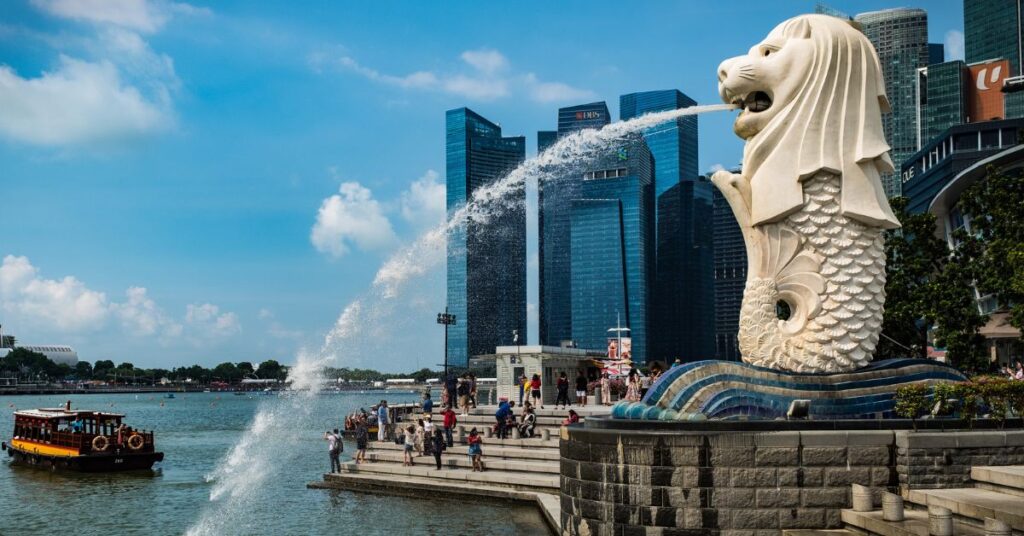
Singapore stands as one of the world’s most fascinating linguistic laboratories. This compact city-state, barely 730 square kilometres, pulses with four official languages, countless dialects, and a unique creole that defies traditional grammar rules. For businesses eyeing Southeast Asian markets or individuals planning to work in Singapore, understanding this multilingual landscape isn’t just helpful, it’s essential.
Understanding Singapore’s Official Languages
Singapore recognises four official languages: English, Mandarin Chinese, Malay, and Tamil. This quadrilingual framework reflects the nation’s ethnic composition and colonial history, creating a linguistic ecosystem unlike anywhere else in the world.
The Role of Each Official Language
- English has emerged as the de facto main language, serving as the primary medium for business, government, and education. Despite Malay being designated the national language, English dominates daily interactions. Recent census data reveals a dramatic shift: English usage at home surged from 32.3% in 2010 to 48.3% in 2020. This represents more than a statistical change; it signals a fundamental transformation in how Singaporeans communicate.
- Malay carries special constitutional significance as Singapore’s national language. The national anthem, Majulah Singapura (“Onward Singapore”), is sung in Malay, and Malay is used on official documents and road signs. However, only 9.2% of the population speaks Malay at home. This gap between symbolic importance and daily usage highlights Singapore’s complex linguistic identity.
- Mandarin Chinese remains widely spoken, though its usage has declined from 35.6% in 2010 to 29.9% in 2020. Among Singapore’s residents, the Chinese population, which comprises 75.9% of the population, uses Mandarin as the standardised language for business and education. The government’s Speak Mandarin Campaign, launched in 1979, successfully unified various Chinese dialects into a single standard language.
- Tamil represents the Indian community, with 2.5% of the population speaking it at home. As one of the world’s oldest living languages, Tamil connects Singapore to its South Asian heritage. The language thrives through cultural events, festivals, and dedicated Tamil-language education programmes.
Need professional translation services for Singapore’s diverse market? Elite Asia specialises in all four official languages, ensuring your message resonates across linguistic boundaries.
Singapore’s Ethnic Composition and Language Distribution
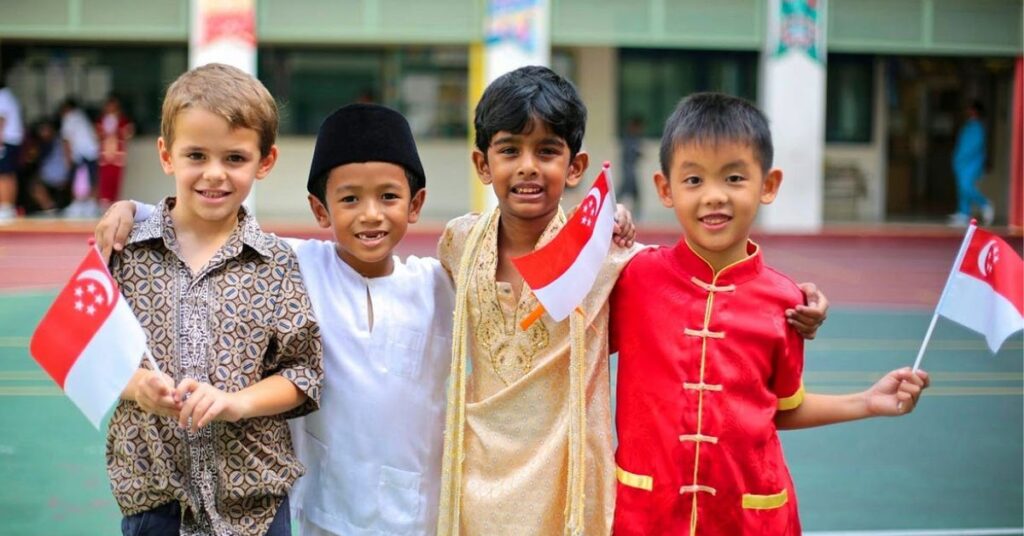
The languages spoken in Singapore directly mirror the nation’s ethnic makeup. Understanding this connection helps businesses tailor their communication strategies effectively.
| Ethnic Group | Population Percentage | Primary Languages |
|---|---|---|
| Chinese | 75.9% | Mandarin, English, Chinese dialects |
| Malay | 15.0% | Malay, English |
| Indian | 7.5% | Tamil, English, other Indian languages |
| Others | 1.6% | Various languages |
Source: Singapore Demographics 2023
This diversity creates unique opportunities and challenges. A marketing campaign might need Mandarin to reach older Chinese-speaking audiences, whilst requiring English for professional contexts. Similarly, government communications in Malay demonstrate respect for national heritage, whilst Tamil translations ensure inclusivity for the Indian community.
The Rise of English as Singapore’s Lingua Franca
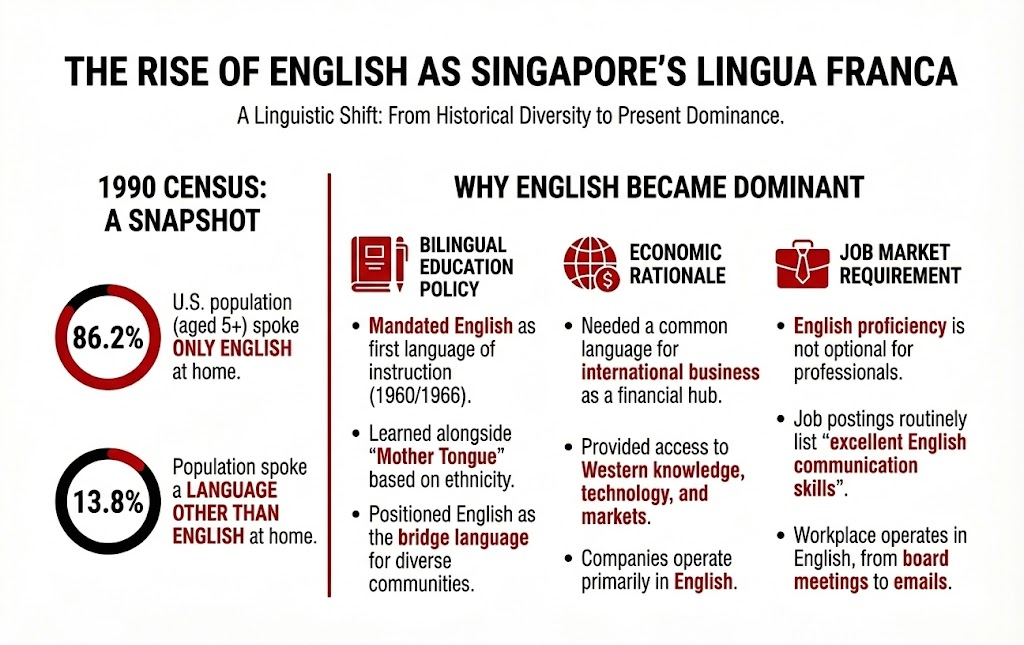
English didn’t always dominate Singapore’s linguistic landscape. The 1990 Census revealed that English was the dominant language, with the vast majority of households speaking only English.
- Non-English Languages: Only about 13.8% of the population spoke a language other than English at home.
- English Only: According to 1990 Census data, approximately 86.2% of the U.S. population (aged 5 and older) spoke only English at home.
Why English Became Dominant
Singapore’s bilingual education policy, implemented in 1960 for primary schools and 1966 for secondary schools, mandated English as the first language of instruction. Students learn English alongside their designated “Mother Tongue” based on ethnicity. This policy positioned English as the bridge language connecting Singapore’s diverse communities.
The economic rationale proved equally compelling. As a global financial hub, Singapore needed a common language for international business. English provided access to Western knowledge, technology, and markets. Companies headquartered in Singapore, from finance to technology, operate primarily in English.
For professionals entering Singapore’s job market, English proficiency isn’t optional. Job postings routinely list “excellent English communication skills” as a fundamental requirement. The workplace operates in English, from board meetings to email correspondence.
Business localisation extends beyond simple translation. Elite Asia helps companies adapt their English content for Singapore’s unique linguistic context, ensuring clarity across cultures.
Chinese Languages and Dialects in Singapore
When discussing the main languages spoken in Singapore, Mandarin represents just the tip of the Chinese linguistic iceberg. Historically, Chinese Singaporeans spoke a rich variety of dialects reflecting their ancestral origins.
The Diversity of Chinese Dialects
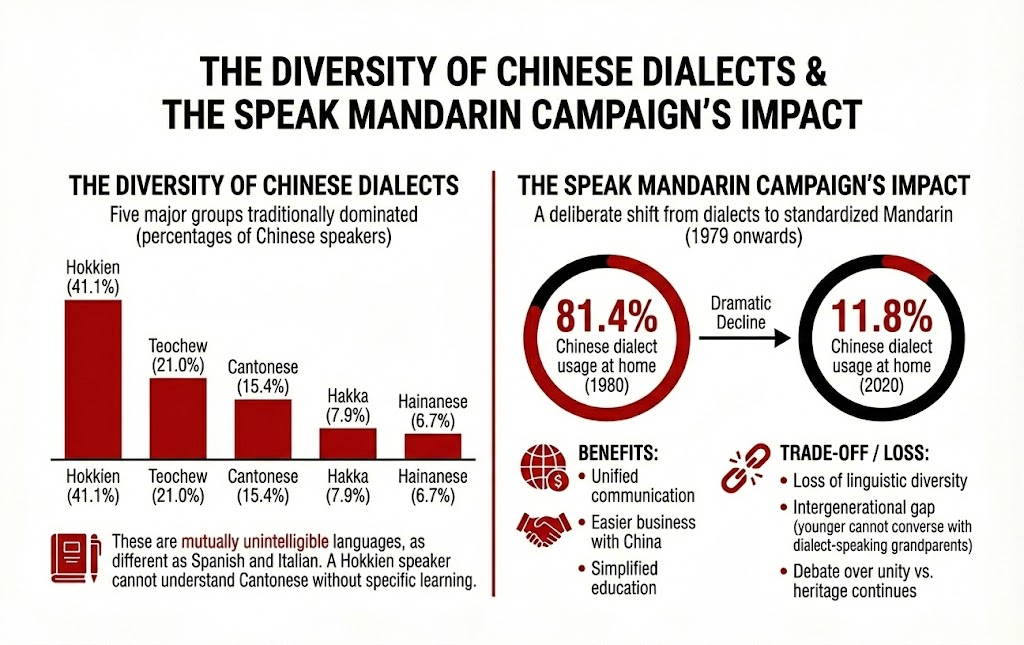
Five major Chinese dialect groups have traditionally dominated Singapore:
- Hokkien (41.1% of Chinese speakers)
- Teochew (21.0%)
- Cantonese (15.4%)
- Hakka (7.9%)
- Hainanese (6.7%)
These weren’t merely variations of pronunciation; they’re mutually unintelligible languages, as different as Spanish and Italian. A Hokkien speaker couldn’t understand Cantonese without specific learning.
The Speak Mandarin Campaign’s Impact
The Speak Mandarin Campaign, initiated in 1979, deliberately sought to replace Chinese dialects with standardised Mandarin. The campaign succeeded dramatically. Chinese dialect usage at home plummeted from 81.4% in 1980 to just 11.8% in 2020 among Chinese residents aged 5 years and over.
This shift brought benefits: unified communication among Chinese Singaporeans, easier business with China, and simplified education. However, it also meant losing linguistic diversity. Younger Singaporeans often cannot converse with dialect-speaking grandparents. The trade-off between unity and heritage continues to spark debate.
For businesses targeting Chinese-speaking audiences in Singapore, understanding whether your audience comprises older dialect speakers or younger Mandarin speakers matters enormously. Simplified Chinese translation services can bridge this gap, though cultural context remains crucial.
Malay: Singapore’s National Language
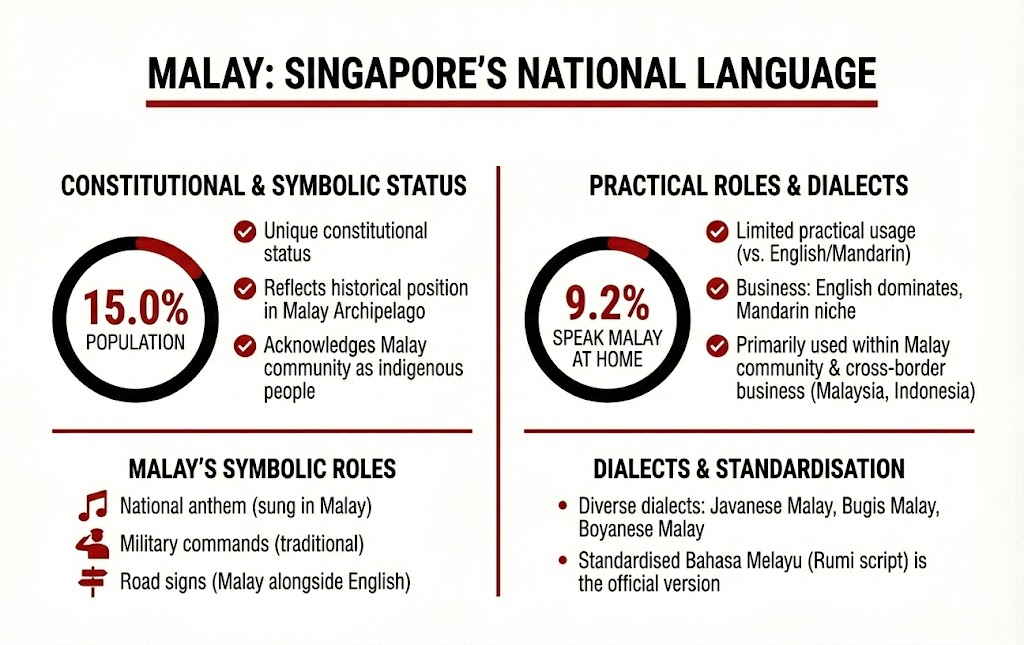
Despite representing only 15.0% of the population, Malay holds unique constitutional status. This reflects Singapore’s historical position within the Malay Archipelago and acknowledges the Malay community as the indigenous people.
Malay’s Symbolic and Practical Roles
Malay’s presence extends beyond symbolic gestures. The national anthem must be sung in Malay at official events. Military commands traditionally used Malay, though this has evolved over time. Road signs display place names in Malay alongside English.
Yet the practical usage remains limited compared to English or Mandarin. Only 9.2% speak Malay at home. In business contexts, English dominates, with Mandarin serving niche markets. Malay functions primarily within the Malay community and in cross-border business with Malaysia and Indonesia.
Several Malay dialects are spoken in Singapore, including Javanese Malay, Bugis Malay, and Boyanese Malay. These reflect the diverse origins of Singapore’s Malay community. However, standardised Bahasa Melayu, written in Rumi script (Latin alphabet), serves as the official version.
Companies expanding into Southeast Asian markets should consider Bahasa Melayu translation as part of their regional strategy, particularly when engaging Malaysian or Indonesian markets alongside Singapore.
Tamil and Other Indian Languages
Tamil’s status as an official language recognises the significant Indian community, particularly those with roots in Tamil Nadu. About 9.2% of Singapore’s population identifies as Indian, creating a vibrant Tamil-speaking community.
Tamil’s Cultural Significance
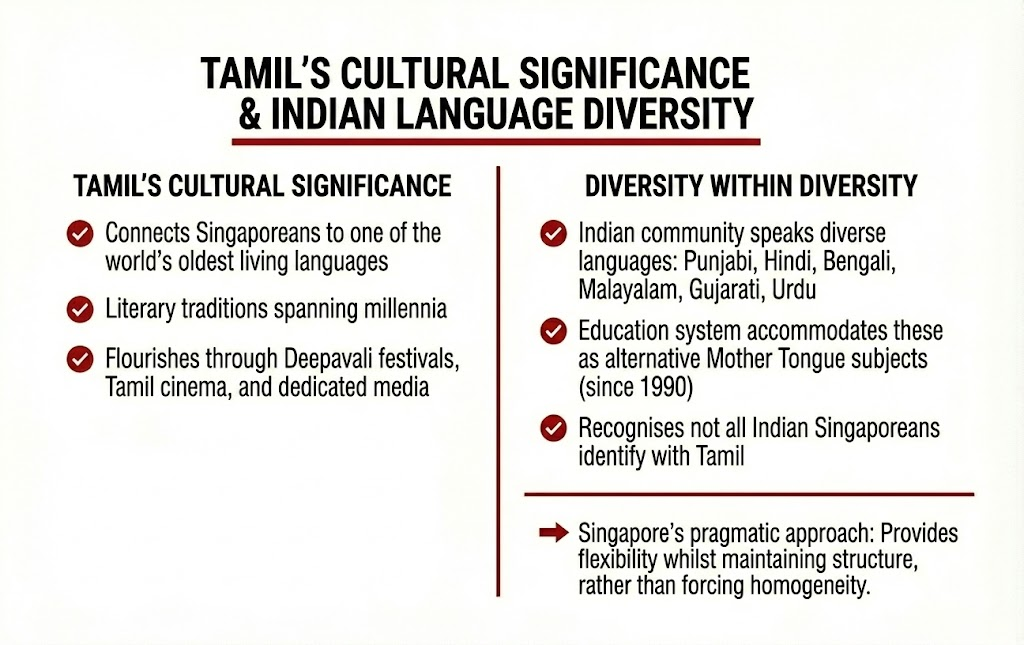
Tamil connects Singaporeans to one of the world’s oldest living languages, with literary traditions spanning millennia. The language flourishes through cultural festivals like Deepavali, Tamil cinema screenings, and dedicated Tamil-language media.
Beyond Tamil, Singapore’s Indian community speaks a diverse range of languages: Punjabi, Hindi, Bengali, Malayalam, Gujarati, and Urdu. Since 1990, the education system has accommodated these languages as alternative Mother Tongue subjects, recognising that not all Indian Singaporeans identify with Tamil.
This diversity within diversity exemplifies Singapore’s pragmatic approach to multilingualism. Rather than forcing homogeneity, the system provides flexibility whilst maintaining structure.
Professional Tamil translation services require cultural sensitivity beyond linguistic accuracy. Elite Asia’s native Tamil translators understand regional variations and cultural nuances, ensuring authentic communication.
Singlish: Singapore’s Unique Linguistic Identity
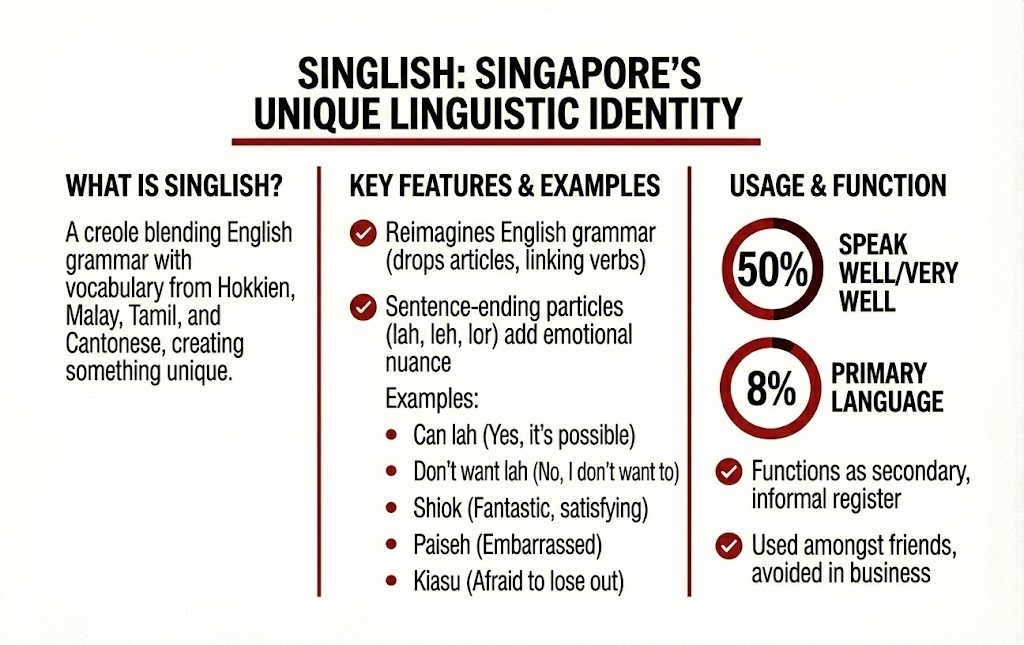
No discussion of languages spoken in Singapore would be complete without addressing Singlish, Singapore Colloquial English. This creole blends English grammar with vocabulary from Hokkien, Malay, Tamil, and Cantonese, creating something entirely unique.
What Makes Singlish Special
Singlish reimagines English grammar. Speakers often drop articles, linking verbs, and grammatical endings. Sentence-ending particles like “lah,” “leh,” and “lor” add emotional nuance impossible in standard English.
Consider these examples:
- “Can lah” (Yes, it’s possible)
- “Don’t want lah” (No, I don’t want to)
- “Shiok” (Fantastic, satisfying)
- “Paiseh” (Embarrassed)
- “Kiasu” (Afraid to lose out)
About 50% of Singaporeans report speaking Singlish “well” or “very well,” though only 8% identify it as their primary language. This suggests Singlish functions as a secondary, informal register, used amongst friends but avoided in business settings.
The Government’s Stance on Singlish
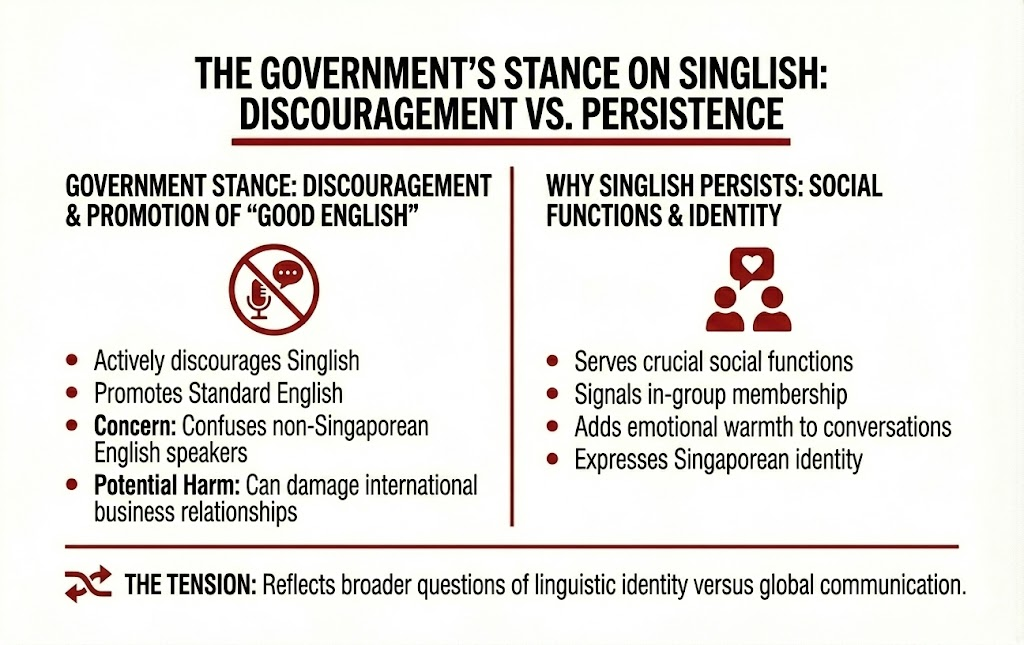
Singapore’s government actively discourages Singlish, promoting “good English” instead. The concern centres on international communication: Singlish confuses non-Singaporean English speakers, potentially harming business relationships.
Yet Singlish persists because it serves crucial social functions. It signals in-group membership, adds emotional warmth to conversations, and expresses Singaporean identity. The tension between standard English and Singlish reflects broader questions about linguistic identity versus global communication.
For international businesses, understanding Singlish helps decode informal conversations, though formal communications should use standard English. Marketing localisation might strategically incorporate Singlish elements to appear authentically Singaporean, though this requires careful execution.
Singapore’s Bilingual Education Policy
Singapore’s linguistic landscape didn’t emerge naturally; it resulted from deliberate policy decisions. The bilingual education policy, cornerstone of Singapore’s language planning since 1959, mandates learning English plus one “Mother Tongue” language.
How the Policy Works
From primary school onwards, students learn English as their first language (the primary medium of instruction) and their ethnic Mother Tongue as a second language:
- Chinese students learn Mandarin
- Malay students learn Malay
- Indian students traditionally learn Tamil (though alternatives exist)
This framework aims to achieve dual objectives:
- English provides access to global knowledge, technology, and economic opportunities
- Mother Tongue anchors students to cultural heritage, values, and identity
The policy has evolved significantly. Initially rigid about ethnic assignment, the system now permits greater flexibility. Students can choose their Mother Tongue rather than having it automatically assigned by ethnicity. Additionally, five other South Asian languages (Bengali, Gujarati, Hindi, Punjabi, Urdu) have been accepted as Mother Tongue subjects since 1990.
Results and Challenges
The bilingual policy has succeeded in creating English-knowing bilinguals. Nearly all Singaporeans can communicate in English while maintaining a connection to their ancestral languages. This bilingualism proves economically valuable, positioning Singapore as a bridge between Western and Asian markets.
However, challenges persist. Mother-tongue proficiency often lags behind English proficiency. Students may achieve technical competence without cultural depth. The pressure to excel in both languages creates academic stress. Some question whether ethnicity-based language assignment truly reflects modern Singapore’s diversity.
Businesses benefit from this bilingual population. Marketing campaigns can operate primarily in English while strategically incorporating Mother Tongue elements. Website localisation services help companies optimise content for Singapore’s bilingual audience, ensuring accessibility without redundancy.
Language in Singapore’s Workplace
Understanding how many languages are spoken in Singapore matters most in professional contexts. The workplace exemplifies Singapore’s linguistic complexity, where English dominates, whilst multilingualism provides a competitive advantage.
English as the Business Language
Virtually all business operations in Singapore occur in English. Job applications, interviews, meetings, reports, and emails all default to English. This creates a level playing field where ethnicity matters less than competence.
However, English proficiency requirements vary by role:
- Multinational corporations demand high-level business English
- Customer-facing positions may prefer bilingual candidates
- Regional roles often specify Mandarin for China-related work
The Value of Multilingualism
Whilst English suffices for many roles, multilingualism opens doors. Research indicates that professionals speaking sought-after languages can command higher salaries. Mandarin proves particularly valuable for roles involving China, Taiwan, or Hong Kong.
Beyond Mandarin, other languages add value:
| Language | Average Salary Benefit | Key Industries |
|---|---|---|
| Japanese | High | Technology, Finance, Manufacturing |
| Korean | Moderate-High | Entertainment, Technology, Manufacturing |
| French | Moderate | Luxury retail, Hospitality, Diplomacy |
| German | Moderate | Engineering, Automotive, Manufacturing |
Data synthesised from Singapore job market analysis
Cultural intelligence accompanies language skills. Understanding how to communicate across cultures, when to be direct versus indirect, how hierarchy functions, and appropriate formality matters as much as vocabulary.
For companies hiring in Singapore, offering multilingual technology solutions and translation support demonstrates a commitment to inclusive communication. This matters for internal operations and customer engagement.
How Singapore’s Languages Impact Business and Commerce
The most spoken languages in Singapore directly shape business strategy. Companies must navigate this multilingual landscape to succeed in Singapore’s competitive market.
Marketing Across Languages
Effective marketing in Singapore requires linguistic dexterity. Consider a typical campaign:
- English reaches the broadest audience, particularly professionals and younger demographics
- Mandarin connects with older Chinese speakers and emphasises cultural authenticity
- Malay demonstrates respect for national identity and reaches the Malay community
- Tamil ensures inclusivity and engages Indian consumers
Brilliant campaigns don’t merely translate, they transcreate. A slogan that works brilliantly in English might fall flat in Mandarin without creative adaptation. Cultural references, humour, and emotional appeals require rethinking for each language.
Transcreation services go beyond literal translation, adapting messaging to resonate emotionally with each linguistic community whilst maintaining brand consistency.
Legal and Regulatory Considerations
Singapore’s multilingual framework extends to legal requirements as well. Official documents often require translation into multiple languages for different stakeholder groups. Certified translation becomes essential for:
- Immigration documents
- Educational certificates
- Legal contracts
- Medical records
- Financial statements
Government communications typically appear in all four official languages, ensuring accessibility. Private sector companies, whilst not legally mandated to follow suit, often provide multilingual customer service to maximise reach.
E-commerce and Digital Platforms
Online businesses face unique challenges. Website content should prioritise English for maximum reach, but offering Mandarin options can significantly boost conversion rates among Chinese-speaking customers. Product descriptions, customer service chatbots, and checkout processes benefit from multilingual support.
Multilingual website development ensures a seamless user experience across languages. Elite Asia’s integrated approach combines translation with technical implementation to create truly multilingual digital platforms.
The Future of Languages in Singapore
Language patterns continue evolving. Current trends suggest several developments for spoken languages in Singapore:
Increasing English Dominance
The ascendancy of English continues unabated. Data from 2009 reveal that among primary school enrollees, 60% of Chinese students, 60% of Indian students, and 35% of Malay students spoke predominantly English at home, reflecting sustained linguistic shift across all major ethnic groups. These figures likely increased in subsequent years.
This shift brings advantages, stronger global connectivity, easier inter-ethnic communication, and simplified education. Yet it also raises concerns about the loss of Mother Tongue proficiency and cultural depth.
Declining Dialect Usage
Chinese dialects continue fading. This trend appears irreversible as older dialect-speaking generations age, whilst younger generations speak primarily English and Mandarin. Within decades, traditional dialects like Hokkien and Teochew might survive only amongst elderly speakers.
Greater Flexibility in Mother Tongue Education
The education system increasingly accommodates linguistic diversity beyond the traditional four languages. Students can now learn languages that better match their heritage rather than being automatically assigned based on ethnicity. This flexibility recognises Singapore’s evolving demographics and individual identity.
Technology’s Role
AI translation technology is increasingly supplementing human language skills. Real-time translation apps, automated subtitling, and machine translation enable communication across language barriers with unprecedented ease. However, human expertise remains essential for nuance, cultural context, and high-stakes communication.
Practical Language Tips for Expats and Businesses
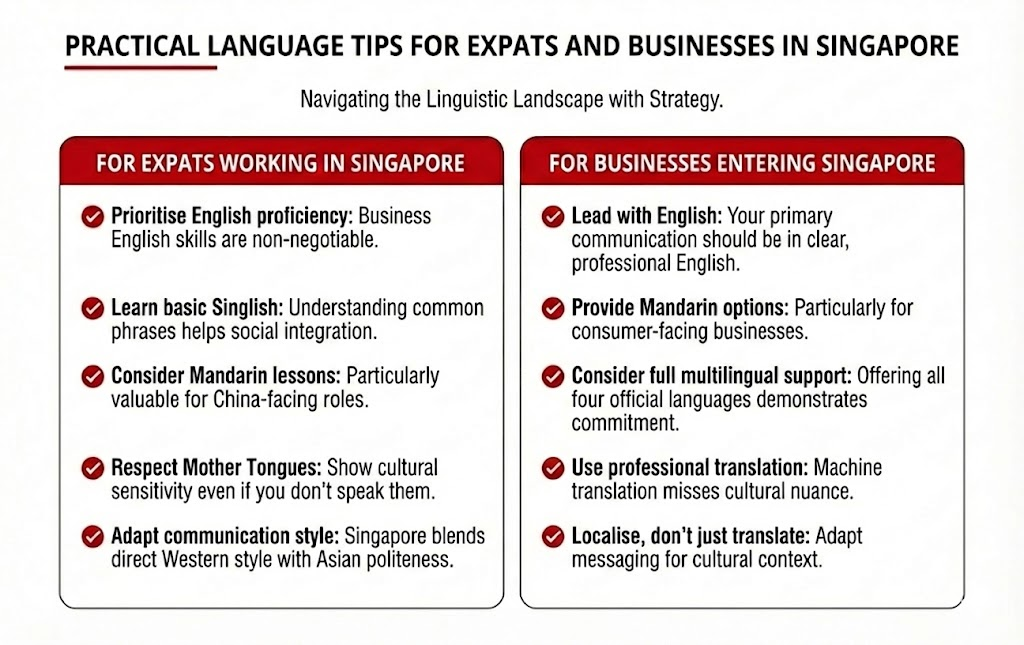
For those entering Singapore’s market or workforce, navigating the linguistic landscape requires strategy:
For Expats Working in Singapore
- Prioritise English proficiency: Business English skills are non-negotiable
- Learn basic Singlish: Understanding common phrases helps social integration
- Consider Mandarin lessons: Particularly valuable for China-facing roles
- Respect Mother Tongues: Show cultural sensitivity even if you don’t speak them
- Adapt communication style: Singapore blends direct Western style with Asian politeness
For Businesses Entering Singapore
- Lead with English: Your primary communication should be in clear, professional English
- Provide Mandarin options: Particularly for consumer-facing businesses
- Consider full multilingual support: Offering all four official languages demonstrates commitment
- Use professional translation: Machine translation misses cultural nuance
- Localise, don’t just translate: Adapt messaging for cultural context
Professional language service providers like Elite Asia offer comprehensive support, from document translation to conference interpretation, ensuring your message resonates across Singapore’s linguistic diversity.
Common Misconceptions About Singapore’s Languages
Several myths persist about what languages are spoken in Singapore:
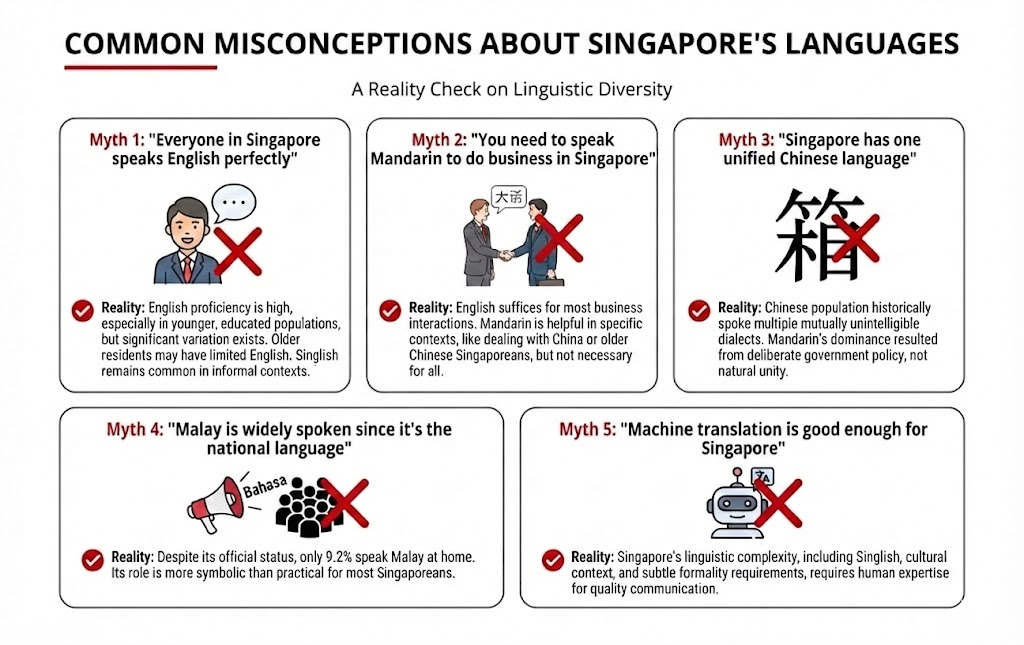
Myth 1: “Everyone in Singapore speaks English perfectly”
Reality: Whilst English proficiency is high, especially among younger, educated populations, significant variation exists. Older residents may have limited English skills. Singlish remains common in informal contexts.
Myth 2: “You need to speak Mandarin to do business in Singapore”
Reality: English suffices for most business interactions. Mandarin is helpful in specific contexts, particularly when dealing with China or older Chinese Singaporeans. Still, it isn’t necessary in all situations.
Myth 3: “Singapore has one unified Chinese language”
Reality: The Chinese population historically spoke multiple mutually unintelligible dialects. Mandarin’s dominance resulted from deliberate government policy, not natural linguistic unity.
Myth 4: “Malay is widely spoken since it’s the national language”
Reality: Despite its official status, only 9.2% speak Malay at home. Its role is more symbolic than practical for most Singaporeans.
Myth 5: “Machine translation is good enough for Singapore”
Reality: Singapore’s linguistic complexity, including Singlish, cultural context, and subtle formality requirements, requires human expertise for quality communication.
Why Professional Translation Services Matter in Singapore
Given Singapore’s multilingual complexity, professional translation services aren’t luxuries; they’re necessities. Here’s why DIY or machine translation often falls short:
Cultural Context Beyond Words
Translation requires understanding cultural nuances that algorithms miss. What’s persuasive in English might seem pushy in Mandarin. Humour rarely translates directly. Formality levels vary significantly across languages.
Expression of emotions in language differs across cultures. Professional translators understand these subtleties, adapting content to resonate emotionally whilst preserving meaning.
Legal and Professional Standards
Certified translations require specific expertise and credentials. Immigration authorities, courts, and official bodies demand accuracy and proper certification. Mistakes can result in rejected applications, legal complications, or financial loss.
Industry-Specific Terminology
Technical, medical, legal, and financial translation requires specialised vocabulary and subject-matter expertise. A general translator might understand grammar but miss critical industry nuances that impact meaning.
Consistency Across Materials
Professional translation services use terminology databases and translation memory systems to ensure consistency across all your materials. This matters for brand identity, user experience, and professional credibility.
Elite Asia specialises in Singapore’s linguistic landscape, offering native translators in all official languages with industry-specific expertise. Our quality management system ensures accuracy, cultural appropriateness, and consistency across all projects.
Conclusion: Embracing Singapore’s Multilingual Identity
Singapore’s linguistic diversity represents both challenge and opportunity. The languages spoken in Singapore, English, Mandarin, Malay, Tamil, Chinese dialects, and Singlish, create a unique ecosystem where global and local, traditional and modern, East and West intersect.
For businesses, this multilingualism demands a thoughtful communication strategy. Success requires more than translation; it requires genuine cultural understanding, strategic language choices, and recognition that different audiences within Singapore have distinct linguistic preferences.
For individuals, Singapore’s multilingual environment offers rich opportunities for personal growth and professional advancement. Whether you’re learning a second language, refining business English, or navigating cultural differences, Singapore rewards linguistic versatility.
The future will likely see continued English dominance alongside efforts to preserve Mother Tongue languages. Technology will facilitate cross-linguistic communication whilst highlighting the irreplaceable value of human cultural understanding. Singapore’s commitment to multilingualism, imperfect but sincere, provides a model for managing linguistic diversity in an interconnected world.
Whether you’re a business expanding into Southeast Asia, a professional considering opportunities in Singapore, or simply curious about linguistic diversity, understanding Singapore’s multilingual identity provides essential context for meaningful engagement with this remarkable city-state.
Ready to Navigate Singapore’s Multilingual Market?
Elite Asia helps businesses communicate effectively across all of Singapore’s linguistic communities. Our comprehensive language services include:
- Translation: All four official languages with native speakers
- Interpretation: Simultaneous and consecutive for events and meetings
- Localisation: Cultural adaptation beyond literal translation
- Certified Translation: Official documents for legal and immigration purposes
- Technology Solutions: AI-assisted translation with human post-editing
With offices in Singapore, Malaysia, and Hong Kong, Elite Asia understands the nuances of Southeast Asian markets. Our ISO-certified quality management system ensures accuracy, whilst our experienced project managers deliver on time, every time.
Request your free quotation today and discover how Elite Asia can help your business thrive in Singapore’s dynamic multilingual environment. Singapore stands as one of the world’s most fascinating linguistic laboratories. This compact city-state, barely 730 square kilometres, pulses with four official languages, countless dialects, and a unique creole that defies traditional grammar rules. For businesses eyeing Southeast Asian markets or individuals planning to work in Singapore, understanding this multilingual landscape isn’t just helpful, it’s essential.