Live AI Captions and Interpretation Are Now a Corporate Standard
Quick Answer
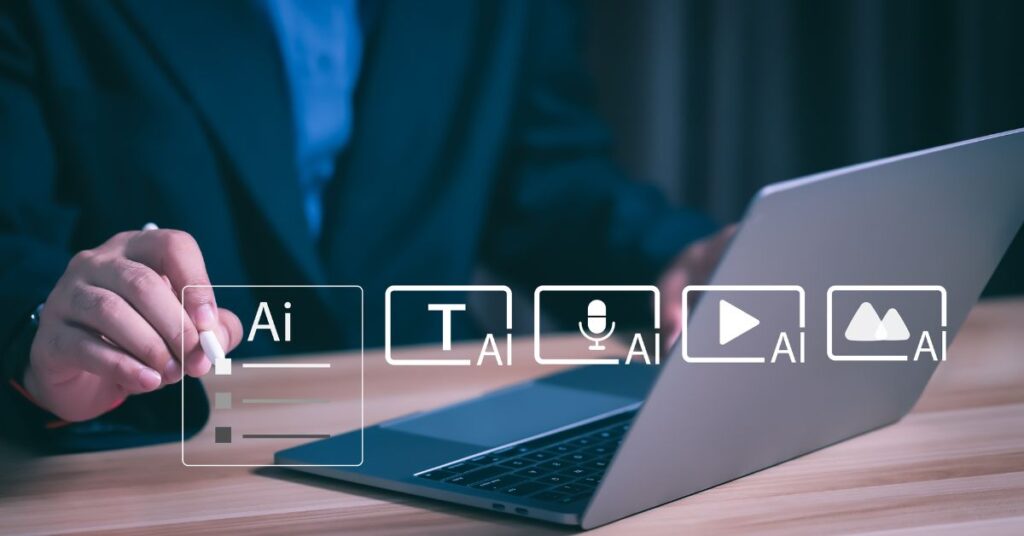
Live AI captions are fast becoming a corporate standard for meetings, town halls and webinars, while AI interpretation is becoming a common option rather than a universal rule. Major meeting platforms now offer built-in captions, and accessibility guidelines such as WCAG ask for captions on live audio at Level AA. Human interpreters remain essential for high-stakes sessions. Elite Asia’s AI captioning shows text within 1–3 seconds.
- 1 Live captions are the strongest candidate for a corporate standard, because they help accessibility, comprehension and record-keeping.
- 2 AI interpretation is spreading fast, but it is a choice for each session, not a rule for every event.
- 3 Accessibility guidelines and platform features have made captions a normal expectation for live content.
- 4 Good results depend on clean audio, a glossary, a trained operator and a plan for the replay.
- 5 High-stakes sessions still need certified human interpreters, so most companies need a hybrid approach.
In This Article:
- Is It Really a “Standard” Yet?
- Why Live Captions Are Becoming the Baseline
- What Captions Do for a Business
- Where AI Interpretation Fits
- A Simple Standard Policy for Your Company
- How to Make Live Captions Work
- After the Event: Reuse the Content
- How to Order a Hybrid Solution from Elite Asia Singapore
- Make Live Language Support Your Standard
Is It Really a "Standard" Yet?
The phrase "corporate standard" is strong, and it is worth testing. Much of the loud claim comes from vendor surveys, which are not neutral. A better test is to look for signs that live captions have become a normal baseline.
Three signs point that way. First, the tools are built into everyday platforms. Second, accessibility rules ask for live captions. Third, large employers now plan multi-country events around them. Interpretation is a different story. AI voice and text translation are widely used, but they are chosen session by session. The honest answer is that captions are close to standard, and AI interpretation is a growing default for low-risk events.
Why Live Captions Are Becoming the Baseline
The tools are now built in
Major meeting platforms offer live captions as a standard feature. Translated captions are often an add-on or higher plan. For example, one platform's support page says organisers of town halls can preselect up to six caption languages, or ten with a premium licence, from more than 50 options. That shows how routine the feature has become, and also that costs and limits apply.
Accessibility guidelines expect them
The Web Content Accessibility Guidelines (WCAG) include a criterion that asks for captions on all live audio in synchronised media. It sits at Level AA, which many organisations and public bodies use as their target. Regional rules add pressure. The European Accessibility Act applied from 28 June 2025, and it covers video and webinar content. Guidance on it says live captions are not clearly required for every live event, but they are recommended, and accurate captions and transcripts should follow soon after the event. So captions are expected, but the law is not identical in every market. Check the rules where you operate.
They solve a real communication problem
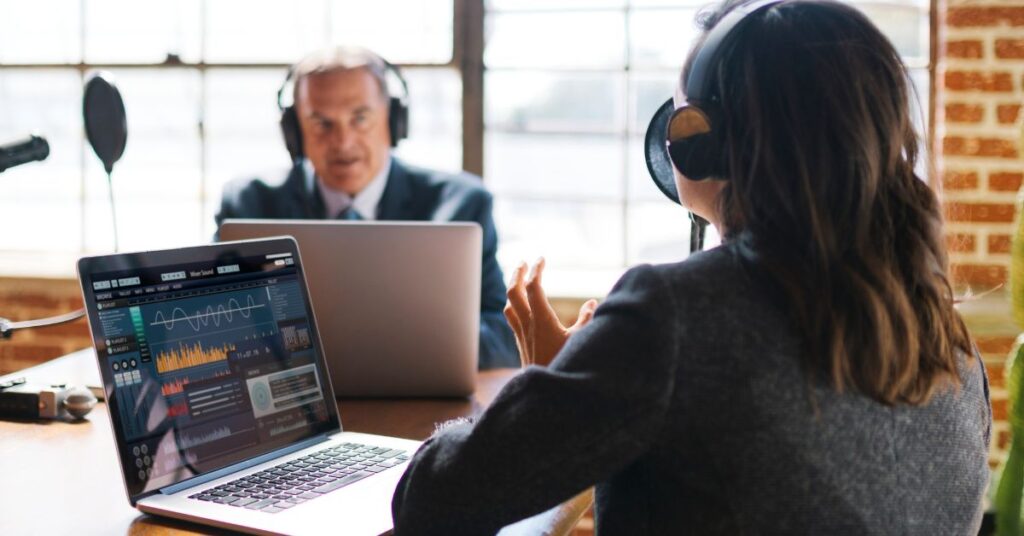
Elite Asia's article on real-time AI captioning for hybrid town halls points to a common issue. English-only speech is a major reason why remote staff in multi-country companies lose focus. Weak audio, fast speech and accents make listening harder. Captions give a second channel, so meaning does not depend on perfect listening conditions.
THE BEST OF AI. THE TRUST OF HUMAN EXPERTISE.
Why choose one when you can have both? Our Hybrid Solutions combine the speed of AI with the cultural precision of native linguists.
- Hybrid Translation — AI-driven translation, refined by industry-specialist linguists
- Hybrid Transcription — automated voiceovers and captions that stay on-brand
- Hybrid Interpretation — host global events in any language, from any location
- AI Captioning — instant multilingual captions for meetings, webinars & beyond
What Captions Do for a Business
- Accessibility: They help people who are deaf or hard of hearing, and also those in noisy places or without headphones.
- Comprehension: Non-native speakers can read along and catch details they would miss by ear.
- Reach: Translated captions let one session serve many language groups.
- Records: Transcripts support archives, minutes and search-friendly content.
Elite Asia's guide on what AI captioning is says text can appear within one to three seconds of speech, supports up to 200 languages and can be exported as SRT, VTT or TXT files. For formal settings, see the article on AI captioning for investor days and AGMs, which covers accessibility and record-keeping. For commercial events, read about AI captioning for B2B product launches and virtual press conferences.
Where AI Interpretation Fits
Captions put text on a screen. Interpretation delivers meaning in another language, often as voice. AI interpretation now covers many of the same events as captions, and it can be cheaper and quicker to set up than booths and teams of interpreters. Elite Asia's AI interpreting webinar recap explains how it can lower costs and simplify multilingual events.
It is not a replacement for people in every case. Performance changes with conditions. In its article on hybrid interpretation for factory audits, Elite Asia reports that AI accuracy can fall from over 95% in quiet rooms to 65–85% around machinery, and it adds that results vary by site. The risk matrix for AI and human simultaneous interpreting sets the main rule: the higher the legal or clinical stakes, the more you need a certified human. For medical settings, the article on AI interpreting for healthcare says human oversight and privacy agreements should be in place first.
A Simple Standard Policy for Your Company
A clear policy keeps teams from guessing. The table below shows one practical approach.
| Session type | Captions | Interpretation |
|---|---|---|
| Internal meetings | On by default | AI on request |
| Town halls and webinars | On, with translated tracks | AI for priority languages |
| Product launches and press events | On, with operator | AI with human oversight |
| Board votes, legal and medical sessions | On, for records | Certified human interpreters |
Elite Asia's town hall guidance suggests many programmes start with English captions plus two to four priority local-language tracks, then add human interpretation for selected markets or annual all-hands. It also notes that captions are not a full answer to every accessibility request. Staff may still need human captioning or sign-language support, and those requests should be honoured.
How to Make Live Captions Work
A standard only helps if it works well. Quality follows inputs, so focus on five areas.
- Audio: Use external microphones and quiet rooms. Do not rely on laptop microphones in large spaces.
- Speaker habits: Speak at a steady pace and pause between points. Show rare names on slides.
- Vocabulary: Build a glossary of names, products and acronyms. The guide to preparing glossaries for AI-assisted interpreting shows how.
- Roles and rehearsal: Name a caption operator and run a rehearsal. The guide to setting up multilingual remote conferences covers tests, bandwidth and backups.
- Replay: Publish a captioned replay and cleaned transcript soon after the event. Elite Asia suggests 24–48 hours.
Remember to tell attendees how to switch captions on. If nobody knows where to click, the feature fails quietly.
Other Related Articles:
After the Event: Reuse the Content
Captions create text, and text is easy to reuse. Transcripts can become subtitles, training material, intranet pages and short clips for local teams. Elite Asia's multimedia localisation services cover subtitling, voice-over and related work. Have a linguist review anything that will be published or kept as an official record. If your plan also uses human interpreters, read how to choose between simultaneous and consecutive interpretation.
How to Order a Hybrid Solution from Elite Asia Singapore
Elite Asia's Hybrid Solution combines the speed and scale of AI technology with the accuracy of human linguists. Here is a step-by-step guide to getting started.
Step 1: Identify Your Hybrid Service Type
Visit the Elite Asia Hybrid Solution page and choose the service that best fits your business need:
| Service | What It Does |
|---|---|
| Hybrid Translation | Machine translation + post-editing by native linguists — ideal for large volumes of legal, financial, or technical content |
| Hybrid Transcription | Automated transcriptions, captions, and voiceovers created in minutes |
| Hybrid Interpretation | AI translates the speaker’s words into multiple target languages in real time, with human expertise available when needed. |
| AI Captioning | AI-powered real-time captioning, translation, and transcription for meetings and events |
Step 2: Prepare Your Files
Before submitting your project, ensure your source files are in a supported format. Elite Asia's cloud-based Translation Management System (TMS) accepts a wide range of file types:
- Documents: DOC/DOCX, XLS/XLSX, PPT/PPTX, TXT, RTF, ODT
- Subtitles: SRT
- Images (via OCR): JPG, PNG, TIFF, BMP, GIF
- Web/Code: HTML, XHTML, PHP
- Localisation files: XML, Android XML, RESX, STRINGS
- Desktop publishing: IDML, MIF
- Bilingual interchange: XLIFF, SDLXLIFF, PO
Step 3: Request a Free Quote
Submit your project details through either of these two channels:
✅ Option A — Online Quotation Form
Go to eliteasia.co/request-free-quotation/ and select "Corporate" as your request type. Include the following details for the most accurate quote:
- Service type needed (Hybrid Translation, Transcription, Interpretation, or AI Captioning)
- Language pair(s) required
- File format and approximate word/page count
- Desired turnaround time
✅ Option B — Direct Contact / Client Portal
Log in or register at the Elite Asia Client Portal to upload documents directly and communicate with the team via Live Chat. Alternatively, reach the team at:
- 📞 Singapore: +65 6681 6717
- 📞 Hong Kong: +852 3904 1138
- 📞 Malaysia: +60 3 9212 8558
Step 4: Project Setup & Glossary Preparation
Once your order is confirmed, Elite Asia's team begins the PREPARE stage:
- File analysis — the TMS analyses your document structure, word count, and format
- Glossary preparation — industry-specific terminology lists are built or updated to ensure consistency
- Machine Translation (MT) & Translation Memory (TM) — your files are run through Elite Asia's private AI engine, which covers 17 language pairs including Simplified/Traditional Chinese, Japanese, Korean, major Southeast Asian languages, and European languages
Step 5: Post-Editing & Quality Review
The AI-generated output enters the POST-EDITING stage, handled by native linguists with domain expertise:
- Post-editing — a human linguist with industry knowledge reviews and refines the AI output
- Proofreading/Review — a second pass ensures accuracy, fluency, and cultural alignment
- Export from TMS — the finalised translation is exported in the original document format and layout
This hybrid workflow is 40–50% faster than traditional translation and reduces cost by 20–60%, without compromising quality.
Step 6: Client Review & Finalisation
The completed translation is submitted to you for review. Elite Asia provides a 4-week revision period to accommodate any feedback or changes needed. Once approved:
- Translation Memory (TM) is updated for future projects, ensuring cost savings on repeated content
- Final files are delivered in your original document format
Step 7: Optional — Platform Integration
For businesses with high-volume or ongoing translation needs, Elite Asia can establish a plug-in connection directly with your operating portal or CMS. This allows documents to flow automatically into the TMS without manual uploads, streamlining your entire localisation pipeline.
Your Multilingual Communication Partner in Asia
Elite Asia helps businesses communicate confidently across languages, markets, and cultures. Our team covers 30+ languages across Singapore, Malaysia, Hong Kong, Japan, South Korea, China, Taiwan, and Thailand, with full technical support, ISO 9001:2015 certification, and a dedicated MICE division ready to support your next multilingual project, meeting, or event.
Talk to Our Language ExpertsMake Live Language Support Your Standard
Ready to add live captions and multilingual support to your next event? Explore Elite Asia's AI Captioning Solutions for captions, translation and transcripts. For sessions that need voice interpretation with human expertise, see the Hybrid Interpreting Solution.


Frequently Asked Questions (FAQs)
1. Are live AI captions really a corporate standard?
They are close in many organisations. Built-in captions on meeting platforms, accessibility guidelines and multi-country workforces have made them a normal baseline for meetings and events. The exact rules and expectations still differ by country, industry and client, so treat captions as good practice and check the requirements that apply to you.
2. Is AI interpretation also a standard?
Not yet in every case. It is a popular default for low-risk and large-scale sessions, but legal, medical and financial sessions still need certified human interpreters. Many organisations now run a hybrid model, using AI for broad coverage and human interpreters for critical sessions or languages.
3. Do live captions meet accessibility rules?
They help meet guidelines such as WCAG, which asks for captions for live audio in synchronised media at Level AA. WCAG does not set a minimum accuracy, and individual needs may still call for human captioners or sign-language support, so check local rules and honour accommodation requests. Treat AI captions as a strong baseline and not the only accessibility measure.
4. How fast do AI captions appear?
Elite Asia reports a delay of about one to three seconds from speech to text. Real delay depends on audio quality, network and set-up, so test before the event under realistic conditions. Read Elite Asia’s guide to what AI captioning is.
5. What is the best way to start?
Pick one recurring event, such as a town hall. Add English captions and two to four priority language tracks, prepare a glossary, rehearse, and publish a captioned replay within 24 to 48 hours. Then review usage and feedback by market before expanding. See Elite Asia’s guide to real-time AI captioning for hybrid townhalls.
Last Modified:
Contact Us
Working across languages? Our team can support your company’s translation and interpretation needs. For business enquiries, get in touch to explore what fits your requirements.
Request a Quote